Running out of gas rarely happens at a convenient time. It happens on the Gardiner in stop-and-go traffic, after a long shift in North York, during school pickup in Scarborough, or late at night on a quiet stretch in Etobicoke. When that happens, an emergency fuel delivery service is not a luxury. It is the fastest, safest way to get moving again without leaving your vehicle stranded on the roadside.
When an emergency fuel delivery service makes sense
A lot of drivers think running out of fuel is simple – just walk to the nearest gas station. In real life, that is often the worst option. If your vehicle is stopped on a busy road, highway shoulder, underground parking exit, or unfamiliar neighborhood, leaving it unattended can create a safety risk. If you have children in the car, limited mobility, bad weather, or a commercial schedule to keep, walking for fuel is not practical.
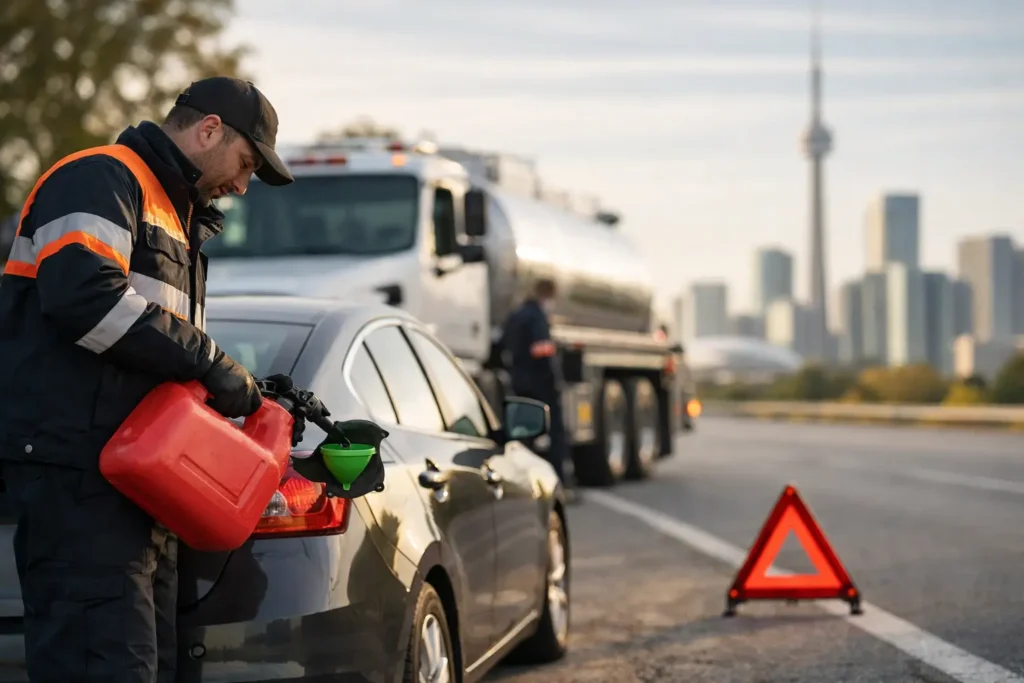
That is where a professional emergency fuel delivery service helps. Instead of guessing how far the next station is or taking risks with a fuel can, you get dispatched roadside support that brings the fuel to your location. The goal is immediate resolution. You call, confirm your location, and wait in a safer position while trained roadside operators handle the rest.
For many Toronto-area drivers, speed matters just as much as convenience. Delivery drivers lose time and money when they are sidelined. Families stuck at night want reassurance as much as they want fuel. Commuters blocking a lane need a quick response before a small problem becomes a dangerous traffic issue. In those moments, fast dispatch and clear communication matter.
What to expect from emergency fuel delivery service
The best roadside fuel service is straightforward. You place a call, share your exact location, vehicle type, and fuel type, and a dispatcher sends help as quickly as possible. Good service should feel calm and organized even if your situation is stressful.
A professional operator should confirm the basics before arrival. That includes whether your vehicle takes regular gas, premium gas, or diesel, where you are parked, whether the car is fully out of fuel, and whether there are any additional concerns such as a dead battery or unsafe position on the road. This matters because not every no-start situation is only a fuel issue.
When the operator arrives, the service is usually quick. Fuel is added, the vehicle is restarted if possible, and you receive clear pricing. If the vehicle still does not start, the problem may be something else, such as a battery, starter, or mechanical fault. That is one reason drivers often prefer a full roadside assistance provider instead of a single-purpose fuel runner. If the issue turns out to be larger, you can move directly to the next solution without making a second stressful call.
Why drivers choose roadside fuel delivery instead of handling it themselves
On paper, getting your own gas can sounds cheaper. But roadside emergencies are not paper problems. They are real-time safety situations, and the trade-off is usually between saving a small amount of money and reducing a much larger risk.
If your car is stalled on the shoulder of a highway, walking away is dangerous. If you are in downtown traffic, leaving your vehicle can lead to tickets, towing, or worse. If it is raining, snowing, or freezing, even a short walk with a fuel can becomes unpleasant fast. And if you accidentally bring the wrong fuel, the mistake can be costly.
A professional service reduces those variables. You do not have to figure out where to buy an approved gas can, how to carry it safely, or how to return to your vehicle through traffic. You stay put, keep your hazards on if appropriate, and let trained roadside support come to you.
Not every out-of-gas call is exactly the same
This is where experience matters. A sedan stopped in a residential area is different from a delivery van stuck near an off-ramp. A diesel truck needs the correct fuel and a careful approach. A motorcycle requires different handling than a passenger vehicle. A hybrid or EV driver may think they are out of charge or fuel, when the real issue is something else entirely.
That is why good dispatchers ask questions instead of assuming. The more accurate the information, the faster the operator can arrive prepared. In some cases, the vehicle may need more than fuel. In others, a quick fuel top-up is all it takes. It depends on the vehicle, location, and what happened before the breakdown.
For drivers across Toronto and the GTA, local knowledge also makes a difference. Dense downtown streets, condo access points, one-way roads, and highway ramps can slow down generic providers. A local roadside company that knows the area can often dispatch more efficiently and give better arrival guidance.
How to stay safe while waiting for fuel delivery
Your first priority is safety, not troubleshooting. If you can move the vehicle to a safer position, do that. If you cannot, turn on your hazard lights and stay aware of traffic around you. On a busy highway, remaining in the vehicle with your seat belt fastened may be safer than standing outside near moving traffic. On a quieter street, it may make sense to wait at a safe distance if the location feels risky. The right choice depends on where you are stopped.
If you call for roadside help, be ready to share landmarks, nearby intersections, and any details that make your location easier to find. Parking garage levels, apartment entrances, loading zones, and ramp directions can save valuable minutes. Keep your phone available and your ringer on in case dispatch needs to confirm access.
If you feel unsafe for any reason, say so right away. A professional dispatcher should treat that seriously and respond with urgency.
Choosing the right emergency fuel delivery service
When you need help now, it is easy to choose the first number you find. Still, a few things separate dependable roadside support from a frustrating experience.
First, response time matters. You want a company built around urgent dispatch, not one that treats fuel calls as an afterthought. Second, pricing should be clear. In a roadside emergency, hidden fees create more stress, not less. Third, coverage matters. A provider that serves Downtown Toronto, Midtown, Scarborough, Etobicoke, North York, East York, Little Italy, Parkdale, and nearby GTA areas is more likely to reach you quickly.
It also helps to choose a company that can do more than deliver fuel. If your car will not restart after refueling, you may need a jump start, a tow, or a broader roadside inspection. Working with one team from start to finish is usually faster and easier than starting over with another company.
Emergency Roadside Service by South Toronto is built around that kind of response – fast dispatch, 24/7 availability, licensed operators, and practical help for real roadside situations.
Common reasons drivers run out of fuel
Most people do not run out of gas because they are careless. It usually comes down to timing, distraction, or bad assumptions. Maybe the fuel gauge was already low and traffic doubled the commute home. Maybe the station you planned to stop at was closed. Maybe you lent the car to someone else, or a dashboard warning came on later than expected. Commercial drivers can burn through more fuel than planned when routes change unexpectedly.
Modern vehicles also make some drivers overconfident. Distance-to-empty displays are helpful, but they are still estimates. Weather, idling, hills, cargo weight, and traffic can change actual fuel consumption. If you are already near empty, even a short delay can be enough to leave you stranded.
That is why fuel delivery is not just for rare worst-case scenarios. It is a practical backup for everyday drivers who hit an avoidable but common problem.
Fast help matters more at night and in bad weather
A fuel problem at noon is frustrating. A fuel problem at 1 a.m. in winter feels completely different. Darkness, low visibility, freezing temperatures, and reduced traffic all increase the pressure. Parents with children in the vehicle, older drivers, and anyone traveling alone often need reassurance as much as speed.
This is where a 24/7 roadside provider earns trust. You want to know someone will answer, dispatch quickly, and keep the process simple. No long explanations. No confusion about where help is coming from. Just direct support from a team used to handling urgent roadside calls.
If your vehicle is out of fuel, the smartest move is usually the simplest one. Stay safe, call for help, and let a professional emergency fuel delivery service bring the fuel to you so you can get back on the road with less stress and fewer risks.