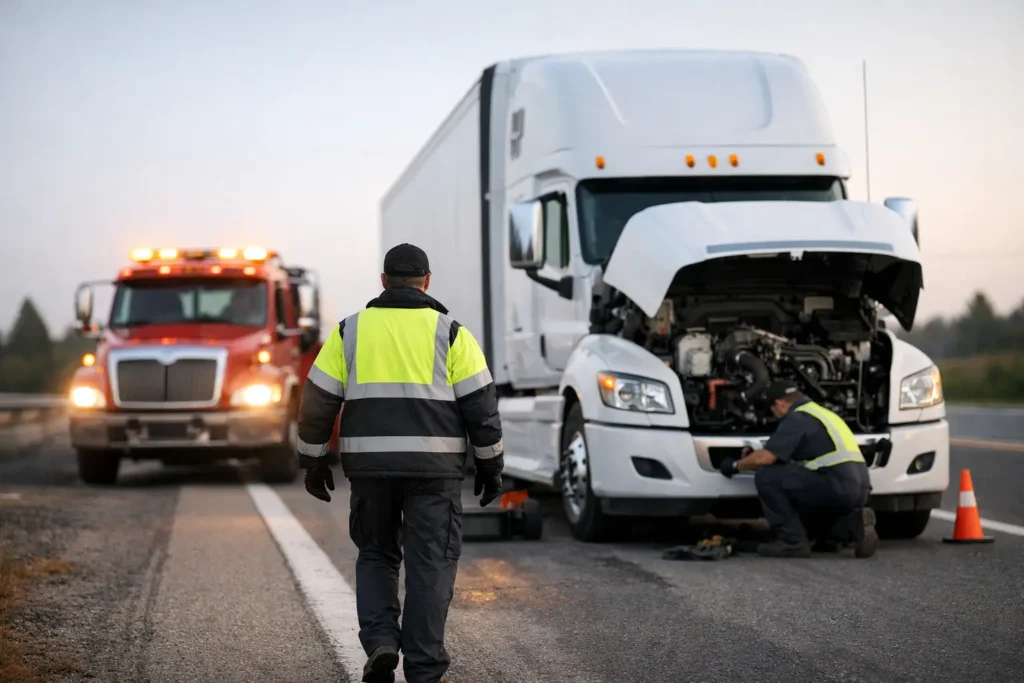
A loaded box truck on the shoulder during rush hour is not a minor delay. It is missed deliveries, upset customers, driver risk, and a vehicle exposed to traffic while the clock keeps moving. That is why commercial truck roadside assistance needs to be fast, organized, and handled by a team that understands urgency from the first call.
For commercial drivers and fleet operators, the real problem is rarely just the flat tire or dead battery. The bigger issue is downtime. Every extra minute on the roadside affects schedules, service windows, payroll, and safety. The right response is not guesswork. It is immediate dispatch, clear communication, and the right equipment sent the first time.
What commercial truck roadside assistance should actually cover
When people hear roadside assistance, they often think about basic help for passenger cars. Commercial vehicles are different. A service call for a work truck, delivery van, cargo vehicle, or light-duty commercial truck can involve more weight, tighter delivery timelines, and more risk on the roadside.
A dependable commercial truck roadside assistance provider should be ready for the problems that stop trucks most often. That includes flat or damaged tires, dead batteries, lockouts, empty fuel tanks, mechanical failures that require towing, and accident-related recovery. Not every issue needs a tow, and that matters. If the problem can be solved on-site with a jump start, mobile tire change, or fuel delivery, the driver gets back on the road faster and the business limits disruption.
The details matter here. A provider that can only handle simple calls may still leave you waiting for another truck, another contractor, or another dispatch once they arrive. In urgent situations, that delay is expensive.
Why response time matters more for commercial vehicles
A personal vehicle breakdown is stressful. A commercial truck breakdown can affect an entire day of operations. Drivers may lose route efficiency. Dispatchers may need to reassign stops. Customers may start calling for updates. If refrigerated cargo, service appointments, or timed deliveries are involved, the pressure increases quickly.
Fast response is not just a convenience. It protects the driver and helps control the cost of the incident. A truck stopped near an exit ramp, in a live lane, or on a narrow shoulder needs attention right away. The longer it sits there, the more dangerous the situation becomes.
That is why professional dispatch matters. When a call comes in, the goal should be simple: understand the vehicle type, confirm the exact location, identify the likely issue, and send the right help immediately. A slow or vague dispatch process creates avoidable delays.
Common roadside problems for commercial trucks
Tire failures are one of the most frequent calls. Commercial vehicles carry weight, cover long distances, and often work full days in changing road and weather conditions. A puncture, blowout, or sidewall damage can stop the route instantly. In some cases a mobile tire change solves the problem. In others, safe towing is the better option.
Battery problems are also common, especially with trucks that make repeated stops, run power-hungry accessories, or sit overnight in cold weather. A dead battery may be a quick jump start, but sometimes the battery failure points to a charging issue that needs closer attention.
Fuel delivery calls happen more often than many operators want to admit. Route changes, traffic, weather, and unexpected detours can throw off fuel planning. Running out of fuel in a commercial vehicle is frustrating, but it does not always need to become a major delay if help arrives quickly.
Lockouts are another real issue for drivers under pressure. One moment of distraction at a delivery stop can leave keys inside the cab and the route stalled. Professional lockout service helps avoid unnecessary damage and gets the driver moving again.
Then there are the cases where roadside repair is not enough. Mechanical breakdowns, collision damage, drivetrain issues, or steering problems may require towing to a repair shop or yard. In those situations, safe loading and proper equipment are not optional.
What to expect when you call for commercial truck roadside assistance
The best roadside calls feel controlled, even when the situation is not. When you call, you should be asked a few direct questions: your location, the type of truck, the issue, whether the vehicle is loaded, and whether it is in a safe position. Those answers help dispatch send the right operator and equipment without wasting time.
You should also expect clear pricing before work begins whenever the situation allows. Hidden fees create more stress in an already difficult moment. Honest service means explaining what is likely needed, what it may cost, and what happens next if the issue cannot be fixed on-site.
Communication matters just as much as speed. Drivers should know who is coming, what service is being provided, and whether the likely outcome is a roadside fix or a tow. For fleet managers, that visibility helps with scheduling and customer communication.
Choosing a provider for commercial truck roadside assistance
Not every roadside company is built for commercial calls. Some focus mainly on standard passenger vehicles and cannot respond effectively when a truck is involved. Before relying on any provider, it helps to look at how they operate under pressure.
First, check availability. Breakdowns do not wait for business hours. Commercial truck roadside assistance should be available 24/7, including nights, weekends, and holidays. If your vehicle stops at 4:30 a.m. before the first delivery window, that call still needs an answer.
Second, look at dispatch coverage. A provider serving Toronto and the surrounding area should be able to coordinate fast help across dense downtown streets, industrial zones, major commuter routes, and surrounding neighborhoods without confusion or long call transfers.
Third, ask whether the operators are licensed, bonded, and insured. Commercial vehicles involve more liability, more equipment, and often more complicated roadside conditions. Professional standards matter.
Finally, consider whether the company can handle both the simple and the serious calls. A provider that offers jump starts, tire service, fuel delivery, lockout help, and towing gives you one point of contact instead of forcing you to chase multiple services while a driver waits on the shoulder.
Safety comes first at the roadside
When a commercial truck breaks down, the first priority is safety. If the vehicle can be moved, it should be taken to the safest available shoulder or lot. Hazard lights should be activated immediately. Drivers should stay alert to traffic conditions and avoid stepping into active lanes unless absolutely necessary.
It also helps to have key information ready before calling. That includes the nearest address or cross street, the truck type, the problem you noticed, and whether the vehicle is carrying cargo that affects service. A calm, accurate call speeds up dispatch.
If the vehicle is in a dangerous position, say that first. A truck stopped in a live lane or blocking access requires a different level of urgency than a truck parked safely off the road.
Local speed makes a difference
For commercial operators in and around Toronto, local knowledge is a practical advantage. Traffic patterns, tight downtown access, construction zones, and time-of-day congestion all affect response times. A local dispatch team can route help more efficiently and prepare operators for the conditions they are driving into.
That matters for delivery companies, contractors, service fleets, and independent commercial drivers who cannot afford broad arrival windows or vague updates. Emergency Roadside Service by South Toronto is built around that local urgency, with fast dispatch coordination and roadside support designed for real breakdown situations, not ideal ones.
The cost of waiting too long
Some operators delay calling because they hope the issue is minor or they want to avoid the cost of service. In practice, waiting often costs more. A battery that might have been handled with a jump start can become a no-start situation that disrupts the entire route. A damaged tire can become unsafe to move on. A truck sitting in the wrong place can expose the driver and vehicle to more risk.
Quick action does not always mean the most expensive option. Sometimes it is the most affordable one because it limits downtime, protects the vehicle, and gets the truck back to work sooner.
Commercial truck roadside assistance works best when it is treated like an operational backup plan, not a last resort. If you run a truck for work, you need a service partner that answers fast, communicates clearly, and knows how to solve the problem without adding more stress.
When a commercial vehicle goes down, every minute feels longer than it is. The right help brings control back fast, and that is what matters most when the road day suddenly stops.