
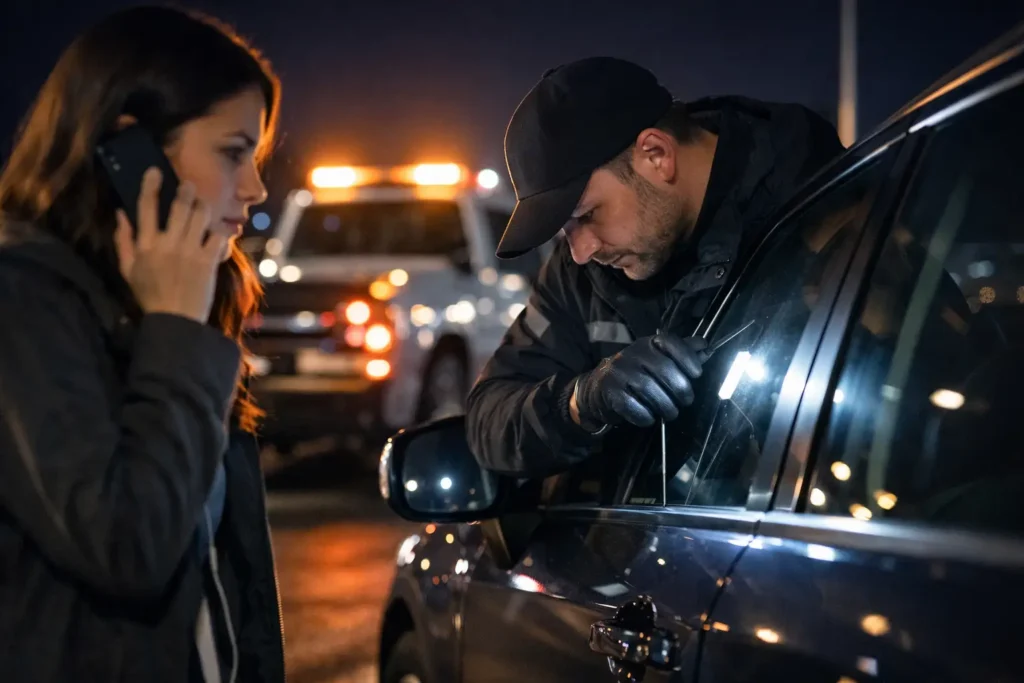
A locked car feels very different at 1:00 a.m. than it does outside a grocery store at noon. Whether you are stuck in a downtown Toronto parking garage, outside your home in North York, or on a quiet Scarborough street, car lockout help at night should start with safety – not with forcing a door open.
The right response is usually quick and straightforward: move to a safer spot if you can, confirm your location, and call a professional roadside provider with 24/7 dispatch. A trained lockout technician can open most vehicles without damaging the door, glass, weather seals, or locking mechanism. That matters because a rushed DIY attempt can turn a simple lockout into an expensive repair.
What to Do During a Nighttime Car Lockout
First, take a breath and look around. If you are in a traffic lane, on a highway shoulder, or in an area where you feel unsafe, get yourself away from moving vehicles and into a visible, well-lit place when possible. Turn on your hazard lights if the vehicle is accessible and safe to approach.
Call emergency services right away if a child, pet, vulnerable passenger, or anyone needing medical care is locked inside the vehicle. Do not wait for standard roadside service in that situation. Tell the dispatcher exactly what is happening, where the car is parked, and whether the vehicle is running.
If no one is trapped inside, gather the details a roadside dispatcher needs: your exact location, vehicle year, make, model, color, and a callback number. In a large parking structure, the level, section, entrance, and nearby store or elevator can save valuable time. On a Toronto street, note the nearest intersection, landmark, or address rather than relying only on a neighborhood name.
Keep your phone charged if possible. If your battery is low, avoid repeated calls to friends who may not be able to help. Make one clear call to a 24/7 roadside service, confirm the estimated arrival process and pricing, then stay alert for the technician.
Why You Should Not Force the Door Open
It is tempting to try a coat hanger, shoelace, wedge, or online trick when your keys are visible on the seat. Modern vehicles are not designed for those methods. Many have side-curtain airbags, sensitive wiring, electronic locks, reinforced door frames, and weather stripping that can tear or fail to seal properly after being pulled apart.
Breaking a window is rarely the answer. Glass creates an immediate injury risk, exposes the vehicle to theft and weather, and often costs far more than a professional lockout service. Even when a window appears to be the fastest option, it can leave you unable to drive safely or secure the vehicle afterward.
Professional technicians use vehicle-appropriate entry tools and methods. The goal is not simply to get the door open. It is to restore access without causing damage that you discover days later, such as wind noise, a leaking door seal, a malfunctioning lock, or a scratched window frame.
Car Lockout Help at Night Is About More Than Opening a Door
Nighttime lockouts often come with extra pressure. Public transit may be limited, temperatures can drop quickly, and the street or lot may be nearly empty. Reliable service means knowing that someone is coordinating a response while you wait, rather than leaving you to search through vague listings and hope a driver answers.
A professional dispatcher should ask practical questions, not make you guess. They should confirm your vehicle information, the nature of the lockout, your location, and any immediate safety concern. They should also explain what to expect when the operator arrives, including identification and the need to verify that you are authorized to access the vehicle.
That verification protects everyone. Have your driver’s license, registration, insurance card, or another form of proof available if it is outside the car or accessible digitally. If your documents are locked inside, tell the dispatcher before the technician arrives. There are often reasonable ways to verify ownership, but clear communication prevents delays.
Emergency Roadside Service by South Toronto provides 24/7 lockout support across Toronto and surrounding GTA neighborhoods, with trained operators focused on fast dispatch, careful vehicle entry, and clear service communication.
Where to Wait Safely for the Technician
Where you wait depends on the location. If you are outside a business that is still open, stay near the entrance or ask staff if you may wait inside. In a condo garage, choose a camera-covered lobby or security desk when available. At a gas station, remain close to the store rather than standing between parked vehicles.
On a highway or busy road, stay far from traffic. If you cannot safely move away from the vehicle, remain inside with the doors locked and seat belt on, provided the car is in a safe position and not at risk of being struck. Do not stand beside the vehicle on the traffic-facing side.
Trust your instincts. If someone approaches and makes you uncomfortable, move toward people, light, or security. A legitimate roadside operator will identify themselves and should already have your vehicle and location details from dispatch. You do not need to open a car door or share extra personal information with a stranger while waiting.
What Affects Night Lockout Response Time
No honest provider can promise the same arrival time for every call. It depends on traffic conditions, weather, operator availability, your exact location, and whether the vehicle is in an easy-to-reach area. Downtown congestion, a snowstorm, a remote industrial area, or a vehicle parked behind a gated entrance can all affect dispatch.
You can help reduce delays by being precise. Say whether you are in a garage with height restrictions, whether the car is in a private lot, and whether a gate code or building access is required. If you must move from the original spot for safety, call back immediately with the new location.
Be cautious of a quote that sounds unusually low but leaves out service fees, after-hours charges, or the type of vehicle involved. Ask for transparent pricing before authorizing service. A trustworthy provider will explain the expected cost clearly and tell you if the situation could require anything beyond a standard lockout.
Special Situations That Need a Different Response
Some lockouts are not routine. A key fob may have a dead battery, the vehicle battery may be drained, or a key may be damaged inside the lock. In those cases, opening the door may be only the first step. A jump start, key fob battery replacement, towing, or dealership support may still be needed depending on the vehicle.
Luxury vehicles, EVs, commercial vans, and newer models with advanced security systems can require specific procedures. Tell dispatch if the vehicle has a push-button start, keyless entry, aftermarket alarm, or unusual door configuration. This helps send an operator prepared for the job instead of creating a second wait.
If your keys were stolen rather than locked inside, prioritize personal safety and report the theft when appropriate. Once you regain access, consider moving the vehicle to a secure location and contacting your insurer or dealer about reprogramming keys. Opening the vehicle does not solve the security risk of a missing key.
Prevent the Next Late-Night Lockout
You cannot prevent every lockout, but a few habits make a difference. Keep a spare key in a secure, deliberate location rather than hiding one loosely on the vehicle. Replace weak key fob batteries before they fail. Before closing the door, especially when unloading groceries, delivery equipment, or a child seat, make a quick check for your keys and phone.
For families and fleet drivers, designate one backup contact who has access to a spare key. For anyone who drives through different parts of Toronto after dark, save a dependable 24/7 roadside number before an emergency happens. Searching while stressed, cold, or standing in an unfamiliar lot is never ideal.
A nighttime lockout does not need to become a dangerous or costly ordeal. Stay visible, avoid damaging the vehicle, give dispatch accurate details, and choose professional help that treats your safety and your time as urgent. The best next step is simple: get to a safer place, make the call, and let a trained operator handle the door.