
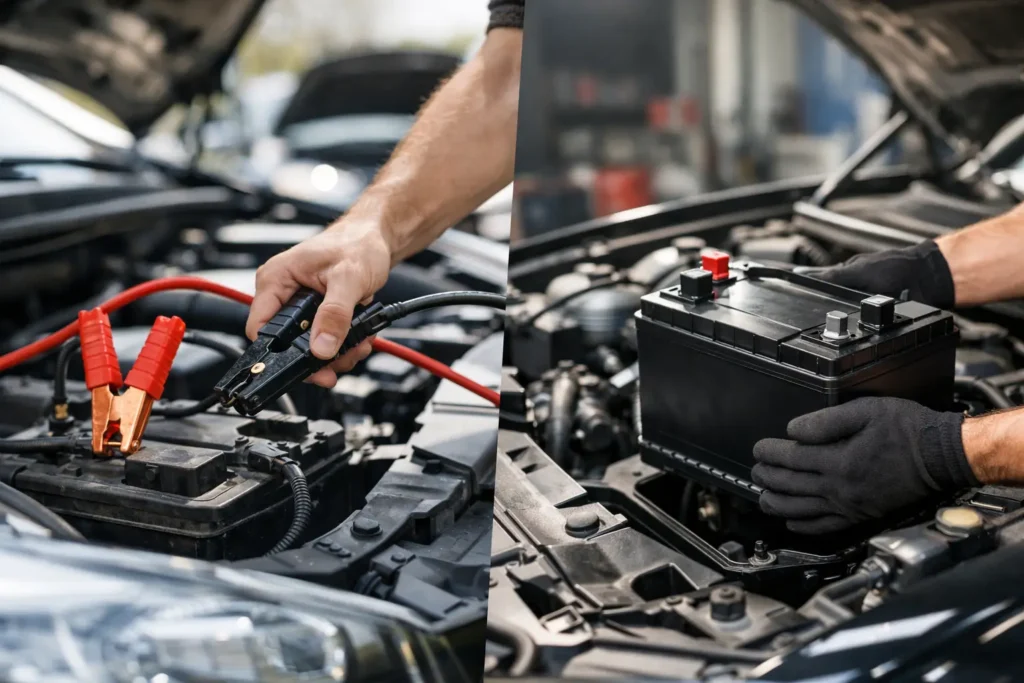
A dead battery can stop your day before it starts. When you are parked outside work, stranded in a Toronto lot, or sitting in your driveway before an early appointment, the real question is not just how to get moving. It is jump start vs battery replacement: does your vehicle need a quick boost, or is the battery no longer dependable enough to keep?
A jump start may get the engine running in minutes, but it is not always a repair. Knowing the difference can help you avoid getting stranded again later that day, especially during a cold Toronto morning or a busy commute.
When a Jump Start Is the Right Call
A jump start is often the right first step when your battery is drained but still healthy. This can happen after leaving interior lights on, using accessories with the engine off, or parking a vehicle for several days without driving it. In these situations, the battery may simply need a boost and enough driving time for the charging system to restore some of its power.
Signs that a jump start may be enough include a slow crank, dim dashboard lights, clicking when you turn the key, or no response after an accidental power drain. If the vehicle starts normally after a boost and continues starting reliably over the next few days, the battery may still have useful life left.
However, do not assume a successful jump means the issue is solved. A battery can accept enough power to start once, then fail again after you shut the engine off. If you need repeated boosts, treat that as a warning, not bad luck.
For drivers who need help now, a professional roadside technician can safely assess the situation, provide a jump start, and help you decide whether it is safe to continue driving. Fast, reliable assistance matters when you are stuck in traffic, parked in an underground garage, or trying to get home after dark.
Jump Start vs Battery Replacement: The Key Difference
A jump start supplies temporary power from another vehicle or a portable booster pack. It gives your starter enough energy to turn the engine over. It does not restore a weak battery to like-new condition, and it cannot correct an internal battery failure.
Battery replacement addresses the source of the problem when the battery can no longer hold a dependable charge. Most conventional car batteries last roughly three to five years, although severe winter weather, short trips, frequent idling, and heavy accessory use can shorten that lifespan.
The choice often comes down to one question: did something drain a good battery, or has the battery reached the end of its service life?
If you left a light on overnight and the battery has otherwise performed well, a jump start is usually reasonable. If the battery is several years old, has been slow to start for weeks, or dies again soon after being boosted, replacement is usually the safer decision.
Signs Your Battery Likely Needs Replacement
A battery rarely fails without giving some warning. Pay attention if your vehicle has started more slowly than usual, especially after sitting overnight. You may also notice headlights dimming at idle, electronics resetting, warning lights appearing, or a clicking sound instead of a normal engine crank.
Other warning signs are more obvious. A swollen battery case, corrosion around the terminals, a sulfur or rotten-egg smell, or leaking fluid calls for immediate attention. Do not try to jump a visibly damaged battery. Keep clear of it and arrange professional help.
Consider replacement if any of these situations apply:
- The battery is more than three to five years old and has become unreliable.
- You have needed more than one jump start in a short period.
- The vehicle dies again shortly after a jump and a normal drive.
- A battery test shows low capacity or a failed cell.
- The battery case is cracked, bulging, leaking, or badly corroded.
Replacing a failing battery before it leaves you stranded can be less stressful and less expensive than dealing with a no-start emergency at the worst possible time.
A Dead Battery Is Not Always the Battery’s Fault
A vehicle that will not start may have a battery issue, but the battery is not always the cause. The alternator charges the battery while the engine is running. If the alternator is failing, a new battery may start the car temporarily but will eventually drain because it is not being recharged.
Loose or corroded battery connections can also prevent power from reaching the starter. In some cases, the starter motor itself is the problem. A parasitic electrical drain, such as a malfunctioning module or accessory staying on after the car is parked, can repeatedly drain even a new battery.
Here is why a professional assessment matters. If the engine starts with a jump but stalls soon after, if the battery warning light stays on while driving, or if the lights become dimmer as you drive, do not keep pushing your luck. Pull over safely and arrange towing or roadside support. Continuing to drive with a charging-system problem can leave you stopped in an unsafe location.
What to Do While You Wait for Help
Safety comes before speed. If your vehicle will not start, turn on hazard lights if possible and move out of active traffic only if the vehicle can be moved safely. In a parking lot or garage, make sure you are not blocking traffic before opening the hood.
Avoid repeated start attempts. Each attempt pulls more power from an already weak battery. Turn off lights, climate controls, chargers, and other accessories while waiting. If you have jumper cables but are not fully confident using them, wait for trained help. Incorrect connections can damage sensitive electronics, create sparks, or cause injury.
This caution is especially relevant for hybrid and electric vehicles. Their 12-volt batteries can still go dead, but high-voltage systems require vehicle-specific procedures. Never assume a traditional jump-start method is safe for every vehicle. A qualified operator can identify the correct approach and arrange EV towing when needed.
How Cold Toronto Weather Changes the Decision
Winter is hard on batteries. Low temperatures reduce available battery power while making the engine harder to start. A battery that seemed acceptable during mild weather can suddenly struggle when temperatures drop below freezing.
If your car needs a boost only after an unusually cold night, the battery may still be serviceable, but it deserves testing. If it has needed several winter boosts, replacement is often the practical choice. Waiting for the next deep freeze can turn a small warning into a missed shift, delayed delivery, or family travel problem.
Short drives can make winter issues worse. Starting the engine uses a significant amount of power, and a quick five-minute trip may not give the alternator enough time to recharge it. If you mostly take short trips, have the battery and charging system checked before winter rather than waiting for a no-start situation.
Choose the Fix That Keeps You Moving
A jump start is a fast solution for a one-time drain. Battery replacement is the better answer when the battery is aging, damaged, or repeatedly unable to hold a charge. Neither option should be treated as a guess when the vehicle is showing signs of an alternator, starter, or electrical issue.
Emergency Roadside Service by South Toronto provides 24/7 roadside support for drivers across Toronto and surrounding neighborhoods. A licensed, insured operator can help you get a safe jump start, assess obvious battery concerns, and determine whether towing is the smarter next move. Clear communication and prompt dispatch help take the uncertainty out of an already stressful stop.
If your car is giving you repeated warning signs, do not wait for the next parking lot, snowstorm, or late-night drive to force the decision. Get the battery checked while you still have control over where and when the repair happens.