
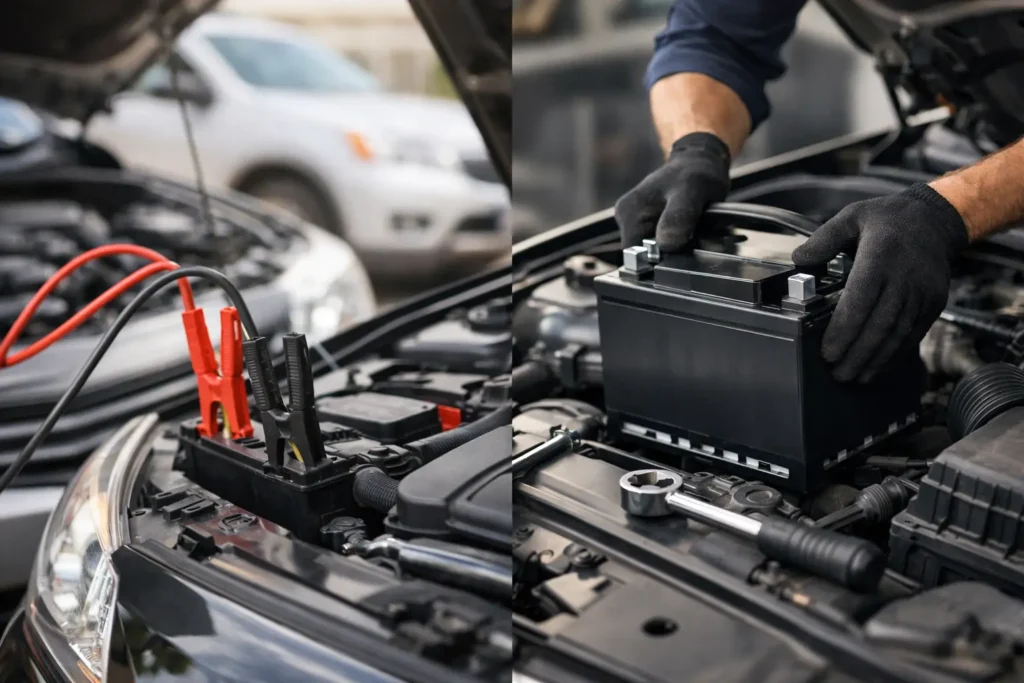
A dead battery can turn a normal commute into an immediate roadside problem. The jump start vs replacement decision matters because a jump start may get you moving right now, but it will not fix a battery that is worn out, damaged, or unable to hold a charge. If your car will not start in Toronto or across the GTA, the priority is getting to a safe place first, then determining what caused the failure.
A reliable roadside technician can provide a proper jump start, inspect obvious warning signs, and help you decide whether it is safe to drive or smarter to replace the battery before the next breakdown. There is no benefit in guessing when you are stuck in a parking lot, driveway, or on the shoulder of a busy road.
Jump Start vs Replacement: The Basic Difference
A jump start supplies temporary power from another battery or a portable booster. It gives your vehicle enough electricity to crank the engine when your battery is too weak to do it alone. Once the engine runs, the alternator begins recharging the battery while you drive.
Battery replacement solves a different problem. It is needed when the battery has reached the end of its service life, has an internal fault, has physical damage, or repeatedly loses its charge. A replacement battery gives your vehicle a dependable power source again. A jump start only buys time.
The key question is not simply, “Will the car start?” It is, “Why did the battery go dead?” Leaving the interior lights on for a few hours is very different from a battery that dies every few days with no clear explanation.
When a Jump Start Is Usually Enough
A jump start can be the practical solution when the battery drained because of a one-time event. Maybe a dome light was left on, a door did not close fully, or the vehicle sat unused during a cold stretch. If the battery is otherwise healthy, it may recharge normally after the vehicle runs long enough.
A recently installed battery that goes dead once may also only need a boost. The same can be true after an unusually short series of trips, especially in cold weather. Starting a vehicle takes a large amount of power, and brief drives may not give the alternator enough time to restore that energy.
After a successful jump start, do not shut the engine off immediately. Drive the vehicle for at least 20 to 30 minutes when it is safe to do so. Avoid adding heavy electrical demand during that time, such as high-powered accessories, if possible. Then pay close attention to how the vehicle starts the next time.
If it starts quickly and continues to do so over the following days, the issue may have been a simple drain. If it hesitates again, cranks slowly, or needs another boost, it is time for battery testing rather than repeated jump starts.
Signs Your Battery Needs Replacement
Most car batteries do not fail without warning. They often become less reliable over weeks or months, particularly during winter temperature swings. A battery that is several years old deserves extra attention, even if it has managed to start the car until now.
Replacement is more likely when you notice several warning signs together:
- The engine cranks slowly or takes multiple attempts to start.
- You need more than one jump start within a short period.
- Headlights dim, dashboard lights flicker, or power accessories act unusually weak.
- The battery case is swollen, cracked, leaking, or has heavy corrosion around the terminals.
- The battery is older than its expected service life, often around three to five years depending on use and conditions.
A swollen or leaking battery is not a situation to manage with another boost. Do not touch leaking material or attempt to force a damaged battery into service. Arrange professional help and replacement as soon as possible.
A Dead Battery Is Not Always the Battery’s Fault
Replacing a battery that is not actually the problem can cost you money and leave the real issue unresolved. The alternator, battery cables, starter, or an electrical drain can all create similar symptoms.
The alternator recharges the battery while the engine runs. If it is failing, a brand-new battery may start the vehicle once or twice and then go dead again. Warning lights on the dashboard, dimming lights while driving, or a burning smell near the engine can point to a charging-system problem. If the battery warning light comes on while you are driving, pull over safely when possible and seek assistance rather than assuming the car will make it home.
Loose, corroded, or damaged battery terminals can also prevent power from reaching the starter. White, blue, or green buildup around the terminals is a warning sign. In some cases, careful cleaning and securing the connections resolves the issue. In others, the cable itself may need repair.
Then there are parasitic drains. An aftermarket device, faulty module, trunk light, or electrical fault may continue drawing power after the vehicle is turned off. If a tested battery and alternator are both healthy but the battery keeps dying overnight, the vehicle needs further diagnosis.
What to Do When Your Car Will Not Start
Start with safety. If you are in traffic, on an expressway shoulder, or in an area where your vehicle is hard to see, stay alert to passing cars and avoid opening the hood until it is safe. Turn on hazard lights if they work, and move away from traffic only when doing so does not create another risk.
Before requesting a jump start, check whether the dashboard lights come on and whether the engine makes any sound. A rapid clicking noise may indicate a weak battery, but a single hard click or no response at all can have other causes. You do not need to diagnose the car yourself, but these details help a roadside technician assess the situation faster.
Avoid repeated start attempts. They can drain the remaining battery power and may overheat or strain the starter. Do not use a jump start if the battery is visibly cracked, leaking, or swollen. Also, never connect jumper cables by guesswork. Incorrect connections can damage sensitive electronics and create a serious safety hazard.
How Professional Roadside Help Protects Your Vehicle
A proper jump start is more than attaching cables and hoping for the best. The vehicle must be approached safely, the battery terminals identified correctly, and the connection sequence handled with care. Modern vehicles have sensitive electrical systems, and some have designated jump points under the hood rather than easily accessible battery terminals.
Professional roadside help is especially useful if you are parked in an underground garage, stuck in a crowded lot, driving an EV or hybrid, or dealing with a vehicle that has died more than once. Hybrid and electric vehicles have different battery systems, and the high-voltage battery should never be handled as a standard 12-volt car battery issue.
Emergency Roadside Service by South Toronto provides fast roadside support for drivers dealing with no-start situations across Toronto and surrounding areas. A trained operator can help you get moving safely, identify whether the battery appears to be the likely cause, and arrange towing if the vehicle should not be driven.
Do Not Let a Temporary Boost Create a Bigger Problem
A jump start is often the right immediate answer, particularly when you need to get home, get to work, or move your vehicle out of an unsafe location. But it should not become a weekly routine. Repeated boosts can leave you stranded at the worst possible time, including during a storm, late at night, or far from a safe place to stop.
If the battery dies again after a jump start, schedule a battery and charging-system test before relying on the vehicle for another long trip. If it starts normally but you are unsure why it went dead, monitor it closely over the next few days. Note whether lights were left on, how long the car sat, and whether starting performance changes.
When your car will not start, focus on the next safe step, not the fastest guess. Get a proper boost if the battery is simply drained, replace it when it can no longer be trusted, and call for roadside assistance when you need calm, capable help at the curb.