Key Takeaways: A Checklist for Toronto Drivers
- Size Matters: Standard flatbed trucks cannot fit into most Toronto condo and mall garages (typically capped at 6ft or 1.9m).
- Specialized Fleet Required: You need a Toronto Towing Service with specific low-profile trucks to access P1, P2, and lower levels safely.
- Prevent Damage: Using the wrong truck risks scraping your vehicle’s undercarriage or damaging the building’s infrastructure.
- Know Your Rights: Always ask for the rate and ensure the company adheres to the TSSEA (Towing and Storage Safety and Enforcement Act).
- Not Always a Tow: Many underground issues only require a Battery Boost or Lockout Service—ask for that first!
It is the nightmare scenario every Toronto driver dreads: You walk down to P3 in your condo building or the CF Toronto Eaton Centre, turn the key, and… nothing. Or worse, your car has stalled on the ramp, leaving an underground lot in Liberty Village or North York.
Panic sets in. You search for a “tow truck,” but there is a crucial catch: Most standard tow trucks are too tall to help you.
If you are stuck beneath the city, you don’t just need a tow; you need a specialist. Here is why choosing the right Tow Truck Toronto provider is critical for underground rescues and how to get your vehicle out safely.
The “Low Ceiling” Problem: Why Toronto Towing is Unique
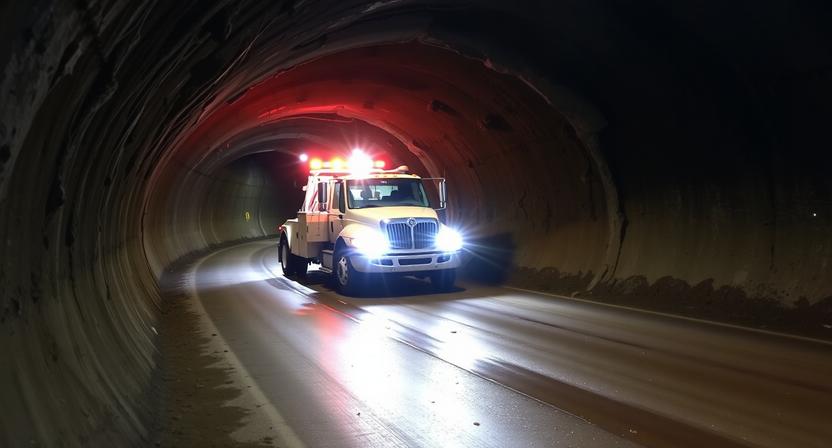
Toronto is a vertical city. From the Financial District’s office towers to the thousands of modern condos stretching from Etobicoke to Scarborough, our parking is increasingly going underground.
The typical overhead clearance in most of these residential and commercial garages ranges between 6 feet (1.8 meters) and 6’8” (2.0 meters).
A standard flatbed or even many wheel-lift tow trucks have an average cab height that often exceeds these limits.
When you search for a Toronto Towing Service, you must specify that you are underground. Otherwise, an ill-equipped driver might arrive, realize they can’t enter, and leave you waiting for a second, more specialized dispatch. This wastes valuable time and adds unnecessary stress.
The Solution: Low-Clearance Expertise and Equipment
At Emergency Roadside Service by South Toronto, we understand the city’s infrastructure challenges. That is why we maintain a diverse fleet that includes Low-Clearance Wheel-Lift Trucks specifically for underground extraction.
These agile vehicles are the “special ops” of the towing world:
1. Navigating the Tight Squeeze
- Height Clearance: Our specialized trucks are built lower to the ground, allowing them to pass under 6-foot clearance bars easily.
- Maneuverability: Condo pillars and tight corners are notoriously challenging. Our trucks are single-cab, which provides a much tighter turning radius to navigate narrow ramps and aisles, unlike longer crew-cab models.
- Damage Prevention: Using a low-clearance truck prevents the tow body from making contact with overhead pipes, vents, or even the vehicle you are recovering.
2. Safe Towing for AWD and Luxury Vehicles
Even in a tight space, vehicle safety is paramount.
- Wheel-Lift Systems: These systems lift the vehicle by the wheels, not the frame, reducing the risk of body damage.
- Using Dollies: If you drive an All-Wheel Drive (AWD) vehicle (common in Toronto) or a luxury car, we use specialized tow dollies to ensure all four wheels are lifted off the ground. This prevents transmission damage, which is a major concern when towing AWD vehicles improperly.
The Law: Your Rights and Costs Under TSSEA
When a specialized vehicle is required, some towing companies may attempt to overcharge. As a professional, compliant Toronto Towing Service, we operate under the Towing and Storage Safety and Enforcement Act (TSSEA).
This is critical information for any driver stuck underground:
- Transparent Rates: Under TSSEA, all fees must be disclosed before the tow begins. You have the right to request a copy of the maximum rate schedule.
- Specialized Service Fee: The province recognizes “Underground Extraction” as a specialized recovery service. While the base tow rate applies, there is a maximum hourly fee for using a Specialized Underground Extraction Vehicle (often around $275–$300 per hour, depending on the operator’s registered maximum rate). A trustworthy operator will quote you a clear total price, not just a base rate.
- No Pressure: You have the absolute right to choose your towing company and destination. Never feel pressured to use the first Tow Truck Toronto driver who shows up, especially if they cannot prove they have the proper low-clearance vehicle.
Case File: The North York P5 Rescue
A prime example of our expertise occurred recently in a high-rise residential tower near Yonge and Sheppard.
The Situation: A driver’s electric vehicle (EV) had its auxiliary battery die on the fifth subterranean level (P5). The vehicle could not shift into neutral, meaning it had to be towed with its wheels locked. The clearance was only 6.5 feet.
The Challenge: The tight corners and limited space meant a standard truck was impossible. Because the EV was “stuck” (not free-rolling), it required a precise, minimal-contact extraction.
Our Solution: We dispatched our lowest-profile, specialized wheel-lift unit. Our experienced operator secured the front wheels, used the wheel-lift to raise the vehicle, and then expertly navigated the 5 steep, winding ramps up to street level, all while protecting the EV’s battery pack and sensitive undercarriage. The whole process was completed safely and within the estimated time, getting the driver to their desired repair shop.
Before You Call: Your Underground Towing Checklist
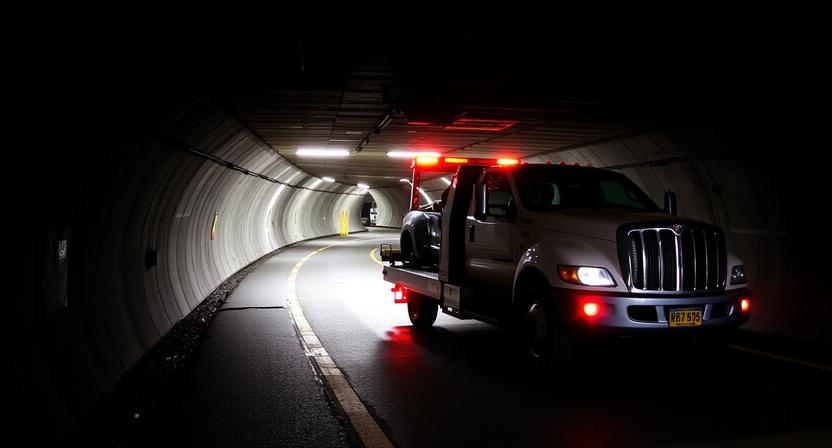
If you are stuck in an underground garage, gathering this information will significantly speed up the dispatch process and improve the outcome:
- Note Your Exact Location: Which level are you on (P1, P2, P3, etc.)? Are you near a specific landmark (e.g., near the elevator, Section D, next to the Security office)?
- Confirm the Clearance: Is the posted height clearance 6 feet, 6.5 feet, or 7 feet? This immediately tells the dispatcher which truck to send.
- Determine Your Car’s Status: Is the car completely dead? Can it roll into neutral? Is it an AWD/4WD vehicle?
- Confirm Access: Can the tow truck access the parking garage 24/7, or does it require a key fob or a call to security?
- Check for Simple Fixes: Before paying for a specialized tow, ask if a simple Jump Start is all you need. We carry heavy-duty battery packs that work even in the coldest temperatures.
The South Toronto Promise: Expert Underground Towing
Getting stuck underground can feel overwhelming—but it doesn’t have to be. With the right equipment and an experienced local team, your vehicle can be recovered safely and efficiently.
At Emergency Roadside Service by South Toronto, we specialize in underground towing across condos, malls, and high-rise buildings throughout the city. Our low-clearance fleet and trained operators ensure your vehicle is handled properly, no matter how deep you are.
Stuck on P3 or P5 right now? Call (647) 568-9291 for 24/7 underground towing in Toronto. Tell our dispatcher you’re underground, and we’ll send the right truck the first time.
Frequently Asked Questions
1. Why can’t regular tow trucks access underground parking in Toronto?
Most Toronto condos and malls have height limits between 6 and 6.5 feet. Standard flatbed and wheel-lift tow trucks are usually taller than this. Attempting entry risks damage to the truck, your vehicle, and garage infrastructure, making specialized low-clearance towing essential.
2. What is low-clearance towing, and when is it required?
Low-clearance towing uses specially designed tow trucks that fit into underground garages with limited height. It’s required when vehicles break down in condo parking, shopping mall garages, or underground ramps where standard tow trucks cannot safely enter or maneuver.
3. Can my car be damaged if the wrong tow truck is used underground?
Yes. Using an incorrect tow truck can scrape the vehicle’s undercarriage, damage bumpers, or hit overhead pipes and concrete beams. It can also cause transmission damage, especially in AWD or luxury vehicles, making professional underground towing critical.
4. Are AWD or luxury vehicles safe to tow from underground garages?
Yes, but only with proper equipment. Certified Toronto towing companies use wheel-lift systems with dollies to lift all four wheels. This prevents drivetrain and transmission damage, which is especially important for AWD, EVs, and high-end vehicles.
5. Is underground towing more expensive in Toronto?
Underground towing is considered a specialized service under Ontario law. While base towing rates apply, a regulated hourly fee may be added for low-clearance equipment. Under TSSEA rules, all pricing must be disclosed upfront before the tow begins.
6. What are my rights under TSSEA for underground towing?
You have the right to clear pricing, written consent, and an itemized invoice. Tow operators must disclose rates before starting work, show certification, and allow you to choose the towing company and destination without pressure.
7. Can I refuse a tow truck that cannot enter my underground garage?
Yes. If a tow truck arrives without the proper low-clearance equipment, you are not obligated to proceed. You can request a different provider that has underground-capable trucks. Choosing the right equipment protects both your vehicle and the building.
8. Does a car in an underground garage always need to be towed?
Not always. Many underground issues can be solved with a battery boost, lockout service, or minor roadside assistance. Asking for these services first may save time and money if the vehicle doesn’t require full towing.
9. What information should I provide when requesting underground towing in Toronto?
Share the parking level, height clearance, vehicle type, and whether the car can roll. Mention if the vehicle is AWD or electric and confirm garage access requirements. This helps dispatch send the correct low-clearance truck immediately.
10. Why should I choose a Toronto-based towing company for underground rescues?
Local Toronto towing companies understand condo layouts, clearance limits, and city infrastructure. They maintain specialized low-profile fleets and follow TSSEA regulations, ensuring faster response, legal compliance, and safer underground vehicle recovery.