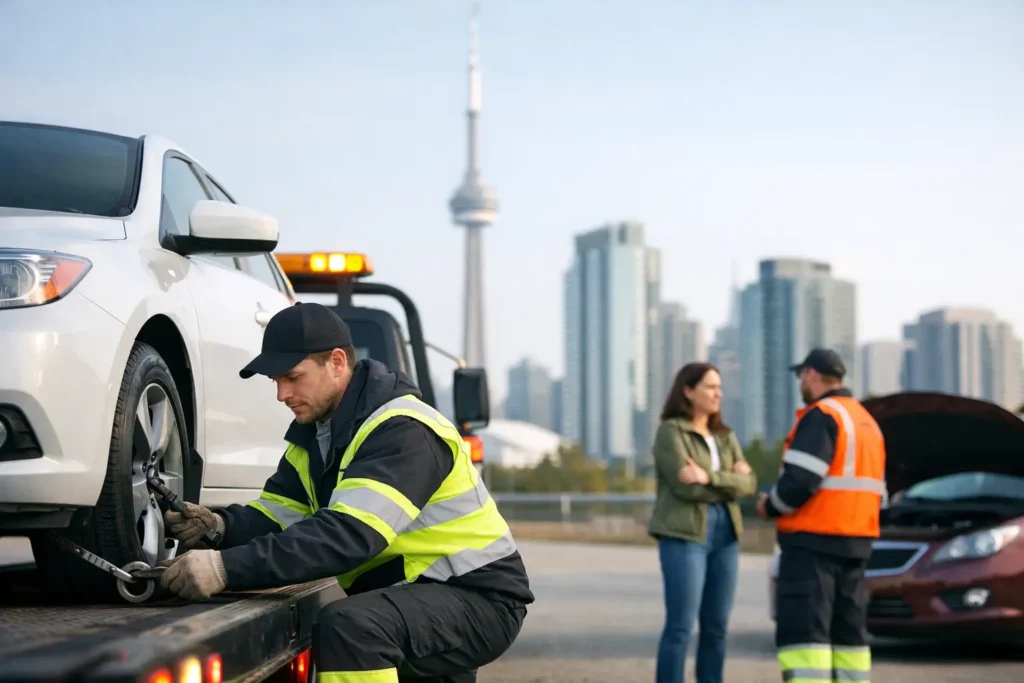
A dead battery on the Gardiner at night. A flat tire in Scarborough before work. Keys locked in the car outside a grocery store in North York with kids in the backseat and a schedule already falling apart. When you need roadside assistance Toronto drivers can rely on, speed matters, but so does who shows up.
The right roadside service does more than get you moving again. It lowers the stress, explains the next step clearly, and handles the job safely without wasting time. In a city as busy and spread out as Toronto, that combination is what separates real emergency support from a name on a list.
What roadside assistance in Toronto should actually do
A lot of drivers hear “roadside assistance” and think it means one simple service. In practice, it covers several urgent problems that can stop a trip without warning. The most common calls are for jump starts, lockouts, flat tire changes, fuel delivery, and towing after a breakdown or collision.
What matters is not just whether those services exist, but how they are delivered. If your battery dies in Downtown Toronto, you need quick dispatch and a technician who arrives prepared. If you are stuck in Etobicoke with a damaged tire, you need someone who can change it safely or arrange towing if the wheel, suspension, or lug nuts are compromised. If your EV needs transport, you need proper handling, not guesswork.
That is why professional roadside support should be available 24/7, clearly priced, and operated by licensed, bonded, and insured crews. During a breakdown, drivers should not have to chase answers.
Why fast roadside assistance Toronto calls for local dispatch
Toronto traffic changes by the hour. A truck that can reach Parkdale in 15 minutes at one time of day might take much longer during rush hour or after an event. Local dispatch matters because it improves response planning, coverage, and communication.
A company that regularly serves Downtown, Midtown, East York, North York, Scarborough, and Etobicoke understands where delays happen and how to route around them. That local knowledge helps when every minute on the shoulder or in a blocked parking lot feels longer than it should.
It also matters for safety. If your car is stalled in an active lane, on a highway shoulder, or in poor weather, you want a team that treats the call like an urgent traffic exposure issue, not a routine appointment. Fast dispatch is not just convenient. Sometimes it is the difference between a stressful wait and a dangerous one.
The most common roadside problems and what to expect
Dead battery or no-start issue
Batteries fail without much warning, especially in extreme temperatures. Sometimes the issue is a weak battery. Sometimes it is a charging system problem that looks similar at first. A proper jump start can get the vehicle running, but a professional operator should also help you understand whether driving away is realistic or if towing is the safer move.
If the engine starts and then dies again, or electronics are acting strangely, the problem may go beyond the battery. That is where experience matters. Quick fixes are useful, but false confidence can leave you stranded a second time.
Flat tire or blowout
Not every flat is a simple tire change. If the spare is missing, underinflated, or your vehicle has wheel damage, roadside tire service may turn into a tow. This is common after pothole strikes and curb impacts around the city.
A good roadside operator will not force a temporary fix when the vehicle is unsafe to drive. That honesty saves time and protects your car from more damage.
Lockout service
Lockouts happen fast. Modern keys, push-button start systems, and automatic locking features catch plenty of careful drivers off guard. The goal is to regain access without damaging the door, weather stripping, window, or lock mechanism.
This is one area where cheap, rushed help can cost more later. Professional lockout service should be controlled, careful, and vehicle-appropriate.
Out of gas or diesel
Running out of fuel is frustrating, but it does not need to ruin the day. Fuel delivery is often the fastest way back on the road, especially when the vehicle is otherwise fine. The key is accurate dispatch and clear communication so you know what is coming and when.
Breakdown or accident towing
Sometimes roadside help cannot end with a restart or quick repair. If the transmission fails, the engine overheats badly, steering feels unstable, or the car was involved in a collision, towing is the right next step.
Not all towing is the same. Some vehicles need flatbed towing. Some trucks require heavier-duty equipment. EVs often need handling that matches the manufacturer’s transport guidance. The right company should be able to make that call quickly and send the proper truck the first time.
What drivers should ask before booking service
When you are stuck, it is easy to accept the first number that answers. But a few clear questions can protect you from delays and surprise charges.
Ask how quickly they can dispatch to your area. Ask whether the rate is explained upfront. Ask what type of truck or roadside service is being sent. If your vehicle is low-clearance, all-wheel drive, electric, or heavily loaded, say that immediately.
It also helps to describe your location precisely. “Near Bloor and Dufferin” is better than “west end.” Mention whether you are in a parking garage, on a highway shoulder, in a laneway, or blocking traffic. Those details affect equipment choice and arrival planning.
A dependable company will answer directly. If the conversation feels vague, rushed, or evasive about pricing, that is a warning sign.
When roadside help is enough, and when towing is safer
This is where experience really counts. Some situations look minor but should not be treated as quick roadside fixes. A car that hit a deep pothole may have suspension or alignment damage even if the tire is changed. A vehicle that overheated could have cooling system failure that makes continued driving risky. After a collision, even small cosmetic damage can hide steering or wheel issues.
On the other hand, many problems can be handled on-site without unnecessary towing. A simple battery failure, lockout, or fuel shortage is often resolved quickly if the service arrives prepared.
The best roadside assistance Toronto providers do not upsell towing when it is not needed, and they do not send drivers back onto the road when the vehicle is unsafe. That balance matters.
Why professionalism matters during a breakdown
A roadside emergency is not just a mechanical problem. It is a pressure situation. You may be late, stranded with family, trying to protect a delivery route, or standing outside in bad weather with traffic moving too close.
That is why professionalism shows up in small moments. Clear updates from dispatch. A technician who explains what they are doing. Fair pricing that is discussed before the work starts. Equipment that matches the vehicle. Respect for your time and your safety.
Emergency Roadside Service by South Toronto is built around that kind of response – fast dispatch, honest service, and support that helps drivers feel in control again when the situation is anything but normal.
Roadside assistance Toronto drivers need at all hours
Breakdowns do not wait for business hours. They happen before sunrise, after midnight, during snow, in summer heat, and in the middle of weekend traffic. A service that only works well when conditions are easy is not enough for a city this busy.
Twenty-four-hour availability matters because the risk changes with the hour. At night, visibility and personal safety become bigger concerns. In winter, even a short wait without heat can become serious. For commercial drivers, every delay can mean missed deliveries and lost income. For families, it can mean a stressful and unsafe roadside wait.
Reliable roadside support should be built for those real conditions, not just the straightforward calls.
If you ever need help, the best move is simple: stay calm, move to a safer position if you can, turn on your hazard lights, and call a local team that can respond quickly and tell you exactly what happens next.