A winter breakdown can turn serious fast on the Gardiner, Highway 401, or a quiet Toronto side street. Snow reduces visibility, black ice removes traction, and cold drains batteries when you need them most. The best roadside tips for winter driving are not about fixing every problem yourself. They are about getting out of danger, staying warm, and making the right call before a small issue becomes a roadside emergency.
1. Get Your Vehicle Out of the Travel Lane If You Can
If your vehicle is still moving and you have control, focus on reaching the safest nearby location. A parking lot, gas station, wide shoulder, or side street is far better than stopping in an active lane. Slow down gradually, avoid sharp steering, and do not slam on the brakes on icy pavement.
On high-speed roads, a narrow shoulder is not automatically safe. If the vehicle cannot be moved without risking a collision, stay calm, turn on your hazard lights, and call for urgent assistance. Never stand beside traffic to inspect damage, change a tire, or wave down another driver.
Once you are stopped, keep your wheels pointed straight and apply the parking brake only if road conditions and your vehicle situation allow it. If you have been in a collision, do not move the vehicle unless it is safe and legally appropriate to do so.
2. Make Yourself Easy to See
Winter drivers may not see your vehicle until they are dangerously close, especially during blowing snow, freezing rain, or dark early evenings. Turn on hazard lights after stopping, keep exterior lights clear of snow, and use interior lights only when you need them to locate items or communicate with responders.
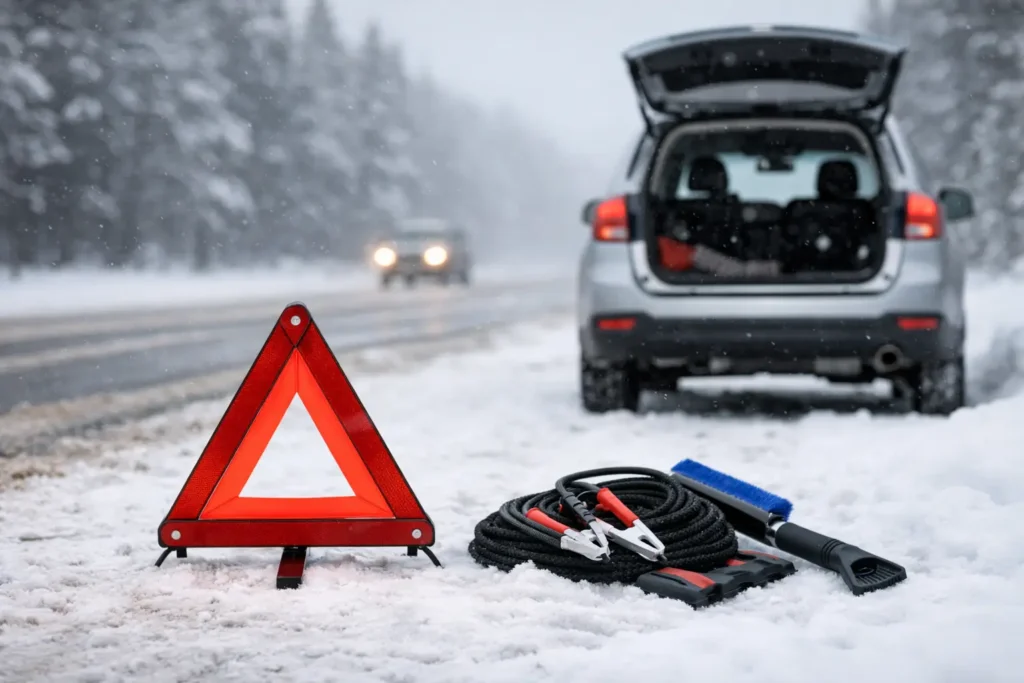
If you carry reflective triangles or road flares, use them only when it is safe to exit the vehicle and place them well away from traffic. On a busy expressway or in poor visibility, remaining inside with your seat belt fastened is usually safer than walking along the shoulder.
Your phone is part of your safety equipment. Share your location with dispatch using the nearest intersection, highway direction, exit number, landmark, or visible address. Saying “somewhere on the 401” can delay help. Saying “eastbound 401, just past the DVP exit, on the right shoulder” gives a towing operator a much better starting point.
3. Stay in the Vehicle Unless There Is Immediate Danger
A vehicle offers shelter from wind, snow, and passing traffic. Unless there is fire, smoke, a risk of being struck, or another immediate threat, stay inside with the doors locked and seat belts on. This is particularly important near fast-moving traffic, where walking for help can be far more dangerous than waiting for a professional.
Keep warm without creating a carbon monoxide risk. If the exhaust pipe is clear and conditions permit, run the engine only in short intervals for heat. Crack a window slightly, clear snow from around the tailpipe, and never idle in a garage, enclosed space, or deep snowbank where exhaust can build up.
If you are traveling with children, older adults, or pets, tell the dispatcher right away. It helps the roadside team understand the urgency and prepare for the situation.
4. Do Not Force a Stuck Vehicle Free
Spinning tires can dig a vehicle deeper into snow, overheat components, and leave you stranded in a worse position. If your tires lose traction, ease off the accelerator. Turn the steering wheel gently, remove snow from around the drive wheels if it is safe, and use traction material such as sand, cat litter, or traction mats if you have it.
Do not stand directly behind or in front of a vehicle while someone tries to rock it free. A sudden surge in traction can cause the vehicle to move unexpectedly. Avoid accepting a tow from an unprepared passerby as well. Improper tow straps, bad attachment points, and slick roads can damage both vehicles or injure someone nearby.
Sometimes the practical choice is to stop trying and arrange professional recovery. This is especially true if your vehicle is blocking traffic, resting in a snowbank, sitting on ice, or positioned near a ditch.
5. Treat Battery Trouble as a Safety Issue
Cold weather exposes weak batteries. A slow crank, clicking sound, dim dashboard lights, or repeated need for a boost are signs that your battery may be failing. If you have jumper cables and know how to use them safely, a jump start may get you moving. But it does not solve the cause of a drained or worn-out battery.
Never connect jumper cables if the battery is cracked, leaking, swollen, or frozen. Do not attempt a jump start beside moving traffic or in a location where you cannot safely position the vehicles. Hybrid and electric vehicles also have manufacturer-specific jump procedures, so guessing can be costly.
A professional jump start provides a safer option when conditions are poor, you are unsure of the connections, or the vehicle still will not start. If the engine runs after a boost but warning lights stay on, the issue may be more than the battery. Arrange a tow rather than risking another breakdown on the road.
6. Handle a Flat Tire Carefully in Snow and Ice
A flat tire on dry pavement is inconvenient. A flat tire on an icy shoulder can be dangerous. Before reaching for the spare, assess the location. If there is not enough room between your vehicle and traffic, if the ground is soft or uneven, or if visibility is poor, calling for a mobile tire change is the safer move.
If you can work safely, place the vehicle on firm, level ground and keep passengers away from traffic. Check that the spare is properly inflated before installing it. Many compact spare tires are designed only for short distances and lower speeds, so they should get you to a repair facility, not carry you through the rest of winter.
Do not ignore tire pressure warnings during cold snaps. Pressure drops as temperatures fall, reducing grip and increasing the chance of tire damage. Checking tire condition before a storm is easier than dealing with a blowout after dark.
7. Keep a Winter Roadside Kit Within Reach
Your emergency supplies should be inside the cabin or another accessible area, not buried beneath luggage and equipment. A useful kit includes more than a phone charger. Pack items that help you stay visible, warm, and mobile while you wait:
- A charged power bank and charging cable
- Warm blankets, gloves, hats, and extra socks
- A flashlight with fresh batteries
- A windshield scraper, small shovel, and traction aid
- Reflective gear, warning triangles, and a basic first-aid kit
- Water and nonperishable snacks
Adjust the kit for your usual trips. A downtown commuter may prioritize a power bank and warm clothing, while a delivery driver or family traveling outside the city may need additional water, medication, and supplies for longer waits.
8. Know When a Tow Is Better Than Another Attempt
There is no prize for getting a disabled vehicle home under its own power. If your car overheats, has steering damage, leaks fluid, will not shift correctly, has collision damage, or repeatedly stalls, continuing to drive can make the repair more expensive and put you at risk.
Electric vehicles need special consideration in winter. Reduced range, a damaged charging port, warning messages, or an underbody impact may require an EV-capable towing service. Tell dispatch the vehicle make, model, and whether it is electric, hybrid, all-wheel drive, or low-clearance so the right equipment arrives.
Emergency Roadside Service by South Toronto provides 24/7 roadside support across the GTA for situations that cannot wait, including towing, jump starts, lockouts, fuel delivery, mobile tire changes, and accident recovery. When you call, give the dispatcher your exact location, vehicle details, condition, and whether anyone needs urgent help. Clear information supports faster, safer dispatch.
9. Avoid the Mistakes That Create Bigger Winter Emergencies
The best roadside tips for winter driving also include knowing what not to do. Do not leave a disabled vehicle without considering whether it is safely parked. Do not run the engine continuously while snow blocks the exhaust. Do not use boiling water on a frozen windshield, since temperature shock can crack glass. And do not rely on cruise control when roads may be icy.
Before every winter trip, check fuel level, battery condition, tire tread, washer fluid rated for freezing temperatures, and weather alerts. Keeping the fuel tank above half full can also reduce the risk of fuel-line freeze and gives you more flexibility if traffic slows to a crawl.
A breakdown in winter is stressful, but your next step can be simple: protect the people in the vehicle, make the location clear, and get qualified help before conditions get worse.