A breakdown rarely happens at a convenient time. It happens on the Gardiner in traffic, on a side street in Scarborough after dark, or in a parking lot when you are already late. If you are wondering what to do after car breaks down, the right moves in the first few minutes can protect your safety, prevent more vehicle damage, and help you get roadside assistance faster.
The biggest mistake drivers make is reacting too fast or trying to force the car to keep moving. If your vehicle is losing power, overheating, making loud mechanical noises, or showing warning lights, your priority is not getting to your destination. It is getting yourself and your passengers somewhere safer and making a clear, informed decision about the next step.
What to do after car breaks down in the first few minutes
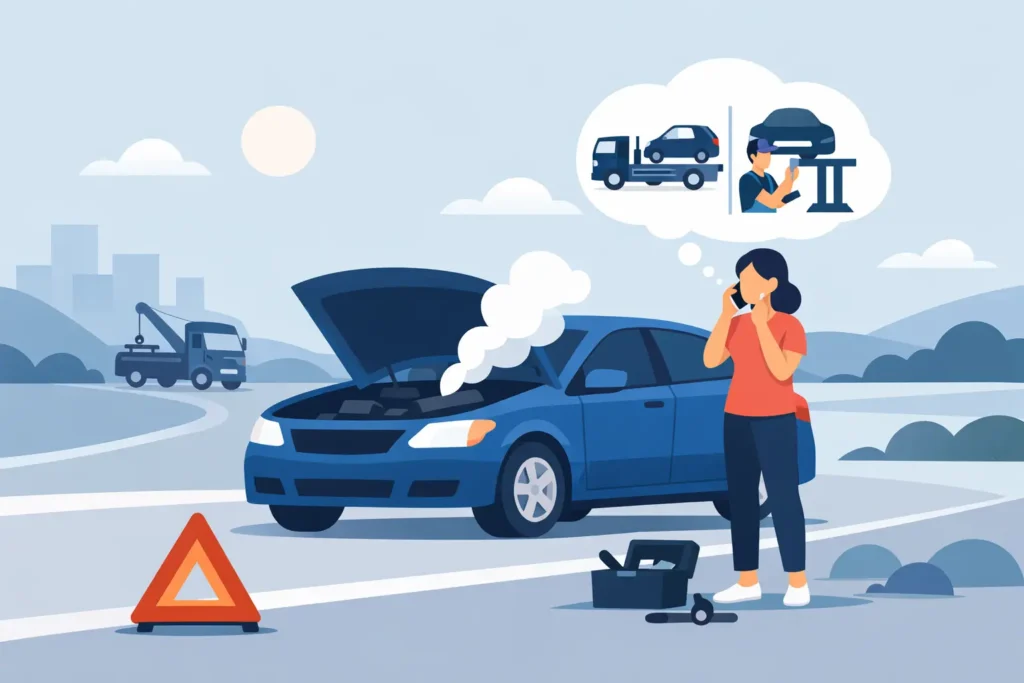
Start by staying calm and checking your surroundings. If the vehicle is still moving, signal right away and guide it to the shoulder, a nearby parking lot, or the safest possible area away from traffic. On busy Toronto roads, even a short distance matters, but do not keep driving if the engine is overheating, the steering feels wrong, or you suspect a tire, brake, or transmission problem.
Once stopped, shift into park, turn on your hazard lights, and take a breath. Those simple actions alert other drivers and reduce the chance of a secondary accident. If it is dark, raining, snowing, or visibility is poor, your hazards become even more important.
Now decide whether it is safer to stay in the vehicle or get out. It depends on where you are. If you are stopped on a high-speed road or narrow shoulder, staying inside with your seatbelt on is often the safer choice. If you are in a parking lot or well away from moving traffic, you may be able to exit carefully and wait at a safe distance.
Put safety ahead of quick fixes
Many breakdowns look minor at first. A flat tire, a dead battery, or a car that suddenly stalls can feel manageable. But roadside conditions change everything. A simple tire change at home is different from doing it inches from live traffic.
If you have emergency triangles or flares and it is safe to place them, use them to give approaching drivers more warning. Keep passengers, especially children, away from the road. If you smell fuel, see smoke, or suspect an electrical issue, move away from the vehicle and call for help immediately.
This is also the moment to avoid guesses. Do not open the radiator cap on an overheating car. Do not crawl under the vehicle. Do not keep restarting the engine if it is making grinding, clunking, or knocking sounds. Those attempts can turn a repairable issue into a much more expensive one.
Figure out what kind of breakdown you are dealing with
You do not need to be a mechanic, but a basic read on the situation helps. Listen to what the car did before it stopped. Did it crank but not start? Did the battery seem weak? Did one tire go soft or blow out? Did the temperature gauge rise? Did the steering suddenly get heavy?
That information matters when you call for service. A dead battery may need a jump start. A punctured tire may need a mobile tire change. Running out of gas calls for fuel delivery. A collision, suspension problem, overheating issue, or EV fault may require a tow, and sometimes a flatbed is the safer option.
If you drive an electric vehicle, be extra careful about assuming a regular tow will do. EVs often require specific handling to avoid drivetrain damage. The same goes for all-wheel-drive vehicles, low-clearance cars, motorcycles, and heavier commercial vehicles. The right equipment matters.
Who to call when your car breaks down
After you have secured the scene, call a professional roadside assistance or towing company. This is where speed, clear pricing, and proper dispatch matter. When you are stranded, you do not want vague arrival windows or confusion about what kind of truck is coming.
Be ready to give your exact location, your vehicle make and model, what happened, and whether you are in immediate danger. Landmarks help. Highway direction, nearest exit, major intersection, or parking lot details can all speed up dispatch. If your car is stuck underground, in a tight garage, or in a no-access area, mention that too.
A reliable roadside operator should be able to tell you what service makes sense based on the symptoms you describe. In the GTA, response time matters because traffic, weather, and road layout can turn a breakdown into a bigger problem fast. That is why many drivers prefer a local, 24/7 company such as Emergency Roadside Service by South Toronto when urgent help is needed.
What to do while waiting for roadside assistance
Once help is on the way, stay visible and stay alert. Keep your phone charged if possible and watch for updates. If conditions are unsafe, call emergency services as well, especially if your vehicle is blocking traffic or you are stranded in a dangerous location.
If someone you do not know stops to help, be polite but cautious. You can crack the window and let them know assistance is already coming. In most situations, it is better to wait for the dispatched professional than accept help from a stranger, particularly at night or in isolated areas.
Use the time to gather what you may need next. Have your license, registration, and insurance information ready. If a tow is likely, think about where the vehicle should go. Sometimes that is your home, but often a repair shop is the better choice. If the breakdown happened after a collision, document the scene and damage with photos if you can do so safely.
When you should not try to drive again
Some breakdowns tempt drivers into taking a chance. The engine cools down, the warning light disappears, or the car starts after a boost. That does not always mean it is safe to continue.
Do not drive if the brakes feel weak, the steering is unstable, the engine is overheating, fluids are leaking heavily, a tire sidewall is damaged, or the vehicle was involved in an accident. The same applies if the car only runs briefly, makes severe noise, or shows repeated electrical problems. Saving a tow bill is never worth risking a crash or a much larger repair.
Even with a dead battery, the answer is not always a jump start and go. If the battery is old, the terminals are damaged, or the alternator may have failed, the car could stall again minutes later. It depends on the condition of the charging system and what caused the no-start in the first place.
Common breakdown situations and the right response
A flat tire is one of the most common roadside problems, but location decides everything. If you are parked safely and have the tools and experience, a spare may be an option. If you are on the shoulder of a busy road, in bad weather, or missing the right equipment, calling for a mobile tire change is the safer move.
A dead battery often shows up as clicking, dim lights, or no start at all. A jump start may solve it, but if the battery keeps dying, that points to a deeper issue. Repeated boosts without diagnosis only delay the real fix.
Overheating needs more caution. Pull over as soon as it is safe, shut the vehicle off, and do not open the cooling system while it is hot. Low coolant, a failed fan, a bad hose, or a more serious engine problem could be involved.
If you are locked out, roadside lockout service is usually faster and less risky than trying improvised methods that can damage the door, weather stripping, or window mechanism. And if you simply ran out of fuel, stay with the vehicle and request delivery instead of walking along a major road.
How to make the next breakdown less stressful
No driver plans for a roadside emergency, but a little preparation changes the experience. Keep your phone charged, know where your roadside contact information is, and carry a basic safety kit with a flashlight, gloves, booster cables, and reflective warning gear. In winter, add warm layers and a small shovel. In summer, keep water on hand.
It also helps to pay attention to warning signs before a full breakdown happens. Slow cranking, repeated tire pressure loss, overheating, dashboard alerts, fluid spots under the car, and unusual vibrations usually mean the vehicle is asking for attention. Acting early is almost always cheaper than waiting.
Breakdowns are stressful, but they do not have to turn into chaos. The safest response is usually the smartest one: get out of danger, avoid making the problem worse, call for qualified help, and let the right equipment and trained operator handle the rest. When you focus on safety first, everything after that becomes easier.