
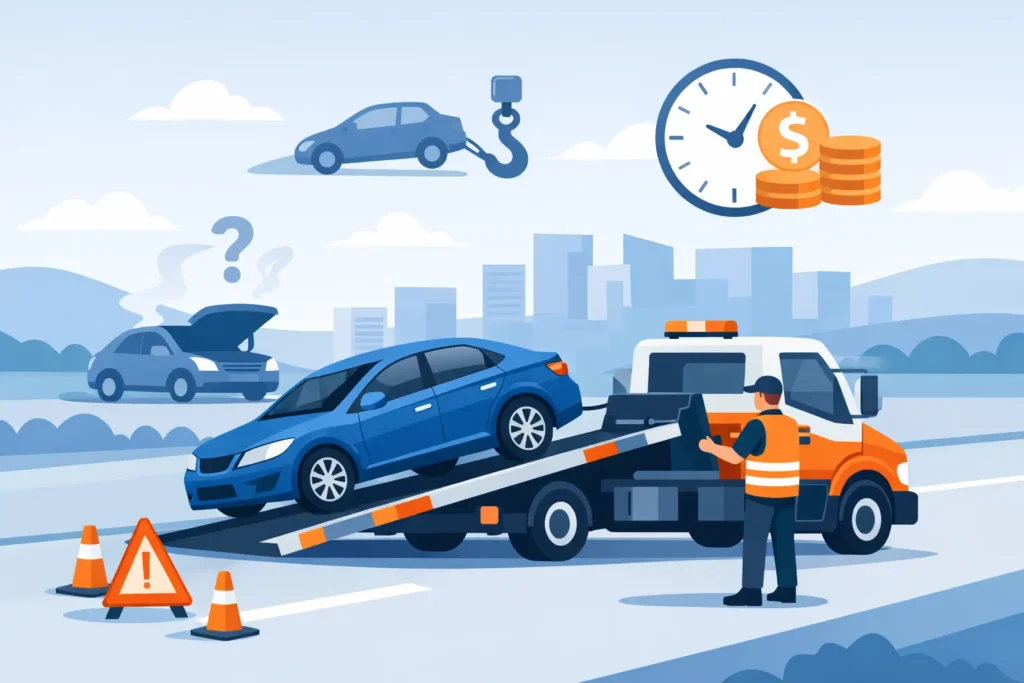
A breakdown never happens at a convenient time. It happens in traffic, in bad weather, late at night, or when you are already behind schedule. That is why one of the first questions drivers ask is how much does emergency towing cost – and the honest answer is that it depends on the vehicle, the distance, the situation, and how quickly help needs to arrive.
If you are stranded in Toronto or anywhere in the GTA, the fastest way to reduce stress is to understand what goes into the price before the truck shows up. Clear pricing matters when you need help now, not after the tow is finished.
How much does emergency towing cost in real situations?
Emergency towing usually starts with a base hook-up fee and then adds mileage, vehicle type, and any special handling required. For many standard local tows, drivers can expect a starting price that often falls somewhere around $75 to $150 for the initial service, with additional per-mile charges commonly ranging from $3 to $7 or more. In dense urban areas, after-hours situations, or more complex recoveries, the total can climb higher.
That range is wide for a reason. A compact sedan parked safely on a side street is one job. A disabled SUV on a highway shoulder during rush hour is another. A vehicle stuck in a garage, involved in a collision, or requiring flatbed transport can push the cost up quickly.
The key point is simple: emergency towing is not priced like a fixed menu item. It is priced based on labor, equipment, urgency, and risk.
What affects emergency towing cost?
The biggest factor is usually distance. A short tow across a nearby neighborhood will cost less than a trip across the city or out to another municipality. Most companies charge a base rate for dispatch and loading, then add distance-based pricing once the vehicle is on the truck.
Your vehicle type also matters. A small car is easier to tow than a pickup truck, cargo van, or large SUV. Heavier vehicles may require stronger equipment, more time, and different towing methods. If the vehicle is electric, low-clearance, all-wheel drive, or otherwise specialized, that can affect both the method and the price.
Timing changes cost too. Emergency service at 2 p.m. on a clear weekday may be priced differently than service during a snowstorm, overnight, or on a holiday. The truck, operator, and dispatcher are still available 24/7, but urgent off-hours response often comes with a premium.
Then there is the condition of the vehicle. If your car rolls freely and can be loaded normally, the process is straightforward. If the wheels are locked, the steering is damaged, or the vehicle has been in an accident, extra equipment or recovery work may be needed. That is no longer just a basic tow.
Common towing scenarios and what they usually cost
A simple roadside tow is usually the most affordable. This might involve a breakdown, overheating issue, dead battery that cannot be boosted, or mechanical failure where the vehicle is accessible and safe to load. In many cases, this stays near the lower end of the normal range.
Accident towing often costs more. The scene may involve traffic control, damaged suspension, broken axles, or the need for careful loading to avoid further damage. If the vehicle cannot roll or steer, dollies, winching, or a flatbed may be required.
Flatbed towing can also be priced higher than a standard wheel-lift tow, depending on the vehicle and distance. Many luxury, exotic, all-wheel-drive, and EV models are better suited to flatbed transport because it protects the drivetrain and reduces the chance of damage.
Long-distance emergency towing is where totals rise the fastest. Even if the hook-up fee is reasonable, mileage charges add up. If you need your vehicle taken from downtown Toronto to a repair shop far outside the city, expect distance to become the main cost driver.
Why some towing quotes sound cheap at first
Drivers under pressure often hear a low starting number and assume that is the full cost. Sometimes it is not. A quote that sounds unusually low may only cover dispatch or the first short portion of the tow. Once loading, mileage, storage, wait time, after-hours service, or specialty handling are added, the final bill can look very different.
That does not mean every low quote is misleading. It does mean you should ask direct questions before you agree. Is the quoted price the full tow or just the base rate? Is mileage included? Are there extra charges for highways, underground parking, accident scenes, or heavier vehicles? Clear answers protect you.
Transparent pricing is one of the most important parts of emergency roadside service. When you are stuck, you do not need vague language. You need a real estimate and a clear explanation of what could change it.
How to avoid paying more than necessary
The best first step is to describe the situation accurately. Tell dispatch where the vehicle is, whether it starts, whether it rolls, and whether it has accident damage. Mention if you are in a parking garage, on the shoulder of a highway, or blocked in by other vehicles. The more accurate the details, the more accurate the estimate.
It also helps to ask whether towing is even necessary. Sometimes a jump start, tire change, lockout service, or fuel delivery solves the problem on the spot for less than a full tow. A reliable roadside company will not push a tow if a faster, lower-cost fix is possible.
If you have roadside coverage through your insurance, auto club, credit card, or vehicle warranty, check it immediately. Some plans reimburse towing or cover a set distance. That does not always make the tow free, but it can reduce out-of-pocket cost.
You should also confirm the drop-off location before the truck starts moving. Changing destinations mid-tow can increase mileage and price. If possible, decide whether you want the vehicle taken to your home, a repair shop, a dealership, or a collision center before dispatch arrives.
How much does emergency towing cost after hours or in bad weather?
After-hours towing usually costs more because the service is truly on-call. Nights, weekends, holidays, and severe weather create tougher operating conditions and higher demand. Snow, freezing rain, and poor visibility slow down response, increase risk, and sometimes require different equipment.
In winter conditions, towing can also turn into recovery work. A car that slid into a snowbank or ditch may need winching before it can be loaded. That is different from simply hooking up a disabled vehicle in a parking lot. More labor and more equipment usually mean a higher invoice.
This is where a local company with full-time dispatch and proper equipment makes a difference. Fast response matters, but so does sending the right truck the first time.
What drivers in Toronto should expect
In a busy city, towing prices are shaped by congestion, limited loading space, highway access, parking structures, and travel time. A five-mile tow on paper may take far longer in real traffic. That affects scheduling and operating cost.
Drivers across Downtown Toronto, North York, Etobicoke, Scarborough, Midtown, and surrounding areas often face another issue: urgency. If your car is blocking traffic, sitting in an unsafe location, or disabled during a storm, the value of a quick, professional response goes beyond price alone. Safety, damage prevention, and getting the vehicle moved legally all matter.
That is why many customers prefer a provider that gives a real estimate, explains the service clearly, and dispatches licensed operators without delay. Emergency Roadside Service by South Toronto is built around that kind of response – fast, reliable, and straightforward when drivers need help most.
What to ask before you book a tow
Before you confirm service, ask for the estimated total, whether mileage is included, what kind of truck will be sent, and whether there are added charges for your vehicle type or location. If the vehicle was in a collision, say so. If it is an EV, say so. If it is trapped in a tight garage, say so.
A professional dispatcher should be able to walk you through the pricing in plain language. You should never feel rushed into agreeing without understanding the basics of what you are paying for.
The right towing company does more than move a vehicle. It gives you clarity in a stressful moment, shows up prepared, and handles the job safely. When you are stranded, that peace of mind is part of the value too.
If you are dealing with a breakdown right now, focus on two things: your safety and a clear quote. The cost matters, but so does getting the right help fast, without surprises after the truck arrives.