A dead battery in a downtown parking garage, a flat on the Gardiner, or keys locked inside your car can turn an ordinary drive into a stressful stop. Knowing how to request roadside assistance before you are stranded helps you get the right help faster, protect yourself while you wait, and avoid paying for a service that does not solve the actual problem.
The first priority is never the vehicle. It is getting yourself and your passengers out of immediate danger. Once you are safe, a clear call to a qualified dispatcher can set the recovery in motion.
How to Request Roadside Assistance in 6 Steps
1. Get to the safest available location
If your vehicle is still moving, do not stop abruptly unless there is an immediate hazard. Signal, reduce speed, and move to a shoulder, parking lot, side street, or other safe area away from traffic. Turn on your hazard lights as soon as you recognize a problem.
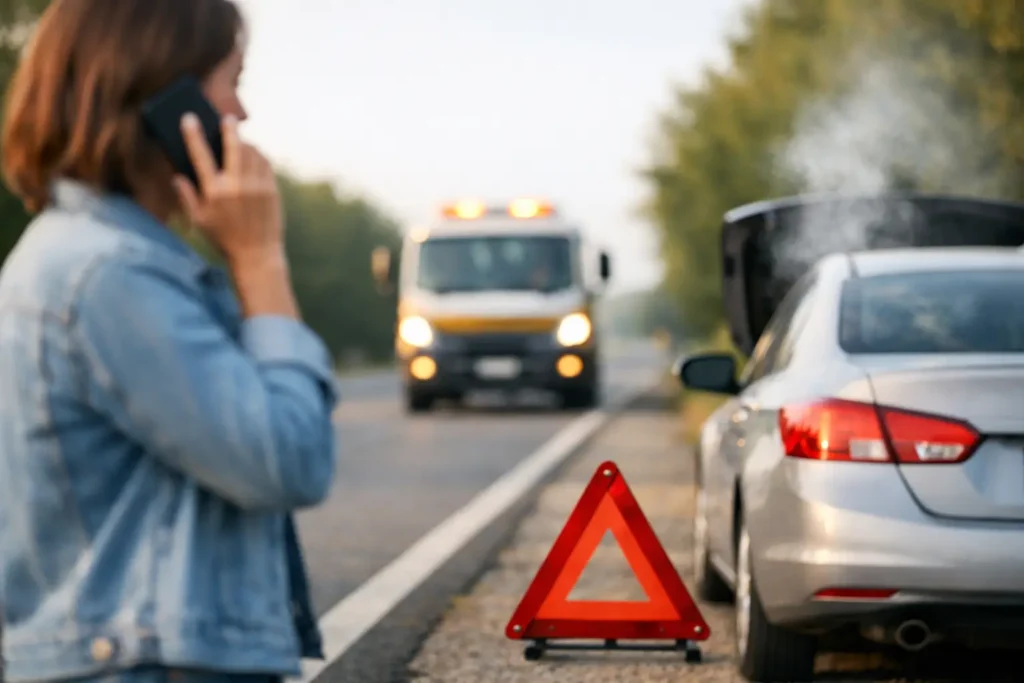
On a busy Toronto road, a highway shoulder, or near a blind curve, remaining in the vehicle may be safer than standing beside it. Keep your doors locked, seat belts on, and stay aware of traffic. If the vehicle is smoking, leaking fuel, has been in a collision, or is in a dangerous lane, move away from it only when it is safe to do so and call emergency services if anyone is hurt or the scene is unsafe.
2. Identify the problem without guessing
You do not need mechanical expertise to ask for help. You do need to describe what happened as accurately as possible. Tell the dispatcher whether the vehicle will not start, has a flat tire, is out of fuel, is locked, has warning lights, or has been damaged in an accident.
A few details can prevent the wrong truck or equipment from being dispatched. For example, an electric vehicle may need EV-capable towing, a vehicle with major damage may need a flatbed, and a truck or motorcycle may require specialized loading. If you are unsure, say so. A professional dispatcher can ask the right questions and recommend the safest service.
3. Call a 24/7 roadside assistance provider
When the situation is urgent, calling is usually the fastest way to request service. A live dispatcher can confirm availability, collect your location, explain the next step, and send the appropriate operator. Online booking can be useful when you are parked safely and the situation is not time-sensitive, but a phone call is better for highway breakdowns, accidents, or any situation where safety is a concern.
When you call Emergency Roadside Service by South Toronto, be ready to share your name, callback number, vehicle type, and the assistance you need. Ask for a price estimate before dispatch if possible. Clear pricing matters, especially when you are under pressure and need to make a quick decision.
4. Give a location a driver can actually find
“Near downtown” is not enough for a fast response. Provide the exact street address, intersection, highway name and direction, exit number, parking level, or recognizable landmark. If you are on the highway, look for the nearest kilometer marker or sign and state which direction you are traveling.
Your phone map can help, but check that the pin is accurate before sharing it. Parking garages deserve extra detail: give the entrance, level, section, clearance height if posted, and whether the vehicle can be reached by a tow truck. A dispatcher may need to send a vehicle that can safely enter the structure.
If you have a flat tire, mention whether you have a usable spare and the wheel-lock key. If you need fuel delivery, state the fuel type. For a lockout, tell the dispatcher if a child, pet, or vulnerable person is inside the vehicle. That changes the urgency of the response.
5. Confirm the service, estimate, and arrival details
Before ending the call, confirm what is being dispatched. Is it a jump start, tire change, fuel delivery, lockout service, tow, or accident recovery? Ask whether the quoted price covers the call-out, labor, mileage, tolls, or any special equipment that may be required.
You should also confirm the vehicle description the operator will look for: make, model, color, license plate, and your exact location. If your vehicle needs towing, decide where it should go. That could be your home, a repair shop, dealership, tire shop, or another safe destination. Some repair facilities have after-hours drop-off rules, so calling ahead can save you from arriving at a closed lot with nowhere to leave the vehicle.
Arrival times can depend on traffic, weather, road closures, the distance to your location, and the complexity of the job. A reputable provider should give you a realistic update rather than promise a time that conditions cannot support.
6. Stay safe and ready while help is on the way
Keep your phone charged and nearby. If your location changes, you move to a safer spot, or traffic conditions become dangerous, call the dispatcher with the update. Do not repeatedly attempt to start a vehicle that is overheating, smoking, or showing signs of serious mechanical trouble.
Have your identification, vehicle registration, payment method, and any towing destination details ready. If you are in a safe parking lot, it can help to clear personal belongings from areas the operator may need to access. For a tow, remove valuable items from the vehicle and take photos of existing accident damage when it is safe to do so.
At night, keep interior lights low if you need to conserve battery power, but make sure your hazards remain visible. Avoid accepting help from an unverified tow operator who arrives unexpectedly. Ask for the company name and confirm the dispatch details before allowing anyone to hook up your vehicle.
What to Say When You Request Roadside Assistance
A short, organized request helps the dispatcher act quickly. Start with your location and safety status: “I am on the eastbound Gardiner near the next exit, pulled onto the shoulder, and my hazards are on.” Then explain the vehicle and issue: “I have a 2022 SUV that will not start after several attempts.”
Next, state what you need or what you think you need: “I may need a jump start, but I need towing if it will not start.” Provide your callback number and destination if towing is likely. If there are special circumstances, say them immediately. Examples include an electric vehicle, low-clearance garage, blocked wheel, collision damage, a child in the vehicle, or a truck carrying business equipment.
This is not about using perfect terminology. It is about giving enough information to send the right operator and avoid unnecessary delays.
When Roadside Service Is Not Enough
Roadside assistance solves many common problems at the scene, including dead batteries, simple lockouts, flat tires with a good spare, and fuel shortages. But it is not always the right answer. A car that overheats, has severe tire or suspension damage, will not shift properly, has a brake problem, or was involved in a collision may need towing instead.
Trying to drive a damaged vehicle can turn a manageable repair into a much larger bill. It can also put you and other drivers at risk. When there is doubt, describe the symptoms and let the dispatcher help determine whether roadside repair or a tow is the safer choice.
A Few Preparations That Make the Call Easier
Save a trusted 24/7 roadside provider in your phone before you need one. Keep your vehicle registration accessible, maintain a charged phone and car charger, and know whether your vehicle has a spare tire, tire inflator, locking lug key, or towing-eye attachment. If you drive an EV, review its towing guidance so you can communicate any manufacturer restrictions.
For families, delivery drivers, and commercial operators, it also helps to decide in advance where the vehicle should be towed after hours. That small bit of preparation can remove one of the hardest decisions from an already stressful roadside situation.
A breakdown does not have to become a crisis. Get to a safe place, make one clear call, share an exact location, and let a licensed roadside professional handle the next move.