A highway breakdown gets dangerous fast. Cars are moving at full speed, shoulder space is limited, and even a simple flat tire can turn into a serious roadside risk if you make the wrong move. If you are wondering how to handle a highway breakdown, the first priority is not fixing the vehicle – it is getting yourself and your passengers out of immediate danger.
Panic makes people do risky things. They stop too late, step into traffic, or try to troubleshoot under pressure. The safer approach is simple: get off the travel lanes, make your vehicle visible, call for help, and wait in the safest available location.
How to handle a highway breakdown without making it worse
The moment you notice a problem, stay calm and keep control of the vehicle. If the engine starts losing power, a tire blows, smoke appears, or you hear a loud mechanical failure, avoid sudden braking unless you have no other choice. Grip the wheel firmly, turn on your hazard lights, and begin moving toward the right shoulder or the nearest safe exit.
If your vehicle can still roll, try to get as far from moving traffic as possible. A wide shoulder, an off-ramp, a parking lot, or a service area is safer than stopping beside active lanes. Many drivers make the mistake of stopping the second something feels wrong. That is not always the best move. If the car is still controllable, creating more distance from high-speed traffic usually gives you a much safer situation to deal with.
Once stopped, shift into park, set the parking brake, and keep the hazard lights on. At night, in rain, or during low visibility, that step matters even more. Your car needs to be seen early by approaching drivers.
Where you stop matters
Not every shoulder is actually safe. A narrow shoulder beside a curve, a bridge, or a merge lane can leave you exposed to traffic with almost no buffer. If you are deciding whether to stop immediately or keep rolling a short distance, it depends on the condition of the vehicle.
A flat tire may allow you to move slowly to a safer spot. A smoking engine, visible fire, or severe steering problem may require you to stop right away. If you smell fuel, see flames, or suspect a major mechanical failure, stop as soon as you can in the safest reachable area and get everyone away from the vehicle.
If the car cannot move at all, do not keep trying to force it. That can make a mechanical problem worse and leave you stranded in a more dangerous position.
If you can exit the vehicle safely
Whether you stay inside or get out depends on traffic conditions and where the vehicle is positioned. If you are well off the roadway with space between your vehicle and traffic, it may be safer to exit from the passenger side and move well away from the road. If you are stuck close to live lanes and exiting would put you into traffic, staying buckled inside may be the safer choice until help arrives.
This is where judgment matters. There is no single rule that fits every breakdown. The goal is always the same: put as much distance and protection as possible between people and moving vehicles.
What to do right after you stop
Start by checking everyone in the vehicle. Make sure passengers stay calm and do not open doors into traffic. If you have children, keep them close and away from the roadway.
Then call for roadside assistance or emergency help, depending on the situation. If the breakdown is creating an immediate hazard, such as being stopped in a live lane or near a blind curve, call 911 first. If the vehicle is safely on the shoulder and you need towing, a jump start, fuel delivery, lockout service, or a tire change, call a professional roadside provider right away.
When you call, be ready with the highway name, direction of travel, nearest exit, and a clear description of your vehicle. That saves time and helps dispatch send the right truck fast. On a busy road, every minute matters.
If you are in the GTA, a local company such as Emergency Roadside Service by South Toronto can coordinate fast dispatch for common highway emergencies, which is often much safer than trying to solve the issue yourself beside traffic.
Make your vehicle easier to spot
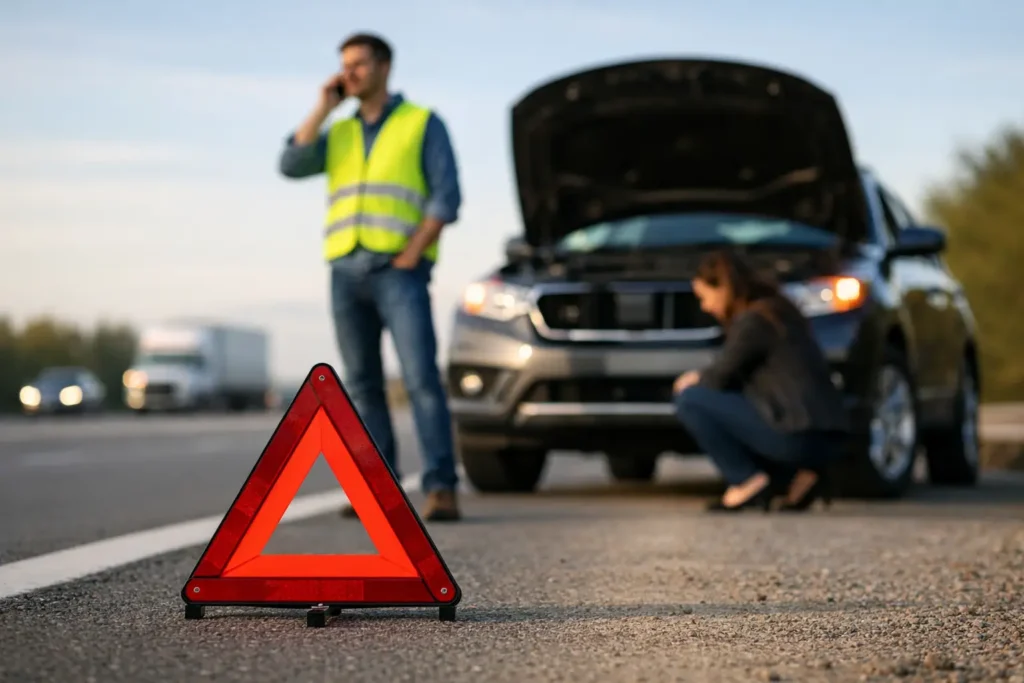
Keep hazard lights on at all times. If it is safe to do so, turn on interior lights at night. Reflective triangles or road flares can help, but only use them if you can place them without stepping into danger. On a high-speed highway shoulder, visibility tools help only if they can be used safely.
A flashlight, reflective vest, and charged phone are small items that make a major difference during a breakdown. They are especially useful during bad weather or overnight stops.
Should you try to fix the problem yourself?
Usually, on a highway, the answer is no.
A breakdown on a quiet side street is one thing. A breakdown with traffic flying past at highway speed is different. Changing a tire, checking under the hood, or walking around the vehicle can expose you to serious risk. Even experienced drivers can misjudge how little space they really have.
There are exceptions. If you are in a clearly protected area, well away from traffic, and the issue is minor, you may decide to handle something simple. But on most highway shoulders, professional help is the safer call. A fast roadside response costs less than a preventable injury.
If your car is disabled in a dangerous position, do not try to crawl under it, push it, or inspect it from the traffic side. Wait for trained assistance with the right equipment and visibility setup.
Common highway breakdowns and the safest response
A flat tire is one of the most common problems, but it is not always safe to change on the shoulder. If the shoulder is narrow or traffic is heavy, call for mobile tire service or towing instead.
A dead battery is less dramatic but still creates risk if your vehicle is stranded in the wrong place. Stay visible, stay off the roadway, and request a jump start.
Running out of gas happens more often than people admit. If the car loses power, coast safely to the shoulder, turn on hazards, and call for fuel delivery. Walking along the highway to find gas is rarely the smart option.
An overheated engine requires extra caution. If steam is coming from under the hood, do not open it right away. Wait until the vehicle cools down. Opening a hot cooling system can cause burns.
If you have been in a collision, even a minor one, treat it differently from a routine breakdown. Check for injuries first, call emergency services if needed, and do not assume the vehicle is safe to drive just because the damage looks small.
What not to do during a highway breakdown
A lot of roadside danger comes from rushed decisions. Do not stand behind or directly beside your vehicle near traffic. Do not let passengers wander on the shoulder. Do not trust that other drivers will move over in time.
Do not accept help from an unverified tow truck operator if you are unsure who they are or what they will charge. In stressful moments, people agree to service before asking basic questions. Always confirm who is coming, what service they are providing, and how pricing works.
And do not ignore the warning signs before a full breakdown happens. Strange sounds, dashboard alerts, vibration, and temperature spikes are often the last chance to get off the highway safely before the vehicle stops completely.
Prepare before you ever need it
The best way to handle a highway breakdown starts before one happens. Keep your phone charged, your gas tank above empty, and your tires properly inflated. A roadside kit with a flashlight, reflective gear, basic first aid supplies, bottled water, and a phone charger is worth keeping in every vehicle.
It also helps to save a trusted roadside assistance number in your phone now, not when you are stranded on the shoulder trying to search under stress. If you drive long distances, commute daily, or operate a work vehicle, that one step can save valuable time.
Bad weather raises the stakes. Rain reduces visibility, snow narrows shoulders, and ice makes stopping harder for everyone around you. In those conditions, calling for help early is usually the right move.
A highway breakdown is not the time to be brave or mechanically curious. It is the time to be visible, stay calm, and make safe decisions one step at a time. If you remember that your job is to protect people first and deal with the vehicle second, you will handle the situation better than most drivers do.