A car can feel almost normal right up until it is not. Maybe the engine light came on during your commute, the steering suddenly feels wrong, or your vehicle will not restart after a quick stop. When do you need a tow instead of trying to make it home or to a repair shop? The safest answer is simple: call for a tow whenever driving could worsen the damage, put you in traffic danger, or leave you stranded somewhere less safe.
For drivers across Toronto and the GTA, waiting too long can turn a manageable breakdown into a major repair or a roadside emergency. A licensed tow operator can get your vehicle off the road, transport it safely, and give you room to make a clear decision without pressure.
When Do You Need a Tow? Start With Safety
You need a tow immediately after a collision if there is visible damage, fluid leaking underneath, a deployed airbag, a bent wheel, broken lights, or any doubt about whether the vehicle is safe to operate. Even if the car starts and moves, internal damage to the suspension, steering, cooling system, or frame may not be obvious from the driver’s seat.
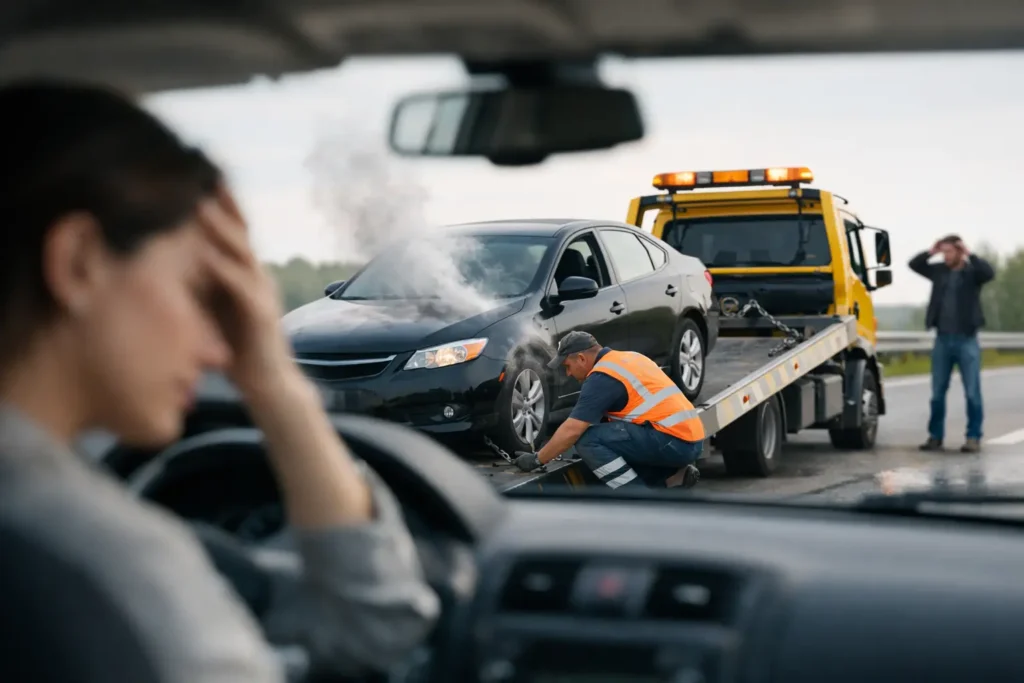
Do not drive a vehicle that is smoking, overheating, losing power, or showing an oil-pressure warning. Pull over as soon as it is safe, turn off the engine, and arrange towing. Trying to drive through an overheating problem can damage the engine. Driving with low oil pressure can do the same in a matter of minutes.
A tow is also the right call when your vehicle is stopped in an unsafe location. That includes the shoulder of a busy highway, a narrow downtown street, a blind curve, an intersection, or an area with poor visibility at night. The goal is not to diagnose the issue beside fast-moving traffic. The goal is to get you out of danger.
10 Signs You Should Stop Driving
Some problems have a little flexibility. Others do not. If any of the signs below appear, pull over safely and request professional help rather than gambling on a few more miles.
- The engine temperature gauge is in the red or steam is coming from under the hood. Shut the engine off. Do not open a hot radiator cap.
- The oil-pressure light stays on while the engine is running. This can signal a serious lubrication problem that may cause rapid engine damage.
- You smell fuel, see a fuel leak, or notice a strong burning smell. Keep away from open flames and avoid restarting the vehicle.
- The steering is loose, extremely stiff, pulling hard, or making loud grinding noises. A steering or suspension failure can make the vehicle unpredictable.
- A tire is shredded, a wheel is bent, or a blowout has damaged more than the tire. A spare may not be enough if the rim, brake line, or suspension was affected.
- The brakes feel soft, sink to the floor, grind heavily, or the brake warning light comes on. Braking problems are never a drive-it-later issue.
- The transmission slips, will not shift, or the car will not move normally in gear. Continuing to drive can increase damage and leave you stopped in traffic.
- Your vehicle has a major fluid leak. Red transmission fluid, green or orange coolant, dark oil, or clear brake fluid beneath the vehicle all deserve attention.
- The engine is knocking, clunking loudly, or running so roughly that the vehicle shakes. A small noise can become a mechanical failure without warning.
- Your vehicle will not start and a jump-start does not solve the problem. The issue may be the alternator, starter, battery connection, fuel system, or another fault that needs diagnosis.
A flashing check-engine light belongs in this category too. It often indicates an active engine misfire, which can damage the catalytic converter if you keep driving. A steady check-engine light is not always an emergency, but it should not be ignored, especially when paired with poor performance, shaking, or unusual smells.
A Tow Is Not Always the Only Option
Not every roadside problem requires transporting the vehicle. A dead battery, locked keys, empty fuel tank, or a simple flat tire can often be handled where you are. Roadside assistance may get you moving again faster and at lower cost than a tow.
The trade-off is reliability. If you have already needed multiple jump-starts, your battery is old, or the vehicle dies again after being boosted, it may not stay running long enough to reach a shop. A mobile tire change works well when you have an intact spare and no wheel damage. If the tire blew apart at highway speed or you hit a pothole hard, towing is the safer choice.
Be honest about the situation when you call. Tell dispatch what warning lights are on, whether the car starts, where it is parked, and whether there was a collision. Clear details help send the right equipment the first time, whether that is a jump-start technician, tire service, a wheel-lift truck, or a flatbed.
Why Flatbed Towing Can Be the Safer Choice
Flatbed towing keeps all four wheels off the ground. It is often the best option for all-wheel-drive vehicles, electric vehicles, luxury cars, motorcycles, vehicles with severe wheel damage, and cars involved in an accident. It also reduces the risk of further drivetrain damage when the vehicle cannot be driven or rolled normally.
For an EV, do not assume it can be towed like a gas-powered car. Many electric vehicles have manufacturer-specific transport procedures, and improper towing can harm the drive system. Request a provider experienced with EV towing and tell the dispatcher the make and model.
A standard tow may work for certain vehicles and short, straightforward moves, but the right method depends on the vehicle’s drivetrain, condition, and location. Professional operators assess those factors before loading the vehicle.
What to Do While You Wait for a Tow
Once you decide not to drive, protect yourself first. Turn on your hazard lights and move the vehicle to the safest reachable location if it can be moved without risk. On a highway or busy road, stay aware of traffic and do not stand between your vehicle and passing cars.
If you can do so safely, take these steps:
- Park as far from moving traffic as possible and set the parking brake.
- Keep doors locked if you are waiting alone in an unfamiliar area.
- Share your exact location, nearby cross streets, vehicle color, make, model, and license plate with dispatch.
- Take photos of collision damage, warning lights, or leaks before the vehicle is loaded.
Do not attempt to repair a vehicle in an active lane, under a raised vehicle supported only by a jack, or near traffic in poor weather. A quick fix is never worth exposing yourself to a preventable injury.
Avoid Making the Damage Worse
Drivers often hesitate to call for a tow because they are close to home, worried about cost, or hoping a warning light will disappear. That hesitation is understandable. But pushing a car with a serious mechanical issue can turn a tow bill into an engine, transmission, or suspension repair bill.
The right towing company should explain the service clearly, provide transparent pricing before work begins when possible, and send trained, insured operators with equipment suited to your vehicle. You should not have to guess whether the truck that arrives can safely handle your car, truck, motorcycle, or EV.
Emergency Roadside Service by South Toronto provides 24/7 towing and roadside support for drivers who need a fast, calm response during breakdowns, accidents, and no-start situations. Whether you are in Downtown Toronto, North York, Scarborough, Etobicoke, or nearby, the priority is getting you and your vehicle to a safer place without adding stress to an already difficult moment.
If the vehicle feels unsafe, sounds wrong, leaks fluid, overheats, or cannot move normally, trust that signal. Pull over, stay safe, and arrange the help that protects both you and your vehicle.