A dead battery in a North York parking garage, a flat tire on the Gardiner, or an empty fuel tank during a late-night delivery can turn an ordinary drive into a stressful situation fast. This guide to roadside assistance coverage explains what help you can expect, where limits may apply, and how to avoid surprises when you need urgent service.
Roadside assistance is not the same as auto insurance, a repair warranty, or a towing plan with unlimited use. Coverage varies by provider, membership level, vehicle, and location. The best time to understand those details is before you are parked on the shoulder with hazard lights on.
What Roadside Assistance Coverage Usually Includes
Most roadside assistance plans are designed to get a disabled vehicle moving again or transport it to a nearby repair facility. They are built for immediate, practical problems – not major mechanical repairs performed at the roadside.
A typical plan may include a jump start for a weak or dead battery, lockout assistance when keys are inside the vehicle, a tire change using your usable spare, limited fuel delivery, and basic winching if the vehicle is stuck close to a passable road. Towing is usually part of the package, but it almost always comes with a distance or dollar limit.
That last detail matters. One provider may cover a tow to the nearest qualified repair shop, while another may allow towing up to a set number of miles. If your preferred mechanic is farther away, you could be responsible for the remaining distance. Ask about this before choosing a plan, especially if you regularly drive outside Toronto or commute across the GTA.
Towing Coverage Has Real Limits
Towing is often the most valuable part of roadside assistance coverage, but it is also where drivers face the most confusion. A plan may restrict the number of service calls per year, the maximum towing distance per incident, or the types of vehicles it will tow.
For example, coverage for a compact passenger car may not automatically extend to a work van, a motorcycle, a trailer, or a heavier commercial vehicle. EV owners should also confirm that the provider can safely handle electric vehicles and understands the proper tie-down and transport procedures. A flatbed may be the right solution in some situations, but not every membership level includes it.
Coverage may also require that the vehicle be accessible. A vehicle buried in a deep ditch, damaged in a collision, blocked inside a garage, or stranded off-road can require specialized recovery equipment. That goes beyond a standard roadside call and can create additional charges.
What a Roadside Plan May Not Cover
Roadside assistance helps with the immediate emergency. It generally does not pay to fix the underlying problem. A jump start can get you running, but it will not replace a failing battery or alternator. A tire change gets the spare installed, but it does not cover a new tire, wheel repair, or tire shop labor.
Read your policy or membership terms carefully for exclusions. Common limits include the cost of fuel, replacement keys, parts, labor beyond a brief roadside attempt, parking fees, storage fees, accident recovery, and towing after a vehicle has been impounded. Some plans exclude vehicles used for rideshare, delivery, rental, or commercial purposes. Others require the covered driver or member to be present when service is requested.
Collision-related towing deserves special attention. After an accident, your insurer may have specific reporting requirements or preferred procedures. Police direction, vehicle condition, road closures, and the need for a secure storage location can all affect the tow. Do not assume a basic roadside plan will handle every part of an accident recovery.
Weather and Location Can Change the Job
Toronto winters can turn a routine call into a more complex one. A frozen door lock, snow-packed driveway, icy incline, or battery drained by extreme cold may require more time and equipment than a standard service visit. Busy expressways, construction zones, underground garages, and restricted-access areas can also affect how quickly a provider can reach you and what kind of truck can be used.
That does not mean help is unavailable. It means clear information helps dispatch send the right operator. When requesting service, share your exact location, vehicle make and model, the problem you are experiencing, whether you are in a safe position, and any access issue such as a low-clearance garage or blocked lane.
How to Compare Roadside Assistance Coverage
Price is worth considering, but the least expensive plan is not always the best value when you are stranded after hours. Focus on the service details that affect a real emergency: towing distance, annual call limits, response availability, eligible vehicles, and whether the provider offers service where you actually drive.
Look at whether roadside help is included through your auto insurer, vehicle manufacturer, credit card, workplace benefits, or an independent membership. You may already have some protection, but overlapping coverage does not always mean better service. One plan might offer short-distance towing, while another provides a longer tow but has stricter call limits.
Before relying on any program, get clear answers to these questions:
- How many roadside calls are allowed each year?
- What towing distance or dollar amount is included per call?
- Does coverage apply to your specific vehicle, including EVs, motorcycles, vans, or work trucks?
- Are fuel delivery, tire changes, lockouts, and winching included?
- Is help available 24/7 in the areas where you drive?
- What charges can apply beyond the covered limit?
A provider that gives a clear estimate before work begins can make a difficult moment easier. Transparent pricing is especially valuable when your membership coverage has been used up, excludes the situation, or only pays part of the bill.
What to Do When You Need Help Right Now
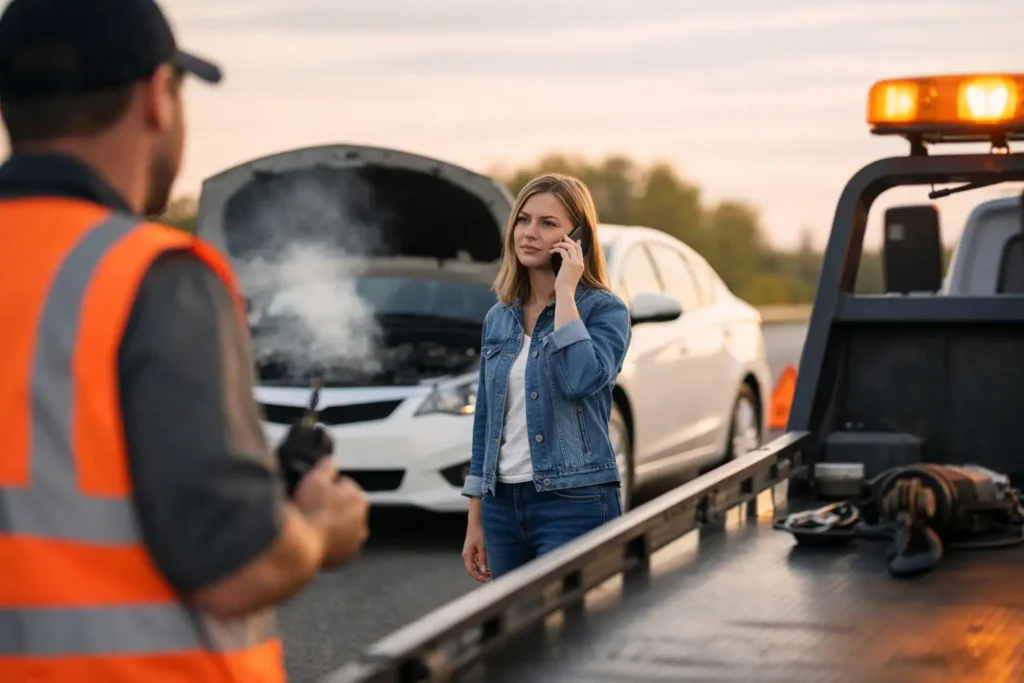
Your first priority is safety, not diagnosing the vehicle. If possible, pull as far from traffic as you safely can, turn on hazard lights, and stay away from active lanes. If you are on a high-speed road, in an unsafe location, or involved in a collision with injuries, contact emergency services first.
Once you are in a safer position, call your roadside provider or a local 24/7 service. Have your membership details available if you are using coverage. Be ready to describe the vehicle, location, and problem without guessing. Saying “I am near downtown” is less helpful than naming the street, cross streets, direction of travel, nearby landmark, or parking level.
If you need a tow, tell dispatch where you want the vehicle taken and ask whether that destination is within your coverage limit. If the vehicle is an EV, all-wheel drive, lowered, heavily damaged, or carrying cargo, mention that too. The right information at the start helps prevent delays and protects your vehicle from being handled improperly.
Do not accept service from an unsolicited operator who arrives before the provider you contacted, particularly after a collision. Confirm the company name, truck details, destination, and expected charges before authorizing work. Keep receipts and service records in case your insurer, membership program, or credit card benefit administrator requires documentation for reimbursement.
A Practical Coverage Plan for Toronto Drivers
For many drivers, the smartest approach is to combine preventive maintenance with a roadside plan that matches how they use their vehicle. A commuter who stays close to home may prioritize reliable jump starts, lockout service, and a modest tow distance. A delivery driver, family making frequent highway trips, or driver with an older vehicle may benefit more from higher call limits and longer towing coverage.
Keep a phone charger, warm layer, flashlight, basic first-aid kit, and current insurance information in the vehicle. Check your spare tire and jack before a flat happens. If your car does not have a spare, know whether it has a tire repair kit and whether your roadside plan can tow it to a tire shop.
When coverage falls short or you need help immediately, Emergency Roadside Service by South Toronto provides fast dispatch coordination for towing, jump starts, lockouts, tire changes, fuel delivery, and more across the GTA. The goal is simple: get the right help to your location quickly, explain costs clearly, and reduce the stress of being stuck.
The best roadside assistance coverage is the coverage you understand before trouble starts. Take a few minutes to check your limits now, save the right contact information, and make sure your plan fits the vehicle and roads you depend on every day.