
That slow, strained sound when you turn the key is more than an annoyance when you are trying to get to work, pick up family, or make a delivery. Knowing the best signs your battery will fail can help you act before your vehicle leaves you stranded in a driveway, parking garage, or on a busy Toronto street.
A battery can weaken gradually, then fail without warning when cold weather, short trips, or heavy electrical use push it past its limit. The good news is that most failing batteries give drivers clues. Pay attention early, and you may avoid the stress and safety risk of a no-start situation.
1. Your Engine Cranks Slowly
A slow crank is one of the clearest battery warnings. When you start the vehicle, the engine may turn over more slowly than usual, with a dragging or labored sound before it starts. This happens because the battery no longer has enough power to deliver the strong burst of electricity the starter needs.
Do not assume a slow start will fix itself after a longer drive. It may start normally once or twice, especially in mild weather, but a weak battery can fail on the next cold morning. If the cranking sound has changed, arrange for a battery test soon.
2. The Vehicle Needs Frequent Jump Starts
One jump start after leaving an interior light on does not automatically mean the battery is failing. But if you need a boost more than once, even after driving the vehicle, something needs attention.
The battery may no longer hold a charge, the charging system may have a problem, or there may be an electrical drain while the car is parked. Repeatedly jump-starting a vehicle is not a long-term repair. It can leave you stuck at the worst possible time, and it may hide a charging issue that needs diagnosis.
3. Dashboard Warning Lights Appear
A battery-shaped warning light on the dashboard often points to the charging system, not necessarily the battery itself. It can mean the alternator is not replenishing the battery while the engine runs, or that there is a loose belt, cable, or connection.
Other warning lights can also appear when voltage drops. You may see random alerts, a check-engine light, or messages that disappear after the vehicle starts. Treat these as a reason to have the system checked rather than ignoring them. Low voltage can make modern vehicle electronics behave unpredictably.
4. Headlights and Interior Lights Look Dim
Dim headlights at idle, weak dome lights, or dashboard lights that flicker can signal a battery or charging-system issue. You may notice the lights brighten when you raise the engine speed, which can point more toward the alternator. If the lights stay weak even with the engine running, a poor connection, weak battery, or alternator problem may be involved.
This symptom deserves quick attention because reduced visibility is a safety issue. If your headlights suddenly become very dim while driving, pull over safely when possible and call for assistance instead of trying to continue through traffic.
Best Signs Your Battery Will Fail in Cold Weather
Cold weather is hard on every vehicle battery. A battery that seems acceptable in warmer temperatures can lose enough available power overnight to prevent starting. At the same time, cold engine oil makes the starter work harder, which increases the demand on the battery.
Watch closely for slower cranking after a cold night, especially if the battery is already several years old. Batteries commonly last about three to five years, but lifespan depends on driving habits, weather, vehicle electronics, and battery quality. A car used mostly for short trips may need a battery sooner because it does not get enough time to recharge fully.
If extreme cold is expected, avoid leaving accessories plugged in, make sure all lights are off, and park in a garage when available. These steps help, but they cannot restore a battery that is nearing the end of its service life.
5. Electrical Accessories Act Strange
Power windows that move slowly, a radio that resets, a clock that loses time, or a screen that takes longer to boot can all be low-voltage clues. These issues do not always mean the battery is bad. Loose terminals, corroded connections, blown fuses, and vehicle-specific electrical problems can cause similar symptoms.
Still, when several electrical features begin acting up together, do not dismiss it as a minor glitch. A professional battery and charging-system test can separate a simple weak-battery issue from a more involved repair.
6. You Smell Sulfur or See a Swollen Battery Case
A strong rotten-egg or sulfur smell under the hood can mean a battery is leaking gas or overcharging. A swollen, cracked, or misshapen battery case is also a serious warning sign. Stop handling the battery, avoid flames or sparks, and do not attempt to jump-start the vehicle if you suspect the battery is damaged.
Battery acid is corrosive, and a damaged battery can be dangerous. Have the vehicle inspected and, if necessary, towed rather than taking chances at the roadside.
7. Battery Terminals Are Corroded or Loose
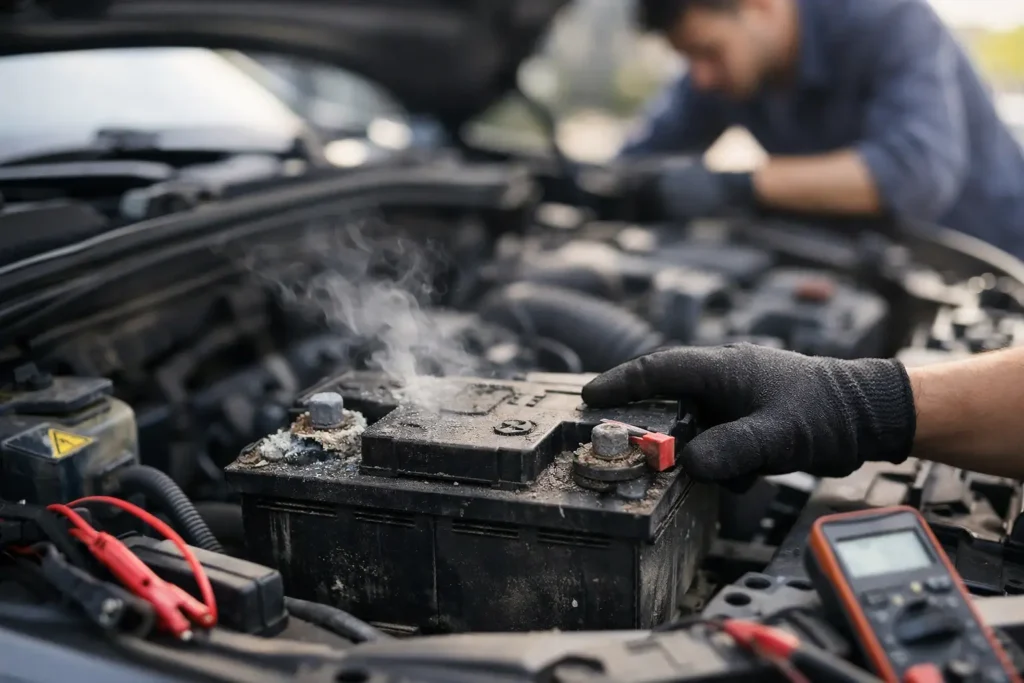
Blue, white, or green buildup around battery terminals can interfere with the connection between the battery and vehicle. In some cases, cleaning and tightening the terminals can solve a starting problem. In others, corrosion is simply another sign that the battery is aging or leaking.
Do not touch corrosion with bare hands. If you are comfortable doing basic vehicle maintenance, follow your owner’s manual and use proper protective gear. If the terminal cables are loose, damaged, or heavily corroded, roadside help is the safer choice.
8. The Battery Is More Than Three Years Old
Age alone does not prove a battery is about to fail, but it changes the risk calculation. Once a battery reaches the three-year mark, testing it before winter or before a long drive is smart preventive maintenance. Check the installation date label if one is present, or look through service records.
Drivers who rely on their vehicle for commuting, rideshare work, deliveries, or family transportation should be especially proactive. Waiting for a battery to fail completely may mean missed work, delayed appointments, or being stranded with passengers in unsafe conditions.
9. Your Car Starts, Then Dies or Will Not Restart
If a vehicle starts with a jump but dies shortly afterward, or starts and then will not restart after a brief drive, the problem may be more than a discharged battery. A failing alternator may not be charging the battery, or an electrical fault may be draining it.
Avoid turning this into a guessing game at the side of the road. A jump start may get the engine running temporarily, but it cannot repair an alternator, a broken cable, or a worn-out battery. If you are in traffic, in a parking structure, or on the shoulder, prioritize your safety and request professional roadside assistance.
What to Do When You Notice Battery Trouble
First, do not wait until the vehicle is completely dead if you have noticed several warning signs. Schedule a battery and charging-system test while the car still starts. Many auto service providers can check battery health, charging voltage, and starting performance quickly.
If your vehicle will not start, move yourself and passengers away from traffic when it is safe to do so. Turn on hazard lights, keep the doors locked if you are waiting in an unfamiliar area, and avoid accepting help from unverified strangers. If you have jumper cables and know the correct procedure, a jump start may be appropriate only when the battery is not damaged and there are no signs of leakage.
For a fast, calm response in the Greater Toronto Area, Emergency Roadside Service by South Toronto can dispatch help for a jump start, battery-related no-start, or towing when the vehicle needs more than a boost. A trained operator can help you get moving safely or arrange the next step without unnecessary delays.
A battery rarely chooses a convenient time to quit. When the cranking slows, lights dim, or jump starts become routine, act while you still have options and keep your next drive from becoming an unexpected roadside stop.