
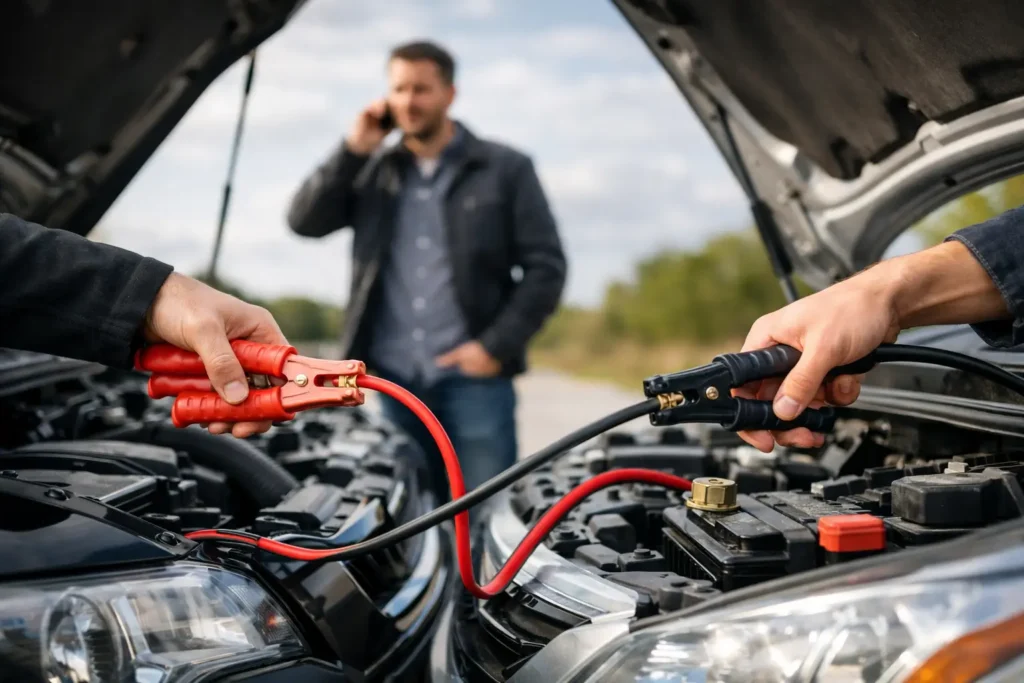
A car battery jump start can turn a frustrating parking-lot problem into a quick recovery, but only when it is done safely. If you turn the key or press the start button and hear clicking, see dim dashboard lights, or get no response at all, a weak or dead battery may be the issue. In Toronto, that can happen outside your home, at work, in a garage, or on a busy roadside when temperatures drop and time matters.
The goal is not simply to get the engine running. You also need to protect yourself, avoid electrical damage, and find out whether the battery will hold a charge long enough to get where you need to go. If you are in an unsafe location, unsure of the process, or your vehicle will not start after a proper boost, call for professional roadside assistance rather than taking chances.
First, Make Sure It Is Really a Dead Battery
A dead battery is common, but it is not the only reason a vehicle will not start. A rapid clicking sound when you try to start the engine often points to low battery power. Dim headlights, a weak horn, a slow crank, or interior lights that fade are also familiar signs.
If the engine cranks at normal speed but will not fire up, the problem may be fuel, ignition, or another mechanical issue. If you smell burning, see smoke, notice damaged battery cables, or find fluid leaking around the battery, do not attempt a jump start. Move to a safe position if possible and call for help.
Modern vehicles can also have warning lights and electronic systems that make a simple no-start situation harder to diagnose. A roadside technician can check the battery condition, cable connections, and charging system before sending you back into traffic.
Car Battery Jump Start Safety Comes First
Before connecting any cables, park both vehicles close enough for the cables to reach but do not let them touch. Put each vehicle in Park or Neutral, set the parking brakes, and turn off the ignition, lights, climate control, and accessories. Remove loose clothing, keep metal tools away from the battery, and keep sparks away from fuel vapors.
Check the battery itself. Do not jump a battery that is cracked, swollen, leaking, frozen, or giving off a strong rotten-egg smell. Those conditions can signal a serious battery failure. A jump start may create a spark, and a damaged battery can be dangerous.
Also check the owner’s manual if your vehicle has a hybrid, electric powertrain, start-stop system, or a battery located somewhere other than under the hood. Many newer vehicles have designated jump terminals. Using the wrong connection point can damage sensitive electronics or create a safety risk.
How to Connect Jumper Cables Correctly
If both batteries appear safe and you have a suitable donor vehicle or a portable jump pack, connect the cables in this order:
- Attach the red clamp to the positive terminal on the dead battery.
- Attach the other red clamp to the positive terminal on the donor battery or jump pack.
- Attach the black clamp to the negative terminal on the donor battery or jump pack.
- Attach the final black clamp to a clean, unpainted metal ground point on the disabled vehicle, away from the battery and moving engine parts.
Do not attach the final black clamp directly to the negative terminal of a damaged or deeply discharged battery unless the vehicle manufacturer specifically directs you to do so. The ground connection helps reduce the chance of a spark near the battery.
Start the donor vehicle, if you are using one, and let it idle briefly. Then try starting the disabled vehicle. Do not crank for more than a few seconds at a time. If it does not start after two or three attempts, stop. Repeated attempts can overheat the starter, drain the donor battery, or hide a larger problem.
Once the vehicle starts, remove the cables in the reverse order. Keep the clamps from touching each other or any metal surface while they are still connected.
When a Portable Jump Pack Is the Better Choice
A portable jump pack can be safer and more convenient than relying on another driver, especially in a crowded Toronto parking garage or on a narrow street. It eliminates the need to position a second vehicle nearby and can start many cars quickly when charged and used correctly.
Still, a jump pack is not a cure for a failing battery. If your vehicle starts with a booster but stalls shortly afterward, or needs another boost the next day, the battery may no longer hold a charge. The alternator, battery terminals, or a parasitic electrical drain could also be responsible.
For drivers who regularly travel in winter, keep a properly rated jump pack charged and stored according to its instructions. Cold weather reduces available battery power, and an uncharged booster will not help when you need it most.
What to Do After the Engine Starts
Let the vehicle run and avoid immediately turning on high-draw accessories such as heated seats, rear defrost, powerful audio equipment, or unnecessary chargers. If it is safe to drive, take a direct route to a place where you can have the battery and charging system tested.
A short idle in a parking spot may not recharge a deeply discharged battery. Driving can help the alternator restore some power, but the amount of recovery depends on the battery’s age, condition, and the cause of the discharge. If the battery is old or has been drained repeatedly, it may fail again even after a longer drive.
Pay attention to the battery warning light. If it stays on after the engine starts, the issue may be the charging system rather than the battery itself. Pull over safely and arrange assistance. Continuing to drive with an alternator problem can leave you stranded once the remaining battery power runs out.
When to Call for a Professional Jump Start
There is no prize for handling a no-start situation alone. Calling for help is the smart move when you are on a busy roadway, in poor weather, parked in an unfamiliar area, transporting children, or working with an unfamiliar vehicle. It is also the right choice if you do not have quality cables, a reliable jump pack, or confidence in the connection process.
Professional help is especially valuable when the vehicle will not respond to a boost. The technician can look for loose or corroded terminals, a failed battery, incorrect battery fitment, charging-system trouble, or signs that towing is the safer next step. That prevents you from wasting time waiting for another boost that will not solve the problem.
Emergency Roadside Service by South Toronto provides fast, reliable roadside support for drivers across Toronto and surrounding areas. A trained operator can perform a safe jump start, assess the immediate situation, and help you decide whether your vehicle is ready to drive or needs further service. Clear communication and upfront expectations matter when you are stranded.
Avoid Another Dead Battery
Most battery failures give some warning before the day they leave you stuck. Slow starting, flickering lights, intermittent electronics, and a battery warning light should not be ignored. Have the battery tested before winter and replace it when it no longer meets its rated performance.
Keep battery terminals clean and tightly connected. Corrosion can interfere with charging and starting even when the battery itself is still usable. If your vehicle sits for long periods, drive it regularly or use an appropriate battery maintainer. Before leaving the vehicle, check that headlights, interior lights, chargers, and accessories are fully off.
A car battery jump start gets you moving, but dependable driving starts with knowing when the problem is bigger than a boost. If your vehicle is stranded now, put safety first, stay visible, and get qualified roadside help so you can get back on the road with confidence.