A breakdown rarely happens at a convenient time. It happens in fast traffic on the Gardiner, on a dark side street in Scarborough, or during a freezing early commute when your battery gives out without warning. If you need to know how to stay safe roadside, the first priority is simple – protect yourself before you think about the vehicle.
The biggest mistake drivers make is focusing on the mechanical problem too soon. A flat tire, dead battery, or engine issue can usually wait a few minutes. Traffic danger cannot. The safest move is the one that reduces your exposure to passing vehicles, poor visibility, and avoidable risks while help is on the way.
How to stay safe roadside in the first 5 minutes
The first few minutes matter most because that is when people are stressed, distracted, and likely to make quick decisions. If your vehicle is still moving, do not slam on the brakes unless you must. Signal early, stay calm, and guide the vehicle as far out of traffic as possible. A shoulder, parking lot, side street, or wide curb lane is always better than stopping in an active lane.
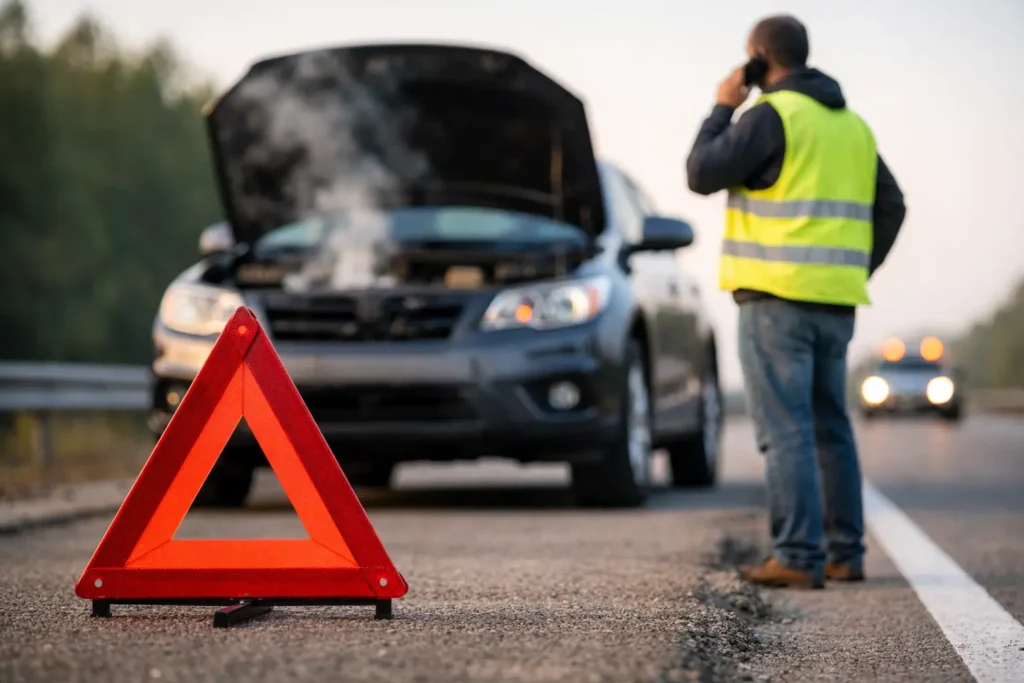
Once stopped, turn on your hazard lights immediately. If it is dark, rainy, foggy, or snowing, visibility becomes a bigger issue than the breakdown itself. Other drivers need as much warning as possible.
If you can safely set the parking brake, do it right away. Then take a breath and assess your surroundings. Ask yourself a practical question: am I safer inside the vehicle, or outside it? In many roadside situations, especially on highways or busy arterial roads, staying buckled inside the car is the safer choice.
When to stay in the car
If you are stopped near fast-moving traffic, on a narrow shoulder, around a blind curve, or in bad weather, stay inside with your seat belt on. That is usually the safest position until trained roadside help arrives. Keep your hazard lights on and call for assistance.
This is especially true if you are on a highway in Toronto or the GTA, where traffic speed and lane changes leave very little margin for error. Standing beside your car, or worse, trying to inspect damage from the traffic side, puts you in a far more dangerous position.
When it may be safer to get out
It depends on where you are. If the vehicle is smoking, you smell fuel, you suspect a fire risk, or the car is stopped in a place where it may be struck, getting out may be the better option. But do it carefully. Exit from the side away from traffic if possible, move well off the roadway, and keep passengers together in a safe area.
Do not stand directly in front of or behind the vehicle. If another driver hits your car, those are high-risk spots.
Make your vehicle visible
Visibility is one of the most overlooked parts of roadside safety. Many secondary crashes happen because approaching drivers do not realize a disabled vehicle is ahead until it is too late.
Keep hazard lights on at all times. At night, leave your interior dome light on if it helps make the vehicle easier to spot, but avoid draining the battery if you are already dealing with electrical trouble. If you have reflective triangles or road flares and can place them without stepping into danger, use them. If placing them means walking beside high-speed traffic, skip it and wait for professional help.
Bright clothing helps too. If you need to exit the vehicle, avoid dark jackets or clothing that blends into the road at night. A reflective vest is ideal, especially for delivery drivers, truck operators, and anyone who spends long hours on the road.
Call for help before you try a fix
A lot of roadside injuries happen because drivers try to solve the problem themselves in unsafe conditions. There is nothing wrong with handling a simple issue when you are parked in a driveway or quiet lot. It is different on the shoulder of a busy road.
If you are in an exposed or high-traffic location, call for professional roadside assistance first. Share your exact location, direction of travel, nearby exits or intersections, your vehicle type, and what happened. If you have passengers, mention that too. The more precise you are, the faster the dispatch process usually goes.
If you are calling from the Toronto area, give landmarks whenever possible. Highway numbers, ramp names, major cross streets, and visible businesses help narrow down your location quickly.
What to say when you call
Keep it short and clear. Start with where you are, what vehicle you have, and whether you are in immediate danger. Then explain the issue – flat tire, dead battery, lockout, no fuel, collision, overheating, or something else.
If your car is in a live lane, say that first. If you are safely on the shoulder, say that too. Dispatchers use this information to prioritize response and send the right equipment.
Be careful with strangers who stop
Most people mean well, but roadside situations require caution. If someone stops and offers help, do not lower your guard. Keep the doors locked and crack the window only if needed. You can thank them and let them know help is already on the way.
Never get into another person’s vehicle unless it is emergency personnel or a verified roadside operator you requested. Do not hand over your keys, wallet, or phone to anyone you cannot confirm. Stress can make people trust too quickly. Stay alert.
If a tow truck arrives and you did not request it, ask questions before agreeing to anything. Confirm the company name, destination, pricing, and service details. In urgent moments, transparency matters.
How to stay safe roadside in bad weather
Rain, snow, ice, and extreme cold change the situation fast. In poor weather, even a minor breakdown becomes more dangerous because stopping distances increase and visibility drops.
If you are stranded in winter, staying warm matters, but so does carbon monoxide safety. If you run the engine for heat, make sure the exhaust pipe is not blocked by snow. Run the heater only in short intervals if needed, and continue watching your surroundings. If the vehicle will not run, use whatever dry layers, blankets, or spare clothing you have available.
In summer heat, dehydration and vehicle overheating can both become issues. If you are stuck for a while, conserve phone battery, drink water if you have it, and avoid standing on hot pavement near traffic unless necessary.
Weather is also a reason not to attempt tire changes in risky places. Wet shoulders, icy ground, and low visibility make even basic roadside work less safe than people expect.
What not to do at the roadside
Some choices create more danger than the original breakdown. Do not crouch on the traffic side of the vehicle. Do not stand between your car and another object. Do not let children or pets wander outside the vehicle near traffic. Do not remove your seat belt inside the car if traffic is still passing close by.
Also avoid walking along a highway to find help unless there is no other option. Your phone is your lifeline. Preserve battery by lowering screen brightness, closing unused apps, and using text updates when possible.
If you must leave the vehicle because of immediate danger, move well away from the road and stay visible to responders.
If you have a flat tire, dead battery, or lockout
These are common problems, but the right response depends on location. In a safe parking lot, a tire change or jump start may be manageable. On a narrow shoulder at night, the safer move is to wait for trained roadside assistance.
A flat tire can tempt drivers to act fast, but jacks can slip on uneven ground. A dead battery may seem straightforward, but jump starts done incorrectly can damage modern electrical systems. Lockouts often push people toward risky DIY attempts that break glass or damage doors.
That is why many drivers call a licensed roadside team instead of taking chances. Emergency Roadside Service by South Toronto handles these situations every day, and the value is not just convenience – it is reducing risk while getting you moving again.
Keep a simple roadside safety kit
You do not need a trunk full of gear, but a few basics help. A flashlight, phone charger, reflective vest, gloves, bottled water, blanket, and warning triangles are practical in almost any season. In winter, add extra layers and a small snow brush. If you drive long distances, a power bank is worth keeping charged.
The goal is not to turn yourself into a mechanic. The goal is to stay visible, stay reachable, and stay protected until help arrives.
Roadside emergencies are stressful, but they do not have to turn into something worse. The safest drivers are not the ones who panic less – they are the ones who make space, stay visible, call early, and wait smart.