A dead battery in a parking garage at midnight feels very different from a flat tire in rush-hour traffic, but the question is usually the same: what does roadside assistance include, and will it actually solve the problem on the spot?
In most cases, roadside assistance covers the fast, immediate services that get your vehicle moving again or get it to safety if it cannot be repaired where it stopped. That usually means help for dead batteries, flat tires, lockouts, empty fuel tanks, minor mechanical issues, and towing when the vehicle is no longer drivable. The exact coverage depends on the provider, the vehicle, the location, and the condition of the car.
What does roadside assistance include most often?
Roadside assistance is built around urgent, common breakdown problems. The goal is simple: send help quickly, assess the situation, and either fix the issue at the roadside or move the vehicle safely.
The most common service is a jump start. If your battery is drained because of cold weather, an interior light left on, or a battery nearing the end of its life, a technician can often restart the vehicle on-site. That gets you moving again, but it does not always mean the battery is healthy. Sometimes a jump start is only a temporary fix, especially if the alternator is weak or the battery is too old to hold a charge.
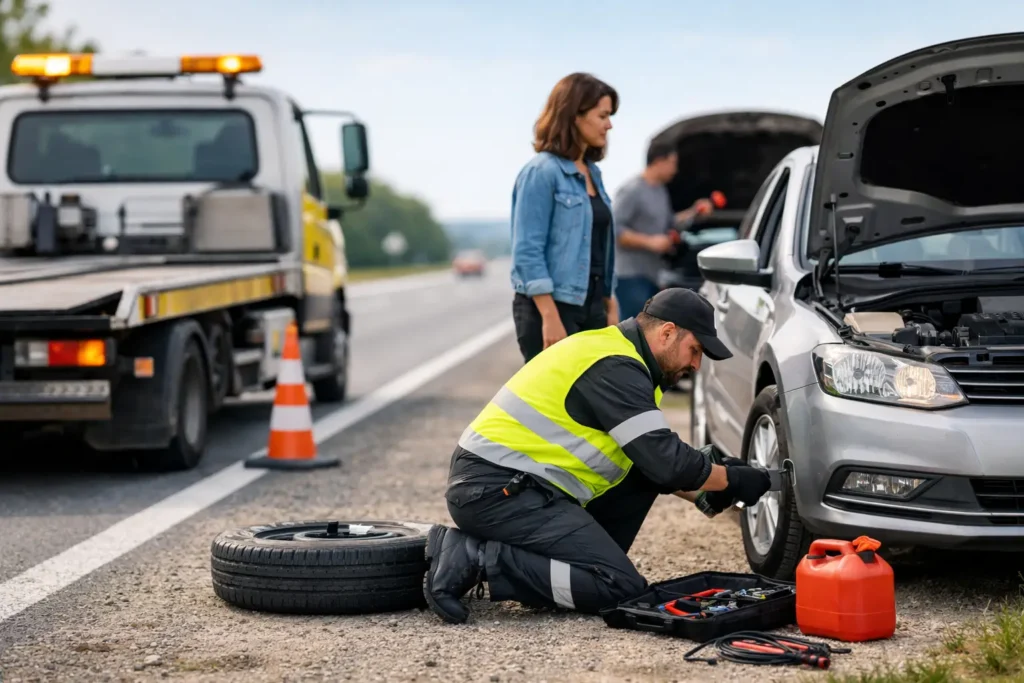
Flat tire service is another standard part of roadside assistance. If you have a usable spare, the technician may install it and get you back on the road. If the tire is shredded, the rim is damaged, or there is no spare in the vehicle, the next step may be towing instead of a roadside change. This is a good example of where coverage and outcome are not always the same thing. The service call may be covered, but the final solution depends on what your vehicle actually needs.
Lockout service is also common. If your keys are inside the car, the trunk is shut with the fob inside, or the lock system fails, roadside assistance can often help you regain entry without damaging the vehicle. Modern vehicles can make lockouts more complicated, especially with electronic security systems, but entry assistance is still one of the most requested roadside services.
Fuel delivery is another typical inclusion. If you run out of gas, roadside service can bring enough fuel to get you to the nearest station. Whether the fuel itself is included or charged separately depends on the provider. Some plans cover delivery only, while others include a limited amount of fuel.
Towing is usually the backstop service. When the car cannot be safely driven because of engine failure, accident damage, overheating, steering problems, transmission issues, or a battery that will not recover, roadside assistance often includes a tow to a repair shop, your home, or another approved location.
Services that may or may not be included
This is where many drivers get caught off guard. Roadside assistance sounds broad, but not every plan or provider includes the same level of support.
Winching or vehicle recovery is one example. If your vehicle is stuck in snow, mud, a ditch, or a tight off-road position, recovery may be available, but it is often treated separately from standard roadside help. The reason is simple: recovery can require special equipment, more time, and a higher-risk setup than a routine jump start or tire change.
Mobile tire replacement is another area where people make assumptions. Basic roadside assistance often means installing your spare, not supplying a new tire. If the tire needs full replacement, that usually becomes a separate service.
Battery replacement may also fall outside standard coverage. A provider may jump the vehicle and test the battery, but a brand-new battery, labor for installation, or disposal fees may cost extra. The same goes for more involved mechanical work. Roadside assistance is meant for immediate support, not full repair-shop service at the curb.
Commercial vehicles, motorcycles, larger SUVs, and electric vehicles can also change what is included. Some companies support all of them, while others place restrictions on vehicle size, weight, or transport requirements. EV towing, for example, needs proper handling and the right equipment. It should never be treated like a routine tow if the manufacturer has specific transport guidelines.
When roadside assistance is enough and when you need towing
A good roadside provider does not guess. They assess the situation quickly and tell you whether the issue can be handled safely on-site.
If your battery is dead, your tire can be swapped with a spare, or you are locked out with no damage to the locking system, roadside assistance is often enough. These are the problems that can usually be resolved within one visit.
If the car will not start because of a larger electrical issue, there is visible fluid leaking under the vehicle, the engine is overheating, the steering feels unsafe, or the brakes are compromised, towing is the safer choice. The same is true after a collision. Even if the vehicle still moves, hidden damage can make driving dangerous.
That is why clear dispatch questions matter. A professional provider will ask about your location, vehicle type, symptoms, and whether the car is in traffic, underground parking, or a hard-to-access area. Fast dispatch is important, but accuracy matters too. The wrong truck or the wrong service type wastes time when you are already stuck.
What roadside assistance usually does not cover
Roadside assistance is designed for urgent help, not unlimited repair work. Most services do not cover major parts, full diagnostics, body repair, accident reconstruction, storage, or long-distance transport unless those items are specifically included.
There may also be limits on towing distance. One provider may include only a short local tow, while another may offer a longer distance for an added charge. After-hours service, parking garage extraction, heavy-duty service, and multi-vehicle incidents can also affect pricing.
Weather and location matter too. A simple call on a residential street is not the same as a disabled vehicle on a highway shoulder in freezing rain. The job may still fall under roadside assistance, but the risk and equipment required can change the final cost.
Why pricing varies even for similar calls
Two drivers can request “roadside assistance” and need completely different levels of service. One needs a quick jump start in a driveway. The other has a flat tire on a busy expressway with no spare. Those are not the same job.
That is why transparent pricing matters. A trustworthy provider explains what is included in the dispatch, what may cost extra, and whether the issue is likely to turn into a tow or recovery. Hidden fees frustrate people because breakdowns are already stressful. Clear communication lowers that stress immediately.
For drivers across Toronto and the GTA, speed also matters. Waiting too long on the side of the road is not just inconvenient. It can become a safety issue, especially late at night, in bad weather, or in high-traffic areas. Fast, professional roadside support should reduce risk first and solve the vehicle problem second.
How to know what you are really getting
If you are calling for help right now, ask direct questions. Is the service on-site only, or does it include towing if the repair cannot be completed? Is fuel included or billed separately? Will the technician change the tire only if there is a spare? Can the provider handle your specific vehicle type, including EVs, motorcycles, or commercial units?
Those questions matter more than generic promises. The best roadside assistance is not just a broad service list. It is fast dispatch, licensed operators, the right equipment, and honest guidance about whether your vehicle can be fixed safely where it sits.
That is the standard at Emergency Roadside Service by South Toronto. When drivers are stranded, they do not need vague answers. They need a clear plan, a quick response, and a professional who treats the situation with urgency.
What roadside assistance include means in real life
For most drivers, the answer is straightforward: roadside assistance includes the immediate services that deal with the most common breakdown problems, from jump starts and lockouts to flat tires, fuel delivery, and towing when needed. But the fine print always comes down to the vehicle, the location, and whether the problem can be handled safely on-site.
If you ever need help, focus on three things first: safety, speed, and clarity. The right provider will tell you exactly what they can do, what it will cost, and how fast they can get you moving again.