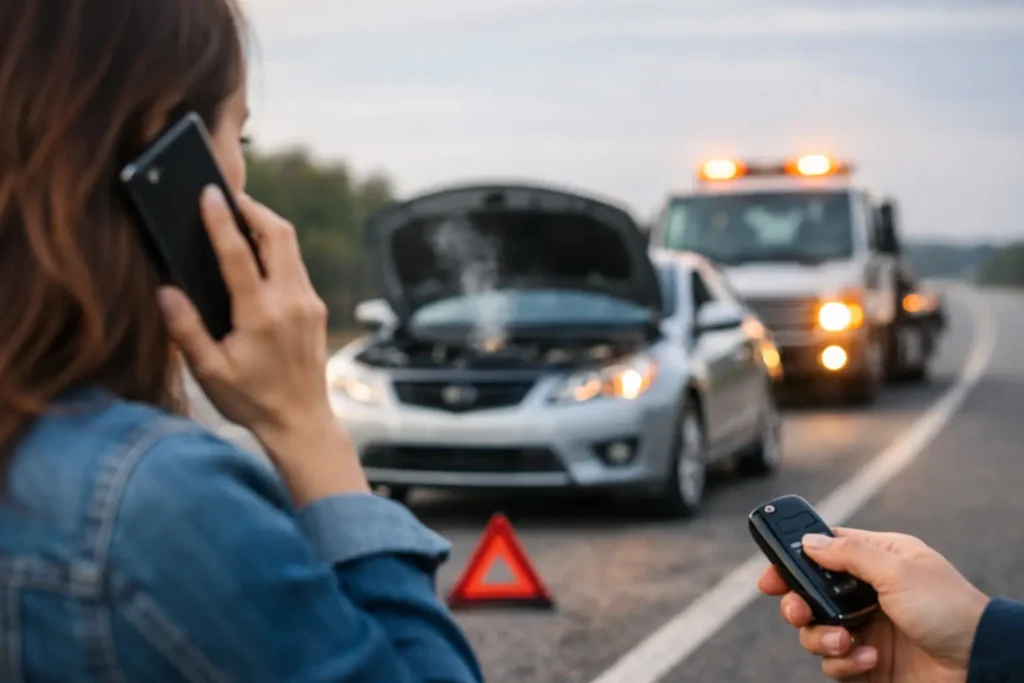
A breakdown never happens when it is convenient. It happens on the Gardiner in traffic, in a dark parking lot after work, or on a side street when your phone battery is already low. If you need to know how to request emergency towing, the goal is simple – get the right help to the right location as fast as possible, without confusion, delays, or surprise charges.
The good news is that the process is straightforward when you know what a dispatcher needs from you. A calm, accurate call can cut minutes off your wait time and make sure the truck arriving is equipped for your vehicle and situation.
How to request emergency towing without delays
The fastest towing requests are the ones with clear information from the start. When you call, the dispatcher is trying to answer three questions right away: where are you, what happened, and what kind of vehicle needs help.
Start with your exact location. A street name is helpful, but it may not be enough in a busy city or on a highway. Give the closest intersection, highway direction, exit number, parking lot name, landmark, or building address if you can. If you are on a major road, mention whether you are in a live lane, on the shoulder, or in a parking area. That detail affects urgency and helps the driver find you faster.
Next, explain what happened in plain language. You do not need to diagnose the problem like a mechanic. Say whether the car will not start, was in a collision, has a flat tire, hit a curb, is stuck, overheated, or has damage that makes it unsafe to drive. If the vehicle can roll and steer, say that too. If it cannot move, mention that immediately because the tow operator may need a flatbed or recovery equipment.
Then provide the vehicle details. The make, model, color, and whether it is a car, SUV, pickup, van, motorcycle, or EV all matter. Some vehicles need special handling. Electric vehicles, lowered cars, all-wheel-drive vehicles, and accident-damaged cars often require the right towing method to avoid further damage.
What to have ready before you call
If you are safe and able to check your phone, gather a few details before speaking with dispatch. This saves time and reduces back-and-forth while you are already stressed.
Have your location ready first. If you are unsure, use your phone map, look for a nearby sign, or check a parking receipt or business address. Also be ready with your phone number in case the driver or dispatcher needs to reach you if traffic, weather, or a blocked access point changes the arrival plan.
You should also know where you want the vehicle to go. Sometimes that is your home, your mechanic, a dealership, a body shop, or a tire shop. If you do not know yet, say so. A good dispatcher can still arrange pickup first and help you think through the destination based on the vehicle condition.
If the car is in a garage, underground lot, condo loading area, or other tight space, mention that early. Clearance limits and access restrictions can change which truck should be sent.
The safest way to wait for the tow truck
Your first priority is not the car. It is your safety.
If the vehicle is creating a hazard or you are on a highway shoulder, turn on your hazard lights right away. If it is safe to exit, move yourself and passengers away from traffic and stand behind a barrier or well off the road. If you are in a parking lot or side street, stay aware of your surroundings and keep your phone nearby.
If you have warning triangles or flares and know how to use them safely, they can help in low-visibility conditions. If not, do not take risks walking into traffic. At night, keep interior lights on if it helps the driver spot you, but avoid draining the battery if it is already weak.
There are situations where you should call 911 before a towing company. If there are injuries, a vehicle fire, leaking fluids after a collision, a car stopped in a dangerous traffic position, or any immediate threat to people nearby, emergency services come first.
What dispatchers need to know during an emergency towing request
Many drivers worry they need the perfect explanation. You do not. You just need the right facts.
A dispatcher will usually ask for your location, vehicle type, the issue, destination, and whether anyone is in danger. They may also ask whether the keys are available, whether the vehicle is accessible, and whether it can be placed in neutral. These are not trick questions. They help the operator arrive prepared.
If you are requesting towing after a collision, say whether the airbags deployed, whether police are on scene, and whether the vehicle has visible wheel or suspension damage. A car with front-end or axle damage is not the same as a simple no-start, and the equipment needs may change.
If you drive a commercial vehicle, delivery van, or work truck, mention cargo, weight, and whether the vehicle is loaded. That affects towing method, route planning, and dispatch timing.
How pricing usually works
One of the biggest concerns during a roadside emergency is cost. That is fair. Nobody wants to be stranded and then surprised.
When you request emergency towing, ask for a quote or estimate based on your location, vehicle type, and destination. Transparent pricing should be part of the conversation from the start. In many cases, the rate depends on factors like distance, vehicle size, whether recovery is needed, and whether the vehicle is stuck in a difficult position.
A simple tow from a parking lot to a repair shop will usually be different from accident recovery or a vehicle pulled from snow, mud, or a ditch. It depends on labor, equipment, and time on scene. The important thing is to ask upfront what is included and whether there may be added charges for mileage, after-hours service, storage, or complex recovery.
A professional company should explain this clearly. Fast service matters, but so does knowing what you are agreeing to.
When towing may not be the only service you need
Not every emergency requires a full tow. Sometimes drivers request towing when a roadside service could solve the problem faster and for less.
If the battery is dead, a jump start may be enough. If you locked your keys inside, lockout service is usually the better call. A flat tire might only need a mobile tire change if you have a usable spare. Running out of gas may only require fuel delivery.
That said, if the car has repeated electrical issues, severe tire damage, overheating, steering problems, brake concerns, or collision damage, towing is often the safer option. Saving a little money is not worth risking a breakdown again a mile later.
Common mistakes that slow down towing help
The most common delay is an unclear location. “Near downtown” or “by the gas station” may make sense to you in the moment, but it does not help much when a truck is trying to reach you in traffic. A close second is minimizing the problem. If the wheel is bent, the car is stuck against a curb, or the vehicle will not shift into neutral, say that early.
Another mistake is leaving the phone on silent or letting the battery die after placing the request. If dispatch or the operator cannot reach you, arrival can be delayed. If your phone battery is low, mention that during the call so the team knows communication may be limited.
It also helps to stay with the vehicle when safe to do so, or at least let dispatch know if you must step away. The operator needs to identify the right vehicle quickly, especially in apartment lots, office garages, and busy curbside areas.
How to request emergency towing for specialty vehicles
Some vehicles need extra care. If you drive an EV, tell dispatch immediately. Electric vehicles often have specific tow requirements, and using the wrong method can cause expensive damage. The same applies to motorcycles, luxury vehicles, low-clearance cars, and all-wheel-drive vehicles.
If your vehicle has custom wheels, a body kit, mechanical damage, or cannot be shifted, mention it. These details are not minor. They help the company send the right truck and protect your vehicle during loading and transport.
For drivers across Toronto and the surrounding area, a local provider with 24/7 dispatch and experience handling everything from standard breakdowns to accident towing can make the process much less stressful. Emergency Roadside Service by South Toronto is built around that exact need – fast coordination, clear communication, and help that shows up ready.
When your car stops and your day goes sideways, keep the next step simple. Share your exact location, describe the problem honestly, ask clear pricing questions, and put safety first while help is on the way.