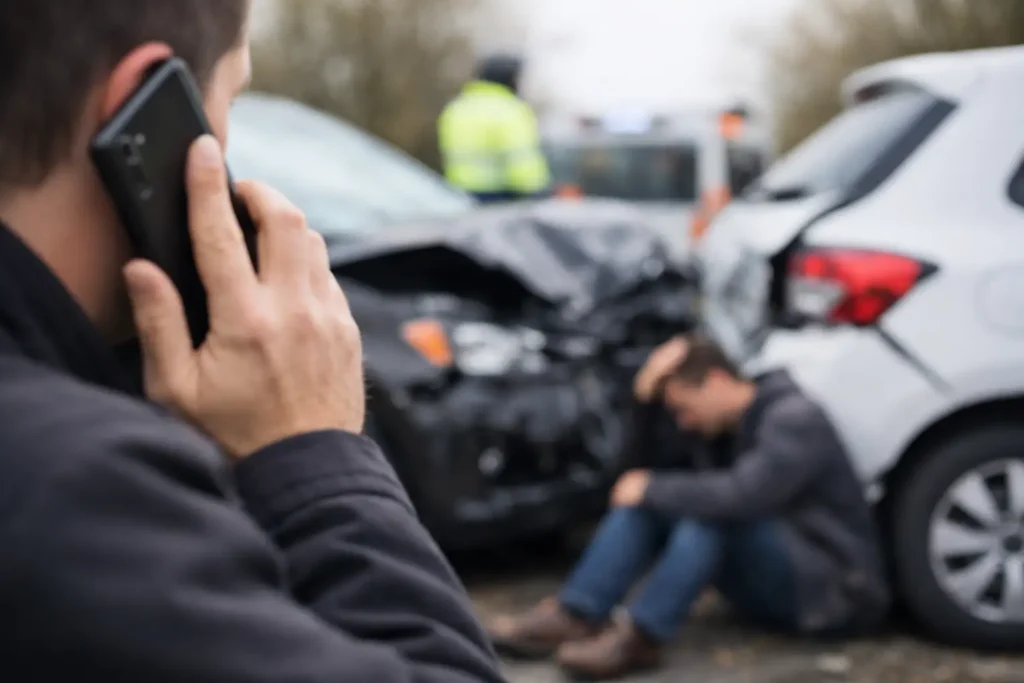
The moment after impact is noisy, confusing, and fast. If you are standing on the shoulder asking, who should I call after a collision, the answer depends on injuries, traffic risk, and whether your vehicle can move. The right calls, in the right order, protect your safety, your claim, and your vehicle.
Who should I call after a collision first?
Your first call is not always the same, but your first priority is. Safety comes before paperwork.
If anyone is hurt, if a vehicle is blocking traffic, if there is smoke, fire, leaking fluid, or the crash happened in an active lane, call 911 first. Do that before you call family, your insurance company, or a towing service. Emergency responders can secure the scene, arrange medical care, and help prevent a second collision.
If no one appears injured and the scene is stable, move to a safer location if your vehicle can be driven without making the damage worse. Turn on your hazard lights. If you have them, use reflective triangles or flares only if it is safe to step out and place them.
Once immediate danger is under control, the next people you may need to call are the police, your insurance company, and a towing company. The order can shift based on the situation. A minor parking lot bump is different from a multi-vehicle crash on a busy Toronto roadway.
Call 911 when the crash is dangerous or someone is injured
Many drivers hesitate because they do not want to overreact. After a collision, that instinct can work against you. Call 911 if anyone has pain, bleeding, dizziness, trouble breathing, or if a child, older adult, or motorcyclist is involved and there is any sign of injury. Some injuries show up slowly. It is better to get help moving than to guess wrong.
You should also call 911 if the vehicles are creating a road hazard, the other driver appears impaired, there is aggressive behavior, a hit-and-run, or you suspect the vehicle is unsafe to approach. Police and emergency crews can manage traffic and document what happened when the scene is not straightforward.
When you speak to dispatch, keep it simple. Give your location, say whether anyone is injured, explain whether traffic is blocked, and describe any immediate hazards like leaking fuel or smoke. Clear information gets help moving faster.
Do I need to call the police after a collision?
This is where drivers often get unsure. Not every collision requires the same police response, and local rules matter. If police are needed at the scene, follow dispatcher instructions and wait where it is safe.
In a less severe crash, you may be told to report the accident through the proper local process instead of waiting for an officer to attend. That does not mean the crash is unimportant. It means you still need documentation, photos, driver information, and often a formal report through the correct reporting channel.
If the other driver wants to “handle it privately,” be careful. Sometimes that works out. Often it creates problems later when stories change, hidden damage appears, or injury symptoms show up the next day. When in doubt, document everything and notify your insurer promptly.
When to call a towing company after a collision
If your vehicle will not start, has wheel or suspension damage, is leaking fluid, has deployed airbags, or feels unsafe to drive, call a towing company. This is not the moment to gamble on making it a few more miles. A damaged vehicle can fail suddenly and turn a stressful crash into a more serious roadside emergency.
A professional towing operator can move your vehicle without causing extra damage, especially if it needs a flatbed. That matters even more for all-wheel drive vehicles, low-clearance cars, motorcycles, and EVs, which often require specific handling.
If you are asking who should I call after a collision because your car is stuck in traffic after the crash, a towing company may be one of the most urgent calls after 911 or police. Quick removal helps protect you from secondary impacts and clears the road faster.
For drivers across Toronto and the GTA, a fast local dispatcher matters. You want licensed, insured operators, clear pricing, and a company that can respond right away instead of leaving you waiting on the shoulder. Emergency Roadside Service by South Toronto is built for exactly that kind of urgent call.
Should I call my insurance company right away?
Yes, in most cases you should notify your insurance company as soon as it is safe. You do not need every detail before you make that first call. What matters is opening the claim process early and getting guidance on next steps.
Your insurer may ask for the other driver’s information, photos, the location, time, police details if applicable, and whether the car has been towed. If a towing service is involved, keep the invoice and confirm where the vehicle is being taken. Good records now make the claim process smoother later.
There is one trade-off here. If you are in immediate danger on a busy road, do not sit there talking to insurance while your disabled vehicle remains exposed. Handle safety and towing first, then make the insurance call from a secure place.
Who else should I contact after a collision?
After the urgent calls are handled, there are a few other people you may need to contact depending on the situation.
If your vehicle is financed, leased, or part of a company fleet, your lender, leasing company, or fleet manager may require prompt notice. If you were driving for work or making deliveries, your employer may also need to know right away.
If you cannot drive home, call a family member or friend only after the scene is safe and the essential response is already in motion. Emotional support helps, but it should not delay emergency services, police reporting, or towing.
If you were in a rideshare or using a company vehicle, the reporting process can be more complicated. That is another reason to document the scene carefully and speak with the relevant insurer quickly.
What information should I gather before you leave the scene?
The best time to collect details is before vehicles are moved too far and before stress blurs the timeline. Get the other driver’s name, phone number, license plate, insurance information, and vehicle make and model. Take clear photos of both vehicles, the road, traffic signs, skid marks, debris, and the overall position of the cars.
If there are witnesses, ask for names and contact information. Keep your questions brief. Do not argue about fault at the roadside, and do not apologize in a way that could be taken as admitting liability. Just stick to facts.
It also helps to make a quick voice note or written note for yourself. Record the time, weather, direction of travel, lane position, and anything unusual you noticed. Small details become valuable later.
What not to do after a collision
A few common mistakes create bigger problems than the collision itself. Do not drive a vehicle that feels unsafe just because you want to avoid the hassle of a tow. Do not accept vague promises from the other driver instead of getting real insurance and identification details. Do not leave the scene before you understand your reporting obligations.
Also, watch for towing confusion. After a collision, drivers are vulnerable to pressure, especially in heavy traffic or late at night. Ask where your vehicle is being taken, who authorized the tow, how charges are calculated, and when you can access your car. Clear answers matter.
A practical order to follow when you are shaken up
If you need a simple sequence, use this. First, check for injuries and immediate hazards. Second, call 911 if anyone is hurt, the road is dangerous, or the crash is serious. Third, follow police reporting instructions if required. Fourth, call a towing company if the vehicle is not safe to drive. Fifth, notify your insurance company and keep all photos, notes, and receipts.
That order is not perfect for every crash, but it works well for most real roadside situations. The key is to make decisions based on safety first, then documentation, then vehicle recovery.
A collision can leave you rattled even when the damage looks minor. If you keep one thing in mind, make it this: the right call is the one that gets you out of danger fastest and puts your next steps in professional hands.