A fuel gauge sitting on empty can turn an ordinary Toronto drive into a stressful roadside stop fast. Fuel delivery roadside service gives you a practical way forward when you cannot safely reach the next gas station: a professional brings enough fuel to get your vehicle moving again, without asking you to walk along a busy road or gamble on a friend arriving with a gas can.
Whether you are stuck near the Gardiner, parked on a residential street in North York, or pulled over after a long delivery route in Scarborough, the first priority is simple: get yourself and your vehicle out of danger. Help can solve the fuel problem. Safe decisions while you wait help prevent a bad situation from becoming a bigger one.
What to Do When You Run Out of Gas
If the engine sputters, loses power, or stops after the low-fuel light has been on for a while, steer calmly toward the safest available location. Aim for a parking lot, side street, shoulder, or other area away from moving traffic. Avoid stopping in an active lane unless the vehicle has already lost power and you have no other option.
Once stopped, turn on your hazard lights. Put the vehicle in park, apply the parking brake, and stay aware of traffic around you. At night, in poor weather, or on a high-speed roadway, remaining inside with the doors locked is usually the safer choice. If smoke, a fuel odor, or another immediate hazard is present, move away from the vehicle and call for emergency assistance.
Do not keep cranking the engine repeatedly. A vehicle that has run out of fuel may not start until fuel has been added, and repeated attempts can drain the battery. Diesel vehicles can be especially sensitive because some models may need a priming procedure after running dry. Tell the dispatcher what type of vehicle you drive so the right assistance can be arranged.
How Fuel Delivery Roadside Service Works
A roadside fuel delivery call starts with clear location details. Give the dispatcher the closest intersection, highway direction, landmark, parking lot name, or address you can see. If you are on a highway, include the direction of travel and your nearest exit or kilometer marker when possible. This helps the operator find you quickly and approach from the correct side of the road.
You will also need to confirm your vehicle’s fuel type. Most passenger vehicles use regular gasoline, but some require premium gasoline, while diesel trucks and vans need diesel fuel. Guessing is not worth the risk. Check the label inside the fuel door, your owner’s manual, or the vehicle’s fuel cap if you are unsure. Putting the wrong fuel in a vehicle can create a much more expensive problem than an empty tank.
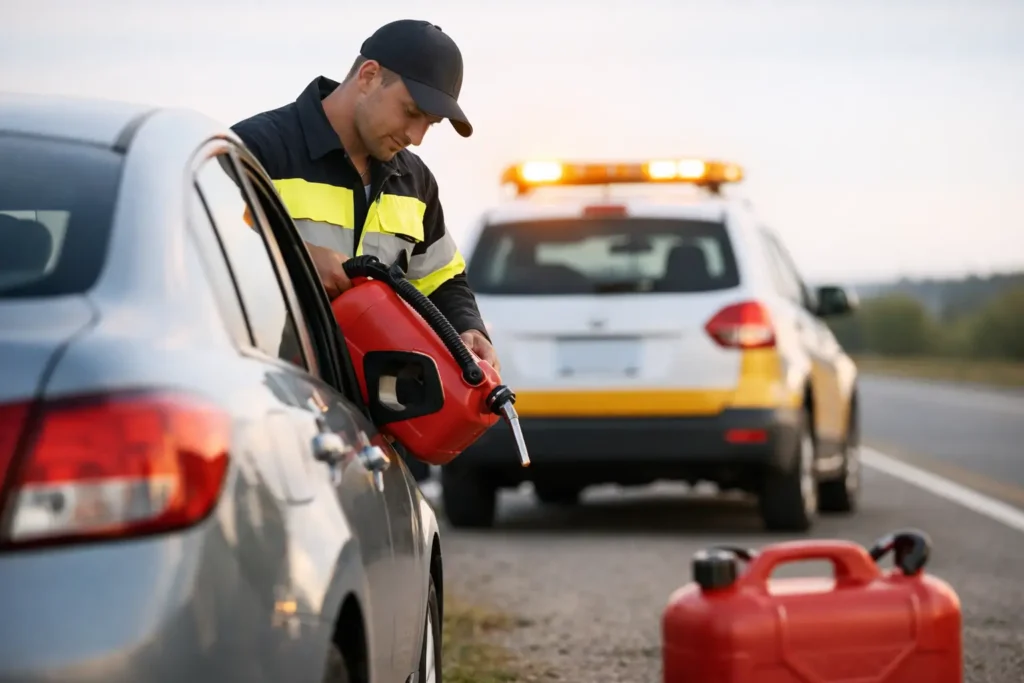
After arrival, the roadside operator adds a suitable amount of fuel so you can restart and drive to a nearby gas station. The goal is to get you mobile safely, not to fill the tank completely at the roadside. Once the fuel has been added, start the vehicle according to the operator’s guidance and let it run briefly before pulling away.
Emergency Roadside Service by South Toronto provides 24/7 dispatch support for drivers who need urgent help across Toronto and the GTA. A licensed, insured roadside professional can bring fuel to your location while you avoid the risks of walking to a station or accepting help from an unknown person.
When Fuel Delivery Is the Right Call
Roadside fuel delivery is a strong option when the vehicle is safely parked, you know the fuel type, and the issue is simply an empty tank. It is also useful for parents with children in the car, drivers traveling alone at night, commercial operators on a tight route, and anyone stranded far from a gas station.
There are situations where fuel may not be the only issue. If you added fuel and the engine still will not start, the problem could be a dead battery, a failed fuel pump, an electrical fault, or another mechanical issue. In that case, a jump-start, diagnostic assessment, or tow may be the safer next step.
A tow is also more appropriate if your vehicle is in an unsafe location, has been involved in a collision, has a visible fuel leak, or cannot be restarted after the correct fuel is added. A professional dispatcher can help you determine which service fits the situation instead of sending the wrong kind of assistance.
Stay Safe While You Wait for Help
Running out of fuel is frustrating, but rushing into the wrong decision can make it worse. Do not walk along a highway, cross several lanes of traffic, or stand beside your vehicle near moving cars. Toronto traffic can be unpredictable, particularly during rush hour, storms, and late-night construction closures.
Keep your hazard lights on and make your vehicle as visible as possible. If you have reflective markers or a roadside safety kit and can place them without entering traffic, use them. Otherwise, do not take chances just to set up equipment. Your visibility matters, but your personal safety matters more.
Keep your phone charged if possible, and be ready to answer calls from dispatch. If your location changes, such as when police or road crews ask you to move, notify the roadside provider right away. Accurate communication helps prevent delays and ensures the operator is looking in the right place.
If you are waiting in cold weather, conserve battery power by limiting unnecessary accessories. Running the heater is not possible with an empty tank, so keep warm with clothing or blankets stored in the vehicle. In hot weather, avoid sitting in direct sun when it is safe to move to a shaded nearby area.
Preventing Another Empty-Tank Stop
Fuel delivery is there when you need it, but a few simple habits can reduce the chance of another roadside interruption. Treat the low-fuel light as a prompt to refuel soon, not as a countdown to see how far the vehicle can go. The distance remaining display is only an estimate and can change based on traffic, hills, weather, idling, and driving style.
Make it a routine to refuel before long highway trips, winter drives, or late-night travel. A fuller tank also gives you more flexibility if traffic comes to a standstill or a detour adds unexpected distance. For delivery drivers and other high-mileage operators, tracking fuel stops as part of route planning can prevent lost time and missed appointments.
It also helps to keep a basic roadside kit in the vehicle. A phone charger, flashlight, reflective vest, warm layer, bottled water, and current roadside service contact information can make a stressful wait more manageable. Carrying a loose fuel container inside the vehicle is not always practical or advisable, especially if it is not properly sealed.
Clear Information Means Faster Service
When calling for fuel delivery roadside assistance, give the dispatcher the facts that speed up a safe response: your exact location, vehicle make and model, fuel type, whether you are in a safe place, and any access concerns. If you are in a parking garage, behind a gate, or on a restricted roadway, say so immediately.
Ask about pricing before service is dispatched if you have questions. A dependable provider should explain the service clearly, communicate what is included, and avoid leaving you uncertain about the next step. Fast help should not mean confusing charges or vague answers.
An empty tank does not have to leave you stranded for long. Pull over safely, make yourself visible, confirm your fuel type, and call for professional help. A calm response now can get you back on the road with far less stress and a better plan for the next fill-up.