A dead EV on the Gardiner, a warning light in North York, or a collision in Scarborough creates one immediate question: can you tow an electric car without causing more damage? Usually, yes – but the towing method matters far more than it does with many gas-powered vehicles.
Electric vehicles have high-voltage battery systems, electric motors that may remain connected to the wheels, and model-specific transport procedures. Pulling one the wrong way can damage the motor, drivetrain, tires, or battery system. When your EV cannot be driven safely, a proper flatbed tow is generally the safest answer.
Can You Tow an Electric Car With a Regular Tow Truck?
Not always. A conventional tow truck can move an EV only when the operator uses the right equipment and follows that vehicle’s manufacturer instructions. In most breakdown situations, the preferred method is a flatbed or rollback truck that carries all four wheels off the road.
This is not just a precaution. Many electric cars use a motor arrangement that can generate electricity when the drive wheels turn. That is useful while driving because it supports regenerative braking. During an improper tow, however, uncontrolled wheel rotation can send power through systems that are not operating as intended. The result can be expensive damage.
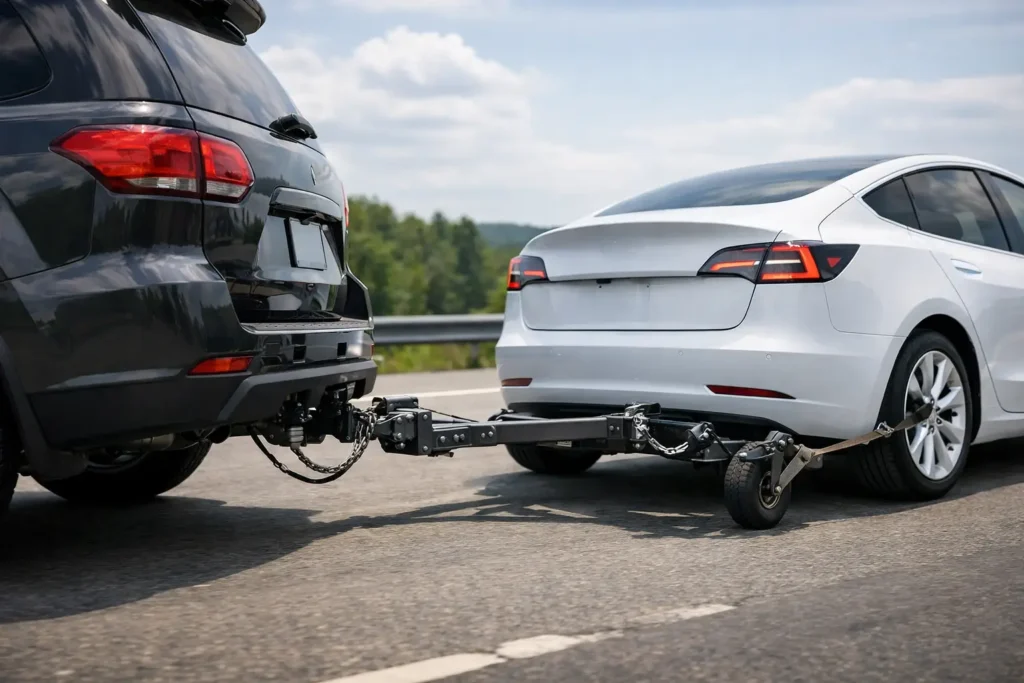
A wheel-lift tow may be acceptable for certain vehicles in limited circumstances, often with dollies keeping the driven wheels off the ground. But it is not a decision to make from the roadside based on guesswork. The vehicle manual and a trained towing operator should determine the method.
For most owners, the simple rule is this: if your EV will not drive, ask for flatbed towing.
Why Flatbed Towing Is Usually Best for an EV
A flatbed truck lifts and secures the entire vehicle on a level platform. None of the EV’s wheels need to roll on the pavement during transport. That reduces the risk of drivetrain damage and gives the operator better control during loading, especially after an accident or tire failure.
Flatbed towing also makes sense when an EV has a damaged wheel, suspension issue, locked brake, low ground clearance, or a battery concern. It is often the safest choice for all-wheel-drive EVs, which may have motors connected to both axles.
Proper loading matters, too. A trained operator should use approved recovery points, suitable tie-downs, and loading angles that protect the vehicle’s underbody. The battery pack in many EVs sits beneath the passenger compartment. Careless contact with the underside, improper straps, or a poorly placed hook can create a serious problem.
A professional tow is about more than getting the car onto a truck. It is about moving it without turning a manageable breakdown into a repair bill.
When You Should Not Try to Tow Your EV Yourself
Towing a disabled vehicle with another personal vehicle is risky under normal conditions. With an electric car, it can be especially risky. Do not attach a tow strap or rope and pull the EV down the road unless the manufacturer specifically permits that exact recovery procedure and the situation is safe to do so.
Even a short-distance pull can be problematic if the car cannot enter its approved tow or transport mode, if the parking brake will not release, or if the drive wheels remain on the ground. A dead 12-volt battery can complicate matters because it may prevent the vehicle from shifting into neutral or releasing electronic systems.
Trying to force a car into neutral, dragging it with locked wheels, or pulling it out of snow without knowing the approved recovery points can damage the vehicle. It can also put you, passengers, and other drivers at risk.
Call for professional help instead when the EV has lost power, displays a drivetrain or battery warning, has been involved in a collision, will not shift into neutral, or cannot roll freely.
What Happens If an Electric Car Runs Out of Charge?
Running out of charge does not automatically mean the battery is damaged. It does mean the vehicle may be unable to move under its own power, and some models will restrict functions to protect the battery.
The best first step is to park safely, turn on your hazard lights, and check whether a nearby charger is within a practical distance. If a mobile charging option is available, it may be enough to get the vehicle moving again. But if the EV is stranded in traffic, on a highway shoulder, in severe weather, or far from a charger, a flatbed tow is usually the safer choice.
Do not assume a few miles of towing will recharge the battery through regenerative braking. It does not work that way in a controlled or reliable manner, and towing with the wheels turning may damage the vehicle. An EV needs a proper charge source, not an improvised roadside solution.
Special Rules After a Collision or Battery Damage
Any EV involved in a collision deserves extra caution, particularly if the impact affected the underbody, wheel area, or battery compartment. High-voltage systems are designed with multiple safety protections, but visible damage, warning messages, smoke, hissing sounds, unusual heat, or a chemical odor require immediate attention.
Move away from the vehicle if it is safe to do so, keep others back, and contact emergency services if there is smoke, fire, or signs of a battery event. Do not touch exposed orange cables, damaged components, or pooled fluids. Do not attempt to charge the vehicle.
A damaged EV may need specialized handling and a secure storage location after towing. The goal is to prevent further damage and give qualified technicians a chance to inspect the vehicle before it returns to the road.
Before the Tow Truck Arrives
A few clear details can help dispatch send the right truck and equipment. Tell the dispatcher your EV’s make, model, and approximate location. Explain whether it has a flat tire, collision damage, a locked wheel, warning lights, no charge, or a problem shifting into neutral.
If you are in an unsafe location, prioritize your safety over the vehicle. Pull as far from traffic as possible if the car can still move. Turn on hazard lights, remain behind a barrier when available, and avoid standing between your vehicle and moving traffic. On a busy Toronto roadway, staying visible and out of traffic is critical.
If the EV is parked in a garage or tight underground lot, mention clearance limits. Some flatbed trucks may not fit, and the operator may need to plan a different recovery approach. Accurate details prevent delays and help avoid a second dispatch.
You can also locate the owner’s manual or vehicle app while you wait. Many manufacturers list towing instructions, transport mode steps, jack-point information, and emergency procedures. Do not feel pressured to operate unfamiliar settings, but having the information available can help the operator verify the correct process.
Questions to Ask a Towing Service for Your EV
When you need help quickly, ask whether the company has experience with EV towing and whether a flatbed is available. Confirm that the operator will follow manufacturer-approved procedures and can handle vehicles that will not shift into neutral or have locked wheels.
You should also ask for clear pricing before the tow begins. A professional service will explain the expected towing method, destination, and any special recovery requirements. If your EV needs to go to a dealership, collision center, charging location, or home, make that destination clear during dispatch.
Emergency Roadside Service by South Toronto provides 24/7 towing coordination for drivers across the GTA, including EVs that need flatbed transport, accident recovery, or help after a loss of charge. Fast dispatch and the right equipment can make a stressful roadside problem much easier to manage.
The Safest Decision When Your EV Cannot Move
Your vehicle’s manual has the final word because towing instructions vary by model, drivetrain, and condition. Some EVs have a designated tow mode. Others require all four wheels off the ground every time. A few may allow a short recovery only under strict conditions.
When you are unsure, do not let anyone drag the vehicle, tow it with its drive wheels rolling, or improvise with a strap. Request a flatbed, share the vehicle details, and let a qualified operator handle the recovery. That one decision protects your EV, your safety, and your next step home.