
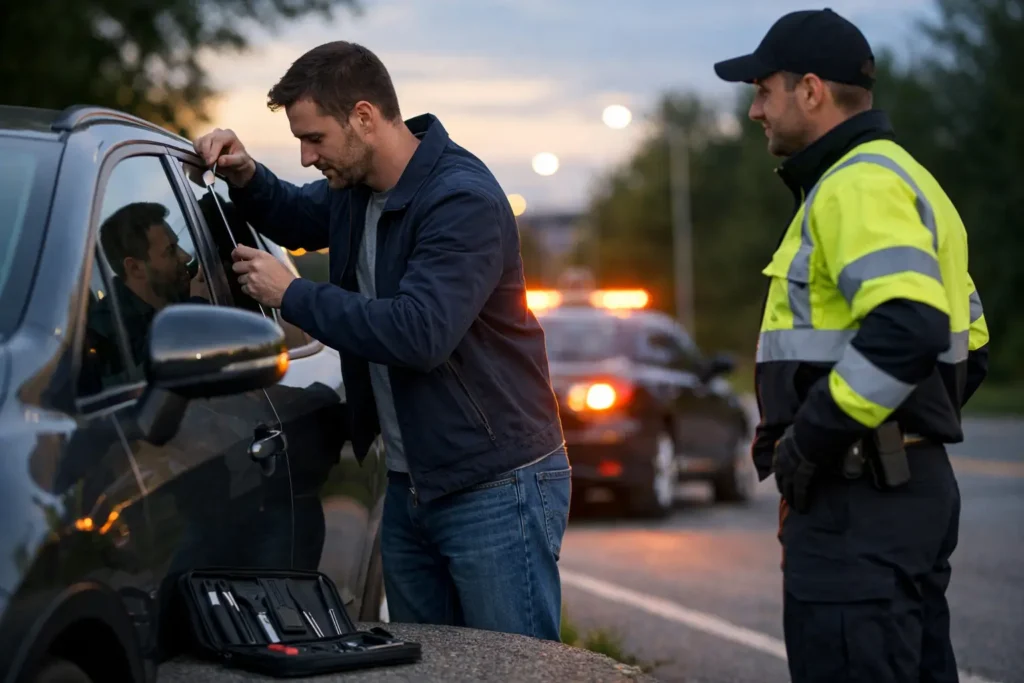
A car lockout can turn stressful fast, especially when you are parked in traffic, standing in bad weather, or trying to get to work, school, or an appointment. Knowing how to unlock car safely starts with one rule: protect people first, then protect the vehicle. A rushed DIY attempt can damage weather stripping, door locks, window glass, wiring, or side-curtain airbags – and the repair can cost far more than professional lockout help.
For drivers in Toronto and the GTA, the safest answer is usually simple: move to a secure location if possible, assess the urgency, and call a trained roadside technician for fast assistance. Here is what to do while help is on the way and when a different response is needed.
Check for an Immediate Emergency First
Before focusing on getting back into the vehicle, look inside. Is a child, older adult, pet, or anyone with a medical concern locked in the car? Is the engine running? Is the vehicle sitting in direct sun, extreme cold, or an unsafe location?
If a child or pet is in distress, or there is an immediate health risk, call 911 right away. Tell the dispatcher your exact location, vehicle type, and what you can see inside the car. Do not wait for routine roadside service when someone may be in danger.
If there is no one trapped inside, take a breath and avoid forcing the door. Many lockouts are frustrating, but they are not emergencies. A calm decision now can prevent broken glass, damaged locks, and a much bigger problem later.
Move Yourself Out of Danger
A lockout on a quiet driveway is inconvenient. A lockout on the shoulder of the Gardiner, near a busy downtown intersection, or in a poorly lit parking area requires extra caution.
Stand away from moving traffic and stay visible. If your vehicle is safely parked, remain nearby in a well-lit public area when possible. If you are on a highway shoulder, do not stand between your vehicle and traffic. Move behind a guardrail if one is available, or wait at a safe distance from the roadway.
At night, keep your phone charged and avoid accepting help from strangers who want to force the door open. A professional operator should identify themselves, explain the process, and use appropriate vehicle-entry tools rather than improvised methods.
How to Unlock a Car Safely: Start With the Simple Checks
Before requesting service, check the options that do not put your vehicle at risk. Look for a spare key with a family member, roommate, or nearby friend. Some vehicles also have manufacturer apps that may allow remote door access if you previously set up the account and your phone has service.
If your key fob battery has died, many modern vehicles still include a concealed mechanical key. The owner’s manual can show where to find it and how to access the key cylinder without damaging trim pieces. Be careful here: some cars trigger an alarm when opened mechanically, and the correct starting procedure may be needed afterward.
It also helps to check every door and the trunk once, without pulling aggressively. A door may be partially closed, a rear hatch may not have latched properly, or another entry point may be available. Do not keep pulling handles or jamming keys into locks. If the vehicle is not opening normally, stop before a small issue becomes physical damage.
Do Not Use Improvised Entry Tools
Online videos make vehicle entry look easy. In reality, using a coat hanger, screwdriver, wedge, wire, slim tool, or other household item can quickly cause expensive damage. Modern vehicles have tighter door frames, electronic locks, side-impact components, sensors, and wiring that can be affected by the wrong tool in the wrong place.
Forcing a gap in the door frame can bend the metal or permanently weaken the seal. That may lead to wind noise, water leaks, road noise, or a door that no longer closes correctly. Prying at a window can crack glass or scratch paint. Trying to manipulate the lock through the door can damage the linkage or interfere with the airbag system.
Breaking a window should never be the first response to a standard lockout. It creates sharp-glass hazards, exposes the car to theft and weather, and leaves you with a costly repair. The exception is a true life-safety emergency where emergency responders instruct you to act immediately.
Call a Professional Lockout Technician When You Need Fast Access
Professional roadside lockout service is designed to get you back into your vehicle without unnecessary damage. A trained technician uses vehicle-appropriate methods and verifies that you are authorized to access the car before starting work.
When you call, be ready to provide your location, the vehicle year, make, model, color, and whether the keys are visible inside. Mention any special circumstances, such as a dead key fob, a running engine, a child or pet in the vehicle, a garage location, or a vehicle parked in an underground lot. Clear details help dispatch send the right support without delay.
Ask for pricing before service begins. A dependable provider should explain the estimated cost, any factors that could affect it, and the expected arrival window. Emergency Roadside Service by South Toronto provides 24/7 roadside support for drivers who need prompt, professional help across Toronto and surrounding areas.
What to Expect During a Professional Car Lockout Service
A legitimate operator will usually confirm the vehicle information and request proof that you own or are authorized to use it. Your driver’s license, registration, insurance card, rental agreement, or digital documents may help. If your identification is locked inside, explain that when booking so the technician can advise you on what they need after entry is gained.
The technician will inspect the vehicle and choose an entry method suitable for its design. Some newer luxury vehicles, EVs, and vehicles with advanced security systems require extra care. The quickest method is not always the safest method, so a good operator will prioritize avoiding damage over shaving off a few minutes.
Once you are back inside, test the key, fob, lock, and door operation before the technician leaves. If the lockout happened because of a weak fob battery, replace it as soon as you can. If a key is bent, damaged, or intermittently working, arrange a replacement instead of waiting for another lockout.
Prevent the Next Lockout
Most people do not plan for a lockout until it happens. A few small habits can make the next one easier to handle. Keep a properly programmed spare key in a secure location, not hidden on the vehicle. Store a roadside assistance contact in your phone. If you use a manufacturer app, test it before you need it.
For families or shared vehicles, decide who has access to the spare key and make sure they know where it is kept. Delivery drivers and commercial operators may also benefit from keeping key-control procedures simple and consistent during busy shifts.
Avoid leaving keys on the seat, center console, or cargo area while loading groceries, equipment, or children. Many lockouts happen during quick stops when a driver sets the key down for just a moment and the doors auto-lock.
A locked car is frustrating, but it does not have to turn into a damaged door, broken window, or unsafe roadside situation. Stay visible, avoid improvised tools, and get trained help when the vehicle will not open normally. The fastest safe solution is the one that gets you moving again without creating a repair bill for tomorrow.