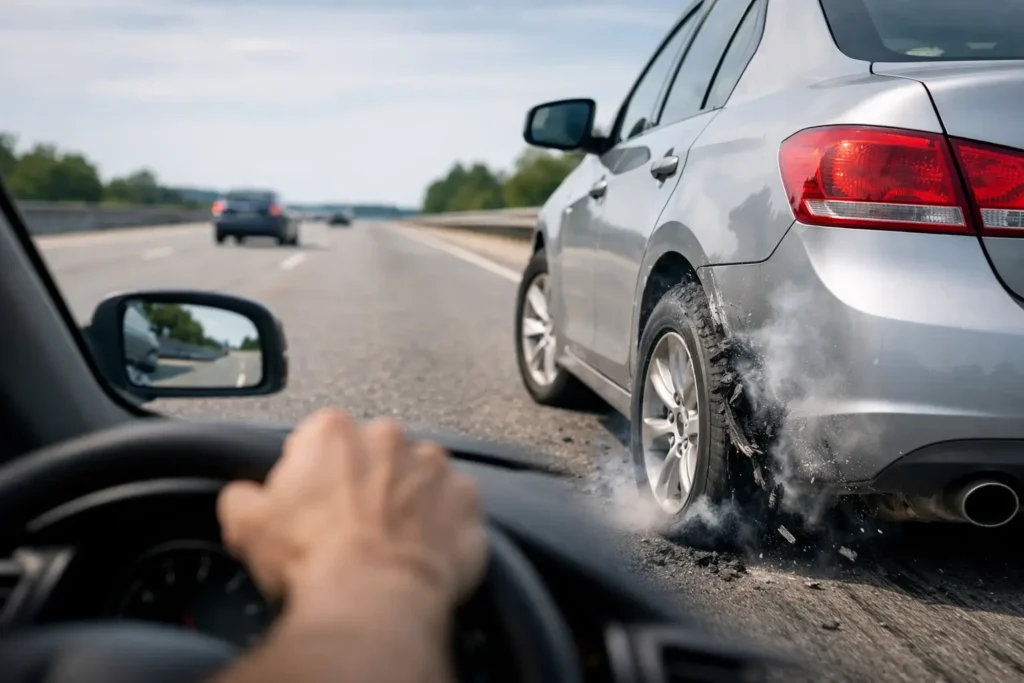
A tire blowout can turn a normal drive on the Gardiner, the 401, or a busy Toronto neighborhood street into an emergency in seconds. Knowing how to handle a blowout before it happens gives you the best chance of staying in control, protecting your passengers, and getting your vehicle safely off the road.
The noise may be startling: a bang, a rapid flapping sound, or a sudden pull at the steering wheel. Your first instinct may be to brake hard. Resist it. A calm, controlled response matters far more than a fast one.
How to Handle a Blowout in the First Few Seconds
Keep both hands firmly on the steering wheel and focus on holding your lane. A blown tire changes how the vehicle responds, especially at highway speed. The car may pull sharply to one side, feel unstable, or vibrate through the wheel and floor.
Do not slam on the brakes. Heavy braking can shift the vehicle’s weight abruptly and make a skid or loss of control more likely. Instead, ease off the accelerator. Let the vehicle lose speed gradually while maintaining a steady grip on the wheel.
If you have enough room and your vehicle is tracking straight, a very light, brief application of the accelerator can sometimes help stabilize a vehicle that is pulling hard after a blowout. This is not about speeding up. It is about maintaining control long enough to steer safely. Once the vehicle is stable, release the accelerator and allow speed to come down naturally.
Keep your steering movements small. Do not jerk the wheel toward the shoulder or make a sudden lane change. Check mirrors, signal when it is safe, and guide the vehicle toward the right shoulder, an exit, or the nearest safe stopping area. On a city street, that may mean a parking lot or a quiet side street rather than stopping in a live traffic lane.
Turn on your hazard lights when you are stable
Hazard lights warn other drivers that your vehicle has a problem, but steering comes first. Once you have control and are slowing down, turn them on. This is especially helpful on the Don Valley Parkway, Highway 401, or any road where surrounding traffic is moving quickly.
Avoid stopping immediately in an active lane unless the vehicle cannot move safely. Rolling a little farther to reach a wider shoulder or safer area is often the better choice, provided the damaged tire is not causing severe handling problems or vehicle damage.
Get Completely Off the Road Before Assessing the Tire
Once you reach a safe location, bring the vehicle to a complete stop. Put the transmission in park, engage the parking brake, and keep your hazard lights on. If it is dark, raining, snowing, or visibility is poor, stay especially alert to traffic around you.
Do not get out on the traffic side of the vehicle. If you must exit, use the passenger-side door when possible and move well away from moving vehicles. On a narrow shoulder, bridge, highway ramp, or busy downtown street, the safest decision may be to remain inside with your seat belt fastened while you arrange help.
A blowout does not always mean the tire simply went flat. The tread may have separated, the sidewall may be torn, or the wheel itself may be damaged after hitting a pothole, curb, or road debris. Driving farther on a shredded tire can damage the rim, brake components, suspension, and body panels. Once you are safely stopped, do not try to continue driving on it.
Decide Whether a Spare Tire Is Actually Safe to Use
A spare tire can get you moving again, but only when conditions are safe and the spare is usable. Before attempting a tire change, consider where you are parked, the traffic speed, weather, lighting, and your comfort level. Changing a tire beside fast-moving traffic is not worth the risk.
Check that you have a properly inflated spare, a jack, a lug wrench, and the vehicle’s wheel-lock key if your wheels use locking lug nuts. A compact temporary spare also has limits. It is intended for short-distance, low-speed driving, not regular highway travel or long trips.
If the vehicle is on an incline, soft ground, a narrow shoulder, or close to traffic, call for mobile tire change service instead. The same applies if the wheel is bent, the lug nuts will not move, you do not have a spare, or you are driving an EV or vehicle with specific lifting points. Using the wrong jack position can cause serious damage.
When towing is the safer choice
A tow is often the right answer when the tire failure has caused more than a flat. Call for towing if the rim is cracked, the tire has wrapped around suspension or brake parts, the vehicle pulls badly after the blowout, multiple tires are damaged, or you cannot safely install a spare.
Do not assume a run-flat tire is safe to drive on after a blowout. Some run-flat tires can travel a limited distance after pressure loss, but a violent failure, damaged sidewall, or warning light still calls for a professional inspection. Follow your vehicle manufacturer’s guidance rather than guessing.
What Not to Do After a Tire Blowout
A few common reactions can make a frightening situation worse. Do not brake aggressively, crank the steering wheel, shut off the engine while moving, or put the vehicle in neutral. You need steering control and predictable vehicle response until you are fully stopped.
Do not stand beside the vehicle near traffic to inspect the damage. Do not let passengers wait between the vehicle and the roadway. If everyone can safely leave the vehicle, move behind a guardrail or far from traffic. If leaving is unsafe, stay buckled inside and wait for assistance.
It is also wise to avoid accepting help from an unverified roadside operator who arrives without being called. Ask for clear pricing and confirm the service being dispatched. During a stressful roadside event, a licensed, insured provider and transparent communication make a real difference.
Call for Roadside Help When Safety Is in Question
If you are stranded after a blowout in Toronto, the priority is not proving that you can change a tire yourself. The priority is getting you, your passengers, and your vehicle out of danger. Provide the dispatcher with your exact location, direction of travel, vehicle make and model, tire size if known, and whether you have a spare.
Let them know if you are blocking traffic, parked on a highway shoulder, carrying children, driving a commercial vehicle, or dealing with wheel damage. These details help the right roadside truck arrive prepared.
Emergency Roadside Service by South Toronto provides 24/7 roadside support for drivers who need a mobile tire change, emergency towing, or help getting safely off the road. Call now when the location is unsafe, the damage is unclear, or you need a fast, professional response without added roadside stress.
Reduce the Chances of Another Blowout
Most blowouts have warning signs, although not all of them are obvious. Check tire pressure at least once a month and before longer trips. Underinflated tires build heat, wear faster, and are more likely to fail at highway speed. Use the pressure listed on the driver’s door-jamb label, not the maximum pressure printed on the tire sidewall.
Inspect your tires for bulges, cracks, exposed cords, uneven tread wear, and objects lodged in the rubber. A sidewall bulge often means the tire’s internal structure has been damaged, frequently after a pothole impact. That tire should be replaced, not ignored.
Keep up with tire rotations, wheel alignments, and suspension repairs. A vehicle that pulls, shakes, or wears one edge of a tire faster than the other needs attention. Toronto roads can be hard on tires and wheels, particularly after winter potholes and construction-season debris.
Finally, make sure your spare is present and inflated. A flat spare is no help during a real emergency.
A blowout is frightening, but it does not have to become a crash or an all-day problem. Hold the wheel, slow down gradually, move to safety, and call for help when the road conditions or damage make a tire change risky.