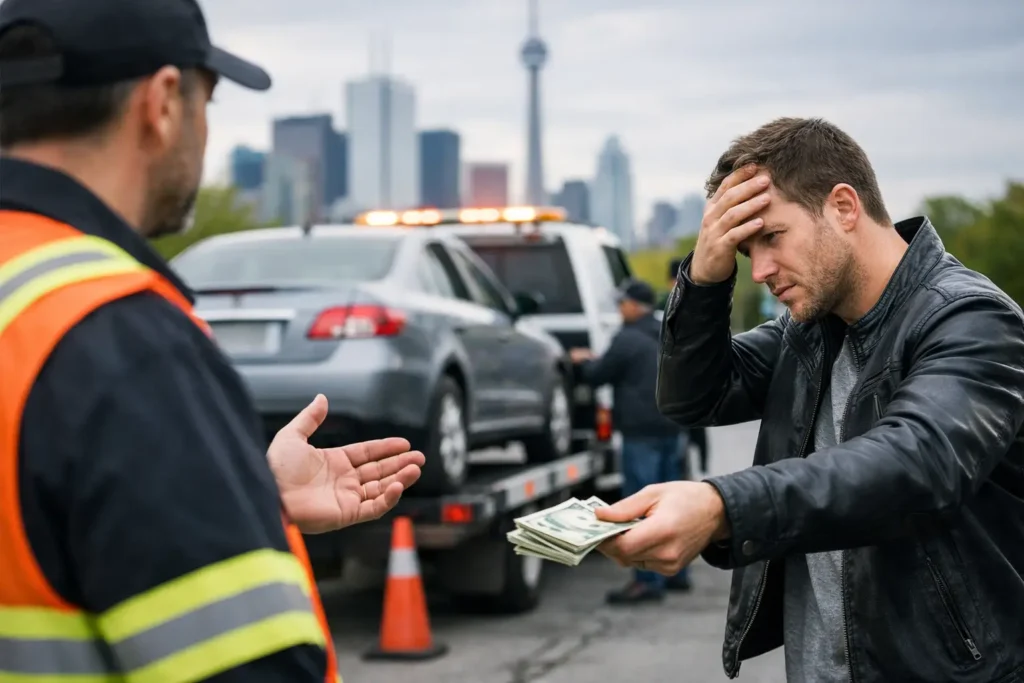
A crash on the Gardiner, a dead battery in North York, or a flat tire outside a Scarborough plaza can put you in a rush to accept help. That pressure is exactly why knowing the best signs of towing scams matters. A dishonest operator may count on you being shaken, late for work, or unsure where your car should go. A legitimate towing company should make the next step clearer, not more confusing.
Why towing scams happen when drivers are vulnerable
Most towing problems do not begin with a dramatic fake truck or a stranger demanding cash. They begin with a driver needing a quick answer. After a collision or breakdown, an unsolicited tow truck may arrive before the police, your insurer, roadside assistance provider, or a company you called. The driver may sound confident, claim they were dispatched, or tell you that you have no time to decide.
In Toronto and across the GTA, there are rules around towing, consent, and disclosure. Still, rules only help if you pause long enough to use them. You do not need mechanical knowledge to protect yourself. You need a few simple questions, a clear destination, and the willingness to say no when the details do not add up.
10 best signs of towing scams to watch for
1. The tow truck arrives before you call anyone
An unrequested truck is not automatically a scam, especially after a visible collision. But it should put you on alert. Do not assume the operator was sent by your insurer, the police, your dealership, or your roadside plan simply because they arrived quickly.
Ask who dispatched them and how they received your information. Then contact your insurer, roadside provider, or chosen towing company yourself. If the operator becomes impatient when you verify their story, treat that as a warning.
2. The driver pressures you to decide immediately
A legitimate operator understands that you may need a moment to call family, an insurer, or a trusted shop. Scammers use urgency as leverage. They may say the vehicle will be impounded if you do not sign now, that your insurance requires their service, or that another truck will take your car if you hesitate.
There are situations where traffic safety requires a fast decision. If your vehicle is blocking a lane or creating danger, move yourself to a safe place and follow directions from police or road authorities. Even then, ask where the vehicle is going and get the company details before it leaves.
3. They will not give a written estimate or rate details
Price should not be a mystery. Before a non-police-directed tow begins, ask for the hookup fee, per-mile or per-kilometer charge, storage rate, after-hours fees, winching fees, and any administrative costs. A professional provider can explain what applies to your situation and provide documentation.
Be cautious when someone says, “Insurance will cover everything,” without explaining the charges. Coverage depends on your policy, the circumstances, and approved limits. It is not a blank check for an operator to add fees later.
4. The paperwork is blank, incomplete, or rushed
Never sign a blank authorization form. A tow authorization should identify the company, vehicle, pickup location, destination, and relevant charges or rate information. Read it before signing, even if the driver is waiting.
If you are too shaken after an accident to handle paperwork, call your insurer or a trusted person for help. Take a photo of every document you sign. If the operator refuses to leave you a copy, do not proceed unless law enforcement is directing the tow.
5. They steer you to one repair shop without your approval
Your vehicle should go where you authorize it to go: your home, your preferred repair shop, a dealership, or another agreed location. A tow driver may recommend a shop, but the choice remains yours unless a specific authority or insurer arrangement applies.
Be especially careful if the operator insists that a certain body shop is the only option, claims your insurance company “always uses” that shop, or says your car cannot be released to any other location. Those statements deserve verification directly with your insurer.
6. The company identity is hard to verify
Look for clear company information on the truck and paperwork. Ask for the operator’s name, business name, dispatch number, and the location where your vehicle will be stored if it is not going directly to a repair shop.
A professional company should be willing to identify itself and explain its process. If the truck has vague markings, the driver will not provide a business address, or the contact number does not connect to a real dispatcher, choose another provider if it is safe to do so.
7. The payment demand changes after the vehicle is loaded
One of the most stressful towing scam patterns is the price shift. You may be quoted one amount at the roadside and then told the cost is much higher once your car is on the truck. The operator may claim surprise equipment charges, mileage, or storage costs that were never discussed.
Ask for a full explanation before the tow begins. If you approve added work, request an updated written estimate. Keep your receipt, photos of the truck and vehicle, and notes on the time and location. Documentation is useful if you need to speak with your insurer, dispute a charge, or file a complaint.
8. They demand cash only or use payment pressure
Cash itself is not proof of fraud, but cash-only demands can make disputes harder to resolve. Be careful if the driver refuses to provide a receipt, tells you the credit card machine is always broken, or pressures you to use a personal payment app without company documentation.
Ask what payment methods are accepted before service starts. A clear invoice and receipt should show the company name, service provided, date, vehicle details, and amount paid. Do not hand over your card, insurance information, or keys without knowing who is taking responsibility for the vehicle.
9. They refuse to let you inspect your vehicle or record its condition
Before a tow, take quick photos of your vehicle from several angles if it is safe. Include existing damage, the license plate, and the interior if you have valuables inside. Remove important personal belongings, documents, medications, and work equipment whenever possible.
A reputable operator should not object to you documenting your car. If there is existing collision damage, ask that it be noted. This is not about accusing the driver. It is a practical record that protects everyone if a question comes up later.
10. They will not clearly say where your vehicle is going
Never let your car leave without knowing the exact destination. Get the repair shop or storage yard name, address, phone number, and operating hours. If storage is involved, ask about daily fees and what you need to bring to retrieve the vehicle.
Vague answers such as “our yard,” “a secure lot,” or “the shop we work with” are not enough. The longer a vehicle sits in an unknown location, the more difficult and expensive it can become to recover.
What to do before approving a tow
Your first priority is personal safety. If you are stranded in an active traffic lane, on a highway shoulder, or in an unsafe area, move away from traffic when possible and call emergency services if there is a threat of injury or danger. Do not stand between vehicles or remain inside a car that could be struck.
Once you are safe, call a towing provider yourself whenever circumstances allow. Tell dispatch your exact location, vehicle type, condition, and destination. Ask for an estimated arrival time and a clear price range. For an EV, all-wheel-drive vehicle, motorcycle, or vehicle with severe accident damage, confirm that the company has the right equipment, such as a flatbed or specialized recovery gear.
When the truck arrives, match the operator and vehicle to the company you contacted. Confirm the destination out loud before loading begins. Photograph the authorization and save the receipt. These small steps take minutes and can prevent a long dispute.
When a quick tow is still the right call
Waiting for the cheapest option is not always the safest option. If your vehicle is blocking traffic, leaking fluid, damaged after a collision, or stuck in a hazardous location, prompt professional towing is often necessary. The goal is not to distrust every tow truck. It is to choose a service that communicates clearly while getting you out of danger.
Emergency Roadside Service by South Toronto dispatches licensed, bonded, and insured operators for urgent towing and roadside help across the GTA. A trustworthy dispatch process should confirm your service, explain the plan, and give you a clear way to ask questions before your vehicle moves.
If something feels off, pause before you sign. Get yourself to a safe location, call a verified provider, and make sure the tow destination, price details, and paperwork are clear. A calm decision at the roadside can save you from a far more expensive problem later.