A damaged vehicle can turn a short trip into a dangerous roadside situation fast. This guide to towing a damaged vehicle helps you make the next safe decision: protect the scene, avoid making the damage worse, and arrange the right type of tow instead of taking a risky shortcut.
Whether you are stopped on a busy Toronto expressway, a downtown side street, or a parking lot in North York, the priority is the same. Get people out of danger first. Your vehicle can be repaired or recovered. A rushed tow setup can create a second collision, damage the transmission or suspension, or put you and other drivers at risk.
Start With Scene Safety, Not the Tow
If your vehicle has been in a collision, has a flat tire, is overheating, or will not move under its own power, pull over only if it can be done safely. Turn on your emergency flashers, set the parking brake if the vehicle is stable, and move occupants away from traffic whenever possible. On a high-speed road or anywhere with limited visibility, staying inside with seat belts fastened may be safer than standing near the vehicle. Use your judgment based on the traffic around you.
Do not stand between your vehicle and oncoming traffic. Do not attempt to push a damaged car across active lanes. If there is smoke, fluid leaking near a hot engine, exposed wiring, or a fuel smell, move well away from the vehicle and contact emergency services.
Take a few photos once you are safe. Capture the vehicle position, visible damage, license plates, road conditions, and any debris. This can help with an insurance claim and gives the towing dispatcher a clearer picture of what equipment may be needed.
Decide Whether the Vehicle Can Be Towed
Not every disabled vehicle should be pulled with a tow strap or lifted by two wheels. The condition of the vehicle, its drivetrain, and the location of the damage determine the safe recovery method.
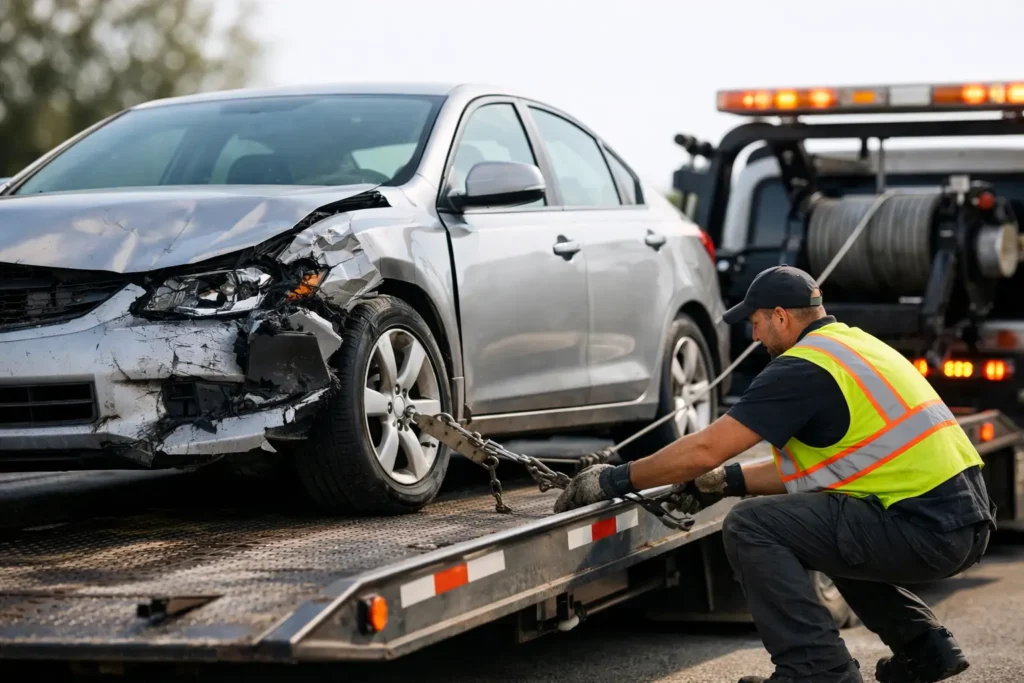
A vehicle may need a flatbed tow when there is collision damage, a locked wheel, suspension damage, a broken axle, severe tire damage, steering problems, or an unknown mechanical failure. Flatbed towing keeps all four wheels off the road. That prevents additional wear and reduces the chance that a damaged part will fail while the vehicle is being moved.
All-wheel-drive and four-wheel-drive vehicles often require a flatbed unless the operator uses approved equipment such as dollies. Towing these vehicles incorrectly can damage the drivetrain. The same caution applies to many electric vehicles. EVs are heavier than comparable gas-powered models, have specific lift points, and may need special handling after a collision or battery-related issue.
If your car has an automatic transmission and cannot be placed in neutral, do not force it. If the steering is locked, the wheels are turned sharply, or a wheel is rubbing against the body, tell the dispatcher before the truck arrives. Those details affect how the operator loads and secures the vehicle.
When a Wheel-Lift Tow May Be Appropriate
A wheel-lift tow can be an efficient option for a vehicle with a simple breakdown and no damage to the lifted end. It may suit certain front-wheel-drive vehicles when the front wheels can be safely raised and the rear wheels roll freely, or rear-wheel-drive vehicles when the rear is correctly lifted.
But it depends on the vehicle and the failure. A wheel-lift is not the low-cost answer to every problem. A qualified operator should confirm the drivetrain, damage location, ground clearance, and manufacturer towing requirements before loading the vehicle.
What to Tell the Towing Dispatcher
Clear information helps send the right truck on the first trip. When you call for towing, provide your exact location, including the nearest intersection, highway direction, landmark, or parking-garage level. Share the make, model, year, and whether the vehicle is gas, diesel, hybrid, or electric.
Explain what happened in plain terms. For example: “The front passenger wheel is bent after hitting a curb,” “The car overheated and will not restart,” or “The rear axle looks damaged after a collision.” Let the dispatcher know if the vehicle is in a garage, underground lot, ditch, narrow lane, or blocked by another vehicle. Height restrictions and tight access can require different equipment.
Also mention whether the keys are available, whether the vehicle rolls, whether it can shift into neutral, and where you want it taken. A repair shop, collision center, dealership, or your home may all be possible destinations, but the safest destination depends on the damage and your insurance instructions.
Ask for clear pricing before service begins. A professional towing company should explain the expected dispatch and towing charges, along with potential additional recovery costs if the vehicle is inaccessible, heavily damaged, or requires specialized equipment.
Do Not Risk a DIY Tow After Damage
A tow strap, rope, or chain can look like a quick fix, especially when a friend is nearby. For a damaged vehicle, it is usually the wrong move. Straps can snap, attachment points can fail, and the towed driver may have limited braking or steering control. This is particularly dangerous in city traffic, rain, snow, steep parking ramps, and congested intersections.
Never attach a strap to a bumper, suspension arm, axle, or any part that is not a designated recovery point. Even factory tow hooks are generally designed for controlled recovery, not extended road towing. A bent frame, damaged underbody panel, or loose wheel can make the situation more unpredictable.
You should also avoid driving a vehicle that has suffered an impact simply because it still starts. Damage can be hidden. A cracked radiator, leaking fluid line, compromised tire sidewall, shifted suspension component, or damaged battery pack may not be obvious from the driver’s seat. If the vehicle handles differently, pulls to one side, makes grinding noises, displays warning lights, or leaks fluid, arrange a tow.
Prepare the Vehicle for Professional Loading
Once help is on the way, gather your personal belongings, insurance information, registration, and any necessary repair-shop details. Remove valuables if the vehicle will be stored overnight. Keep your phone charged if possible and stay available for the driver’s call.
When the tow operator arrives, point out all visible damage and explain what you noticed before and after the incident. Mention any special features, such as low ground clearance, air suspension, an electric parking brake, aftermarket wheels, or a key fob that is not working. This is not extra information. It helps prevent loading mistakes.
Do not direct the loading process from a dangerous position. The operator needs room to work around winch cables, ramps, traffic, and the damaged vehicle. Stay where you can communicate but remain clear of the recovery area. Before the truck leaves, confirm the destination, make sure you understand the estimate, and ask how you will receive any service documentation.
Special Considerations for EVs and Hybrids
Electric and hybrid vehicles deserve extra caution after a crash, especially if the underbody has struck an object or the battery area is damaged. Do not touch orange high-voltage cables, attempt a jump start unless the vehicle’s procedure allows it, or park a damaged EV inside a garage without professional guidance.
Tell the dispatcher that the vehicle is electric or hybrid before they send a truck. The correct loading method, securement points, and storage precautions matter. A flatbed is commonly the safest choice because it avoids rolling a potentially compromised vehicle on its drive wheels.
Choose a Tow Company That Protects Your Vehicle
Fast service matters when you are stranded, but the cheapest quote is not always the safest outcome. Look for a towing provider that can explain what truck it is sending, assess vehicle damage before loading, and give you a straightforward estimate. Licensed, bonded, and insured operators provide an added layer of protection when your vehicle needs more than a basic roadside tow.
For drivers across Toronto and the GTA, Emergency Roadside Service by South Toronto provides 24/7 dispatch for accident towing, flatbed towing, EV towing, and complex roadside recovery. The goal is simple: get the right equipment to your location quickly and move your vehicle without adding to the problem.
A damaged vehicle does not need a rushed solution. Get yourself to a safe spot, share accurate details with the dispatcher, and let a properly equipped tow operator handle the recovery. That one decision can protect your vehicle, your insurance claim, and everyone at the roadside.