A tow truck showing up fast is only half the job. The other half is choosing the right towing method for your vehicle, your location, and the kind of problem you are dealing with. When drivers ask about flatbed towing versus wheel lift, they are usually asking a practical question: which option protects the vehicle better and gets it moved without creating a second problem.
That answer depends on the car, the damage, and the pickup conditions. In a busy city, where vehicles break down in parking garages, side streets, condo lanes, and packed downtown roads, the wrong towing setup can mean delays, added wear, or extra risk. The right setup gets the vehicle loaded safely, moved efficiently, and delivered without surprises.
Flatbed towing versus wheel lift: the basic difference
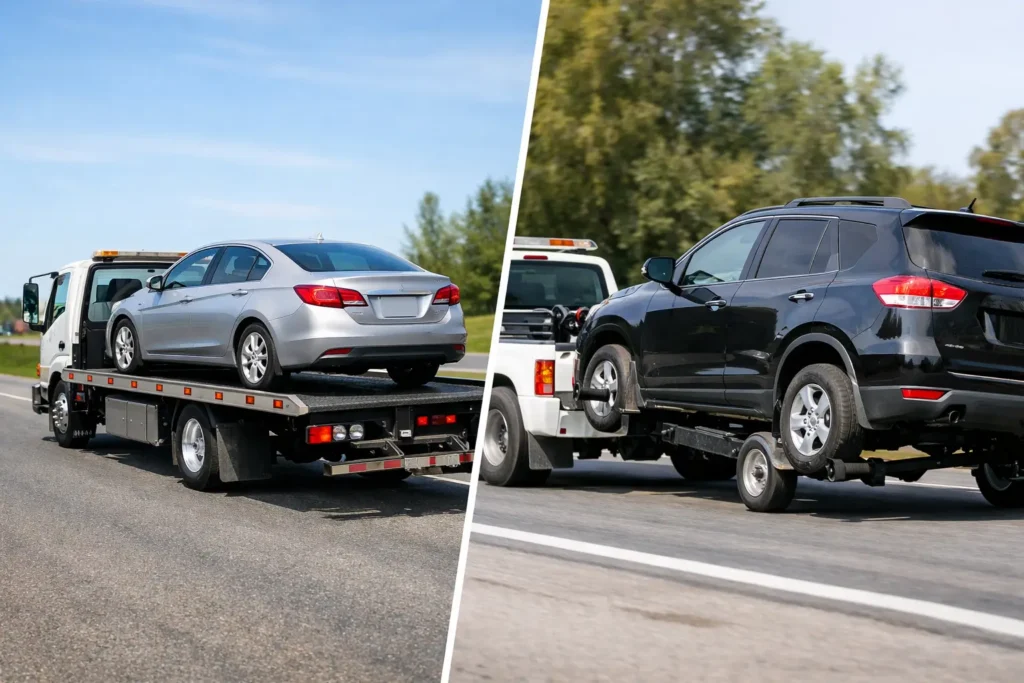
A flatbed tow truck carries the entire vehicle off the ground on a platform. The car is either driven onto the bed, winched up, or carefully loaded if it cannot roll. Once secured, all four wheels stay off the road during transport.
A wheel lift tow truck lifts one end of the vehicle by the front or rear wheels while the other two wheels remain on the road. This method is common for shorter tows, quick relocations, and vehicles that can be safely towed with two wheels rolling.
Both methods are widely used, and neither is automatically right or wrong. What matters is whether the towing method matches the vehicle’s drivetrain, condition, ride height, and the space available at the scene.
When flatbed towing is the better choice
Flatbed towing is often the safest option when the goal is maximum protection. Since the whole vehicle rides on the truck, there is less road contact and less chance of tire wear, drivetrain strain, or damage from dragging a low front bumper or damaged undercarriage.
This matters most for all-wheel drive vehicles, electric vehicles, luxury cars, lowered vehicles, motorcycles, and any car with serious accident damage. If the transmission is compromised, the suspension is broken, or a wheel is bent, a flatbed is usually the smart move. It also gives the operator more control when loading a vehicle that cannot be started or steered normally.
For longer-distance transport, flatbeds also make sense. Keeping the entire vehicle off the road reduces exposure to potholes, debris, and tire-related issues during the tow.
Vehicles that usually belong on a flatbed
AWD and 4WD systems are a big reason flatbeds are recommended so often. Many of these drivetrains do not tolerate being towed with two wheels on the ground unless very specific procedures are followed. The same is true for many EVs, which often have manufacturer rules that strongly favor flatbed transport.
Flatbeds are also preferred for high-value vehicles. If you drive a luxury sedan, sports car, classic car, or a vehicle with very low clearance, the extra protection is worth it. The loading angle, secure tie-down points, and full-lift transport help reduce the chance of scraping or stress during the move.
When wheel lift towing makes sense
Wheel lift towing is often faster and more practical for certain jobs. It works well for standard front-wheel-drive or rear-wheel-drive vehicles when there is no major collision damage and the vehicle can safely roll on two wheels.
In dense urban areas, wheel lift trucks have a real advantage. They can often access tighter spaces more easily than a larger flatbed. If a car is stuck in a narrow alley, a tight parking lot, or a cramped roadside position, a wheel lift truck may be the quickest way to get it out and moving.
This method is also useful for short-distance tows, impounds, unauthorized parking removal, and straightforward roadside recoveries where speed matters and the vehicle’s condition allows it. A skilled operator can complete a wheel lift hookup quickly, which can help clear traffic and reduce the time you are stranded.
Why speed is not the only factor
Faster does not always mean better. A wheel lift may be more efficient at the scene, but if the vehicle has hidden suspension damage, transmission issues, or a drivetrain that should not roll, the quicker option can become the more expensive one. That is why professional dispatch matters. The truck should match the vehicle, not just the address.
Safety, damage risk, and vehicle type
If you are comparing flatbed towing versus wheel lift strictly on vehicle protection, flatbed usually comes out ahead. It removes more variables because the vehicle is fully supported and not rolling during transport.
That said, wheel lift towing is not unsafe by default. When it is used on the right vehicle and done by a trained operator, it is a reliable and common towing method. Problems usually happen when the vehicle type is misidentified, accident damage is underestimated, or the tow is rushed without considering the drivetrain and clearance.
For example, a front-wheel-drive sedan with no major damage may be perfectly fine with a wheel lift if it is lifted from the correct end. But the same setup could be a poor choice for an AWD crossover, a Tesla, or a car with a damaged axle after a collision.
Cost differences between flatbed and wheel lift
Drivers often assume wheel lift towing is always cheaper. Sometimes it is, especially for local, uncomplicated tows. The equipment can be faster to position, and the job may take less time.
But the price difference is not the whole story. If a flatbed is the correct method for your vehicle, choosing a cheaper tow type that risks drivetrain or body damage is not a savings. It is just shifting the cost to a repair bill later.
Transparent pricing matters here. A professional towing company should explain why one method is recommended over the other and give you a clear estimate before the tow begins. If the vehicle needs flatbed transport, that recommendation should be based on safety and manufacturer guidelines, not upselling.
City towing in tight spaces
Toronto-area drivers deal with towing situations that are not always simple. A highway breakdown is one thing. A disabled SUV in an underground condo garage, a delivery van blocking a laneway, or a car with front-end damage stuck on a narrow downtown street is something else.
This is where dispatch experience matters as much as equipment. Sometimes a flatbed is ideal for the vehicle but harder to position at the pickup point. Sometimes a wheel lift can remove the vehicle from a tight spot first, or a smaller truck is needed to access the scene. Real towing decisions are often about the vehicle and the environment together.
An experienced operator will look at the scene, the damage, and the vehicle specs before loading. That protects the car and gets the road cleared faster.
How to know which tow truck to request
If you are stranded and unsure what you need, give the dispatcher the details that matter most. Mention the make and model, whether the car is AWD or electric, whether it has accident damage, whether it can roll, and where it is located. If the wheels are locked, the steering is damaged, or the car is sitting unusually low, say that right away.
Those details help determine whether a flatbed or wheel lift is the safer call. They also help avoid delays caused by sending the wrong truck first.
If you drive an EV, luxury vehicle, motorcycle, or an all-wheel-drive vehicle, it is usually smart to ask for a flatbed unless the dispatcher advises otherwise based on the exact situation. If you drive a standard two-wheel-drive car with no major damage and it needs a short local tow, a wheel lift may be completely appropriate.
The real question is not which is better
The better question is which method is better for this vehicle, in this condition, at this location. That is the difference between a routine tow and a stressful one.
At Emergency Roadside Service by South Toronto, that decision is treated like a safety issue, not a guess. Fast dispatch matters, but sending the right truck matters just as much. A careful tow protects your vehicle, your time, and your peace of mind when the day has already gone sideways.
If you ever need help choosing between flatbed towing versus wheel lift, focus on protection first, speed second, and always tell dispatch exactly what happened. The right information at the start usually leads to the right tow the first time.