
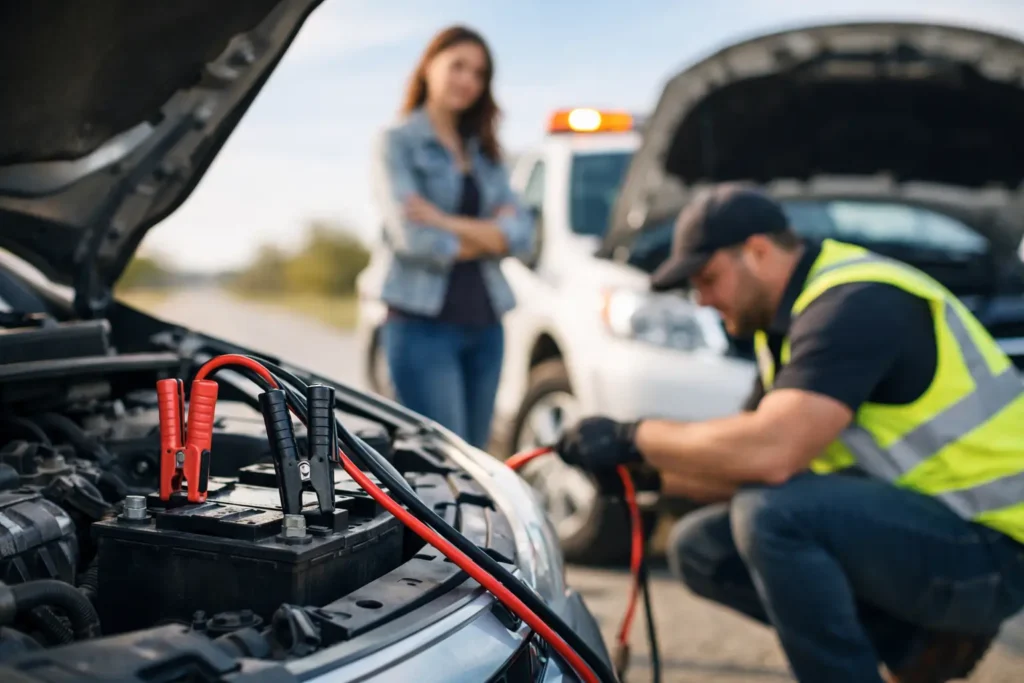
You turn the key, hear a weak click, and suddenly your whole schedule stops. When you need dead car battery roadside help, the priority is not theory – it is getting your vehicle started safely, fast, and without making the problem worse.
A dead battery can happen in a condo garage in Downtown Toronto, on a side street in Little Italy, outside a store in Scarborough, or before an early shift in North York. It does not always mean your battery is ruined, and it does not always mean a simple jump start will solve everything. The right roadside response depends on what caused the battery to die, how long it has been weak, and whether there is a larger electrical issue behind it.
What dead car battery roadside help should include
Good roadside battery service does more than show up with jumper cables. It starts with fast dispatch, clear communication, and a technician who can work safely in traffic, parking garages, apartment lots, and tight urban streets. When you are stranded, you need a real assessment, not guesswork.
In many cases, a professional jump start is enough to get you moving again. But there are situations where the battery will not hold a charge, the terminals are badly corroded, the alternator is failing, or the starter is the actual problem. That is why roadside help should focus on the immediate fix and the next safe step. If your car starts, you need to know whether it is likely to restart once you shut it off. If it does not start, you need a towing plan right away.
For drivers across Toronto, speed matters, but safety and honesty matter just as much. A rushed jump start done carelessly can damage sensitive electronics, especially on newer vehicles with more complex electrical systems.
The most common reasons a battery dies
Most dead batteries are caused by ordinary situations, not major breakdowns. Interior lights left on overnight, extreme cold, an aging battery, or a vehicle that has been sitting too long are all common triggers. Winter is especially hard on batteries because cold weather reduces cranking power just when the engine needs more effort to start.
That said, it is not always about the battery itself. If your alternator is not charging properly, the battery may go dead again soon after a jump. If battery terminals are loose or corroded, the connection can fail even when the battery still has life left. Some drivers also assume a dead battery is the issue when the real cause is a faulty starter or another electrical fault.
This is where experience matters. The goal is not just to boost the battery and send you off. The goal is to help you avoid getting stranded again a few blocks later.
What to do before roadside help arrives
If your vehicle will not start, stay calm and start with safety. Turn on your hazard lights if possible. If you are stopped in traffic or on the shoulder, remain inside the vehicle when it is safer to do so, especially at night or during bad weather. If you are in a parking lot or driveway, make sure the vehicle is in park and the ignition is off.
Avoid repeated start attempts. If the battery is weak, constant cranking can drain it further and overheat electrical components. It also makes it harder to tell whether the issue is a drained battery or something else.
If you called for dead car battery roadside help, be ready to share your exact location, vehicle make and model, and any symptoms you noticed. A rapid clicking sound, dim dashboard lights, or total loss of power can all help the dispatcher and operator prepare for the call.
If you have jumper cables but are unsure how to use them, wait for a professional. Incorrect cable placement can create sparks, damage the battery, or harm onboard electronics. The risk is higher in tight parking structures, during rain, or when visibility is poor.
Jump start or tow – which one do you need?
This depends on how the vehicle responds. If the battery was drained by a light left on and the battery is still in decent condition, a jump start often solves the problem. You may still need to drive long enough for the battery to recover, but the vehicle can usually get back on the road quickly.
If the car starts and then stalls, or if electrical power fades again almost immediately, the issue may be the charging system rather than the battery. In that case, driving farther can leave you stuck in a worse location. A tow is usually the safer option.
If the battery case is swollen, leaking, badly corroded, or very old, jumping it may not be the best answer. Some vehicles also have battery placement or manufacturer procedures that require extra care. Professional roadside operators know when a jump start is appropriate and when towing is the smarter call.
Dead car battery roadside help in Toronto is not one-size-fits-all
Toronto driving conditions add extra pressure to battery problems. Underground garages can make access harder. Dense traffic can turn a simple no-start into a safety issue. Winter temperatures can kill a marginal battery overnight, while short city trips may not give the alternator enough time to fully recharge it.
That is why local response matters. A service team familiar with Downtown Toronto, Etobicoke, Midtown, East York, Parkdale, and surrounding GTA neighborhoods can dispatch more efficiently and prepare for access issues before arrival. Fast help is important, but the right equipment and local knowledge often make the difference between a quick restart and a long delay.
For families, commuters, rideshare drivers, and delivery vehicles, every minute counts. The best roadside service understands that you are not just dealing with a battery problem. You are dealing with missed appointments, safety concerns, weather exposure, and uncertainty.
Why professional roadside service is worth it
It can be tempting to flag down another driver for a boost, especially if you are in a rush. Sometimes that works. Sometimes it creates a bigger problem. Modern vehicles are more sensitive than older models, and improper jump starts can lead to blown fuses, damaged electronics, or injury.
Professional roadside assistance gives you a safer process, better diagnosis, and a clear plan if the vehicle still will not start. You also get accountability. Licensed, bonded, and insured operators bring the right equipment and know how to work around busy roads, parking restrictions, and vehicle-specific needs.
Transparent pricing matters too. When you are stranded, you should not have to argue over vague fees or inflated emergency charges. Clear service terms and direct communication reduce stress at the exact moment drivers need it most.
How to reduce the chance of another dead battery
Once your car is running again, do not assume the problem is gone for good. If the battery is more than a few years old, especially after repeated weak starts, it may be near the end of its life. If you mostly take short trips, the battery may not be getting fully recharged between starts.
Have the battery and charging system checked if the problem returns, if headlights seem dim, or if the engine cranks slowly in the morning. Cleaning battery terminals can help in some cases, but only if corrosion is the issue and the battery itself is still healthy.
Cold weather drivers should be especially proactive. A battery that seems fine in mild weather can fail quickly during a Toronto cold snap. Planning ahead is cheaper and easier than dealing with a no-start in a freezing parking lot before work.
When to call right away
Call immediately if your vehicle is stalled in traffic, stuck in an unsafe area, or completely without power at night or in bad weather. You should also call if you tried one start attempt and got nothing but clicking, if you smell something burning, or if you see damage around the battery.
If you are unsure whether you need a jump start, lockout help, tire service, or a tow, a good dispatcher can help sort that out quickly. One call should move the situation forward. That is the standard drivers should expect from a real roadside company.
Emergency Roadside Service by South Toronto handles these calls with the urgency they deserve – fast dispatch, straightforward pricing, and practical help that matches the actual problem, not just the first symptom.
A dead battery always seems to happen at the worst time, but the right help can turn a stressful stop into a short delay. Stay safe, get the vehicle assessed properly, and make the next step the one that gets you moving with confidence.