
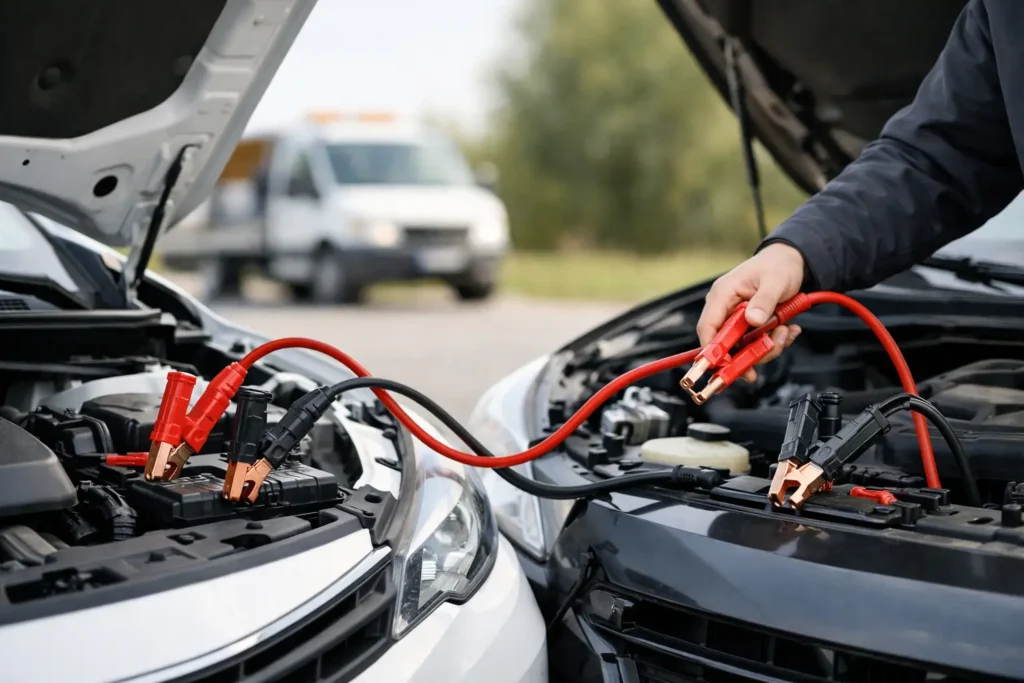
A dead battery rarely happens at a convenient time. You may be leaving work downtown, parked outside a grocery store in North York, or trying to get home after a late shift in Scarborough. This guide to jump start service explains what to do first, when a jump is the right solution, and why calling a trained roadside technician can protect both you and your vehicle.
A vehicle that will not start is stressful, but it does not always mean you need a tow. In many cases, a fast battery boost gets you moving again. The key is staying safe, recognizing the warning signs, and avoiding a rushed jump-start attempt that could cause damage.
First, Make Sure You Are Safe
If your vehicle stalls or will not start in a driveway, parking lot, or garage, take a moment before opening the hood. Put the car in park, engage the parking brake, turn off headlights and accessories, and make sure everyone is clear of traffic.
Safety becomes more urgent on a Toronto roadway, highway shoulder, or busy street. Turn on your hazard lights immediately. If you are in an unsafe location, such as a narrow shoulder, a blind curve, or an active lane, do not try to jump the vehicle yourself. Move away from traffic if it is safe to do so, then call for roadside assistance or emergency help when needed.
Never attempt a jump start if the battery is cracked, leaking, swollen, frozen, or giving off a strong sulfur-like smell. These signs can point to a damaged battery, and connecting jumper cables may create a serious hazard. A professional can inspect the situation and determine whether a jump, battery replacement, or tow is the safer next step.
How Do You Know It Is a Dead Battery?
A dead battery often has a few clear symptoms. You may hear rapid clicking when turning the key, see dim dashboard lights, notice slow cranking, or get no response at all when pressing the start button. Interior lights, power locks, and the radio may also be weak or unresponsive.
Still, a no-start problem is not always a battery problem. A failed alternator, loose battery connection, starter issue, blown fuse, empty fuel tank, or electronic fault can produce similar symptoms. If your car starts after a jump but dies shortly afterward, the alternator may not be charging the battery properly. Continuing to drive could leave you stranded again within minutes.
This is where a trained roadside operator offers more value than a quick boost from a stranger. They can check the battery condition, look for obvious terminal issues, and help you decide whether it is reasonable to drive to a repair shop or arrange a tow.
What a Professional Jump Start Service Does
A professional jump start service is designed to get you back on the road safely and efficiently. After dispatch, the operator arrives with a commercial-grade jump pack or properly maintained equipment, rather than relying on another vehicle’s battery.
The technician will confirm that the battery is appropriate to jump, locate the correct terminals, and attach the equipment in the proper order. This matters because incorrect cable placement can damage sensitive electrical systems, blow fuses, or create sparks near the battery.
Once the vehicle starts, the operator may check for common concerns such as corroded terminals, loose connections, or signs that the battery is beyond its service life. You will then have a clearer idea of what to do next. If the vehicle is unlikely to restart after being shut off, arranging a tow to a trusted repair facility may save you from another breakdown later that day.
For drivers across Downtown Toronto, Etobicoke, Midtown, East York, Parkdale, Little Italy, and nearby GTA neighborhoods, fast dispatch coordination matters. You should not have to wait for a friend with cables, flag down another driver, or take risks in bad weather just to get a car started.
When You Should Call for a Jump Start Instead of Doing It Yourself
If you have the right cables, know your vehicle’s battery location, and are parked safely, a DIY jump may be possible. But it is not always the best choice. Modern vehicles often have complex electronics, battery monitoring systems, and components that are easy to damage with an improper connection.
Call for a jump start service if you are in traffic, parked in an unfamiliar area, dealing with extreme cold, unsure where the battery terminals are, or driving a hybrid, EV, luxury vehicle, commercial vehicle, or newer model with specialized jump points. The same applies if you do not have reliable cables or a safe second vehicle.
A professional call is also the better option when time matters. Delivery drivers, commuters, parents with children in the car, and business operators cannot always spend an hour waiting for help. A 24/7 roadside provider can dispatch the right assistance while you stay safe and informed.
What to Tell the Dispatcher
Clear details help the dispatcher send the right vehicle and reduce delays. Explain your exact location, including the street, nearby intersection, parking level, or recognizable landmark. Let them know the make, model, and year of your vehicle if you have it available.
Mention whether you are in a safe parking space, on a roadside shoulder, in an underground garage, or blocked in a location with limited access. Tell the dispatcher what happened before the vehicle would not start, such as leaving lights on overnight, hearing clicking sounds, or needing multiple boosts recently.
If you drive an EV or hybrid, say so right away. These vehicles may have a 12-volt battery that can require a boost, but their high-voltage systems require different handling. The right equipment and trained service make a real difference.
After the Jump Start: Do Not Assume the Problem Is Solved
A successful jump start gets the engine running, but it does not repair the underlying cause. Let the engine run and drive directly to a battery retailer, mechanic, or service center when practical. A reasonable drive can help recharge a healthy battery, but it will not restore a battery that is failing internally.
Avoid shutting the vehicle off right away unless you are already at a place where it can be tested. If the battery is old, the weather is very cold, or you have needed more than one boost recently, have the charging system checked as soon as possible.
Watch for warning lights, dim headlights, electrical glitches, or a battery warning indicator. These can signal an alternator or charging issue rather than a simple drained battery. If the car stalls, loses power, or will not stay running, pull over safely and request towing instead of trying repeated jumps.
Common Causes of a Dead Battery
Toronto weather is hard on batteries. Deep winter cold reduces battery performance, while summer heat can shorten battery life over time. Short trips can also prevent the battery from fully recharging, especially when the vehicle runs heated seats, defrosters, lights, and phone chargers.
Other common causes include interior lights left on, a door not fully closed, an aging battery, corroded terminals, aftermarket accessories, or an alternator that is not charging correctly. Most car batteries last only a limited number of years, so recurring trouble should be treated as a warning, not bad luck.
You can reduce surprises by having the battery tested before winter, keeping terminals clean, and paying attention to slower starts. If your vehicle sits unused for long periods, start it regularly or use a battery maintainer approved for your vehicle.
Choosing a Reliable Roadside Provider
When your battery dies, the lowest advertised price is not the only factor. Ask whether the provider is available 24/7, whether pricing is explained before service, and whether the operator is licensed, bonded, and insured. Fast dispatch is valuable, but professional handling and clear communication matter just as much.
Emergency Roadside Service by South Toronto provides prompt jump starts and roadside support for drivers who need calm, capable help without unnecessary delays. Whether the issue is a drained battery, a lockout, a flat tire, or a vehicle that needs towing, the goal is simple: get the right help to your location and give you a safe next step.
A dead battery can interrupt your day, but it does not need to leave you stuck. Stay visible, stay out of traffic, and call now for professional roadside help when a safe jump start is the fastest way forward.