A dead battery in a downtown parking garage needs one kind of help. A wrecked suspension after hitting a pothole on the Gardiner needs another. When drivers search for tow truck versus roadside assistance, what they usually want is a fast answer: who should I call right now, and will it solve the problem on the spot?
The short answer is simple. Roadside assistance is for issues that can often be fixed where your vehicle is parked. A tow truck is for situations where the vehicle cannot be driven safely, cannot be repaired on the roadside, or needs transport after a breakdown or collision. The difference matters because the right call saves time, reduces risk, and gets you moving faster.
Tow truck versus roadside assistance: what is the difference?
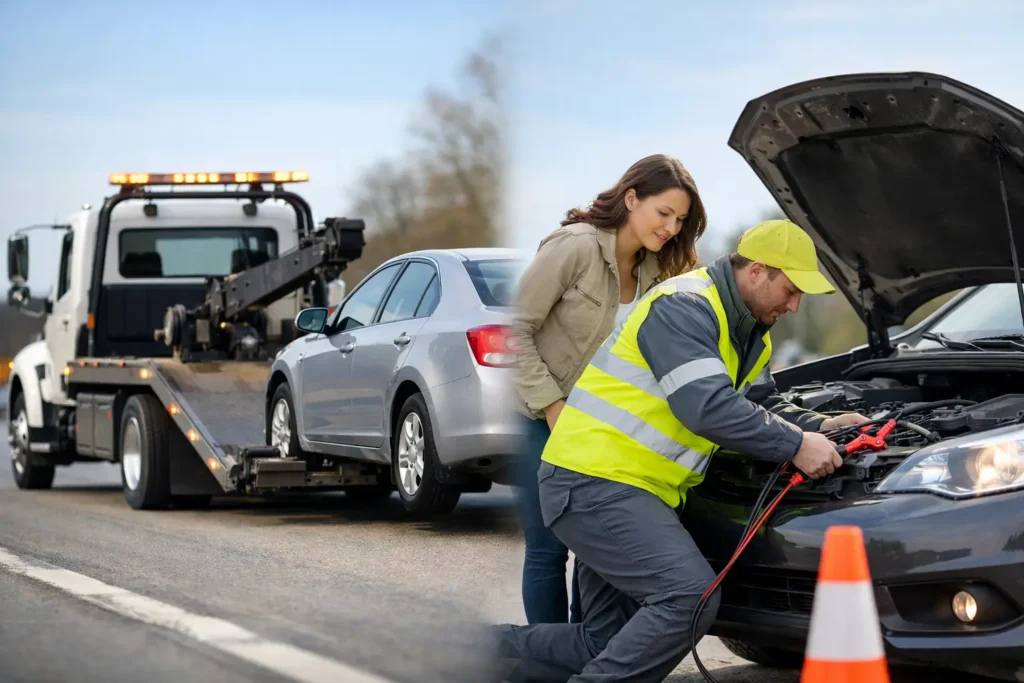
Roadside assistance is meant for common, non-collision problems that leave you stuck but may not require moving the vehicle to a shop. That includes jump starts, tire changes, lockout service, and fuel delivery. In many cases, the technician arrives, resolves the issue at your location, and you drive away within minutes.
A tow truck service is different. It is built to transport a vehicle that should not be driven. That could be because of mechanical failure, collision damage, wheel or axle issues, overheating, transmission trouble, or an EV problem that calls for proper towing equipment. If the vehicle is unsafe, immobilized, or at risk of further damage, towing is the better choice.
For drivers under stress, the confusion usually comes from the fact that some companies offer both. That is actually a good thing. It means dispatch can assess the situation and send the right equipment instead of guessing.
When roadside assistance is the right call
If your problem is minor and localized, roadside service is usually faster and more affordable than towing. A dead battery is the most common example. If your lights were left on overnight or cold weather drained the battery, a jump start may be all you need.
Flat tires are another clear case. If the tire can be changed safely at the scene and you have a usable spare, roadside service makes sense. The same applies to lockouts and running out of gas. These are urgent problems, but they do not always require vehicle transport.
Roadside help is also a good fit when your car is otherwise in working order. If the engine runs, the steering and brakes are normal, and there is no visible damage that affects safety, on-site service is often the quickest route back on the road.
That said, there are limits. A flat tire with a damaged rim is not the same as a simple tire swap. A battery that will not hold a charge may need more than a jump. Roadside service is ideal when the issue is straightforward, but not every problem stays simple once a trained operator takes a look.
Common roadside assistance situations
Drivers usually call roadside assistance for dead batteries, lockouts, flat tires, empty fuel tanks, and minor issues that can be handled without transporting the vehicle. The goal is immediate relief at the curb, in a driveway, in a parking lot, or on the shoulder if conditions are safe.
In busy Toronto traffic, this matters. If your car is blocking a lane, stuck in an underground garage, or stranded in a tight condo entrance, a fast-dispatched roadside unit can often reach you and solve the issue before it turns into a larger problem.
When a tow truck is the better option
If your vehicle cannot be driven safely, do not try to force it. That is when towing becomes the right answer. After a collision, for example, damage is not always obvious. A bumper might look fine while the frame, steering, wheel assembly, or suspension has been compromised. Driving it even a short distance can make the damage worse.
Mechanical failures also point to towing. If the engine is overheating, the transmission slips badly, the brakes feel unreliable, or the car will not start after attempted roadside service, the safest move is transport. This is especially true on highways, ramps, bridges, and heavy-traffic routes where staying on the shoulder is risky.
Towing is also the right choice for vehicles with severe tire damage and no spare, motorcycles that cannot be safely ridden, trucks that need specialized handling, and EVs that require correct loading procedures. Not every vehicle should be pulled the same way. Proper equipment protects the drivetrain, underbody, and electronics.
Signs you should not keep driving
If you hear grinding, smell burning, see fluid leaking heavily, notice smoke, or feel the vehicle pulling hard to one side, stop and reassess. The same goes for warning lights tied to braking, engine temperature, or charging systems when the car is behaving abnormally. In those situations, a tow truck is not overkill. It is damage control.
Many drivers hesitate because they hope the car will make it home or to the nearest shop. Sometimes it will. Sometimes that decision turns a manageable repair into a much larger bill. If safety is in question, towing is the cheaper choice in the long run.
Tow truck versus roadside assistance after an accident
After a collision, most drivers should lean toward towing unless a trained professional confirms the vehicle is safe to operate. Even low-speed accidents can damage components you cannot inspect from the curb. A cracked wheel, bent tie rod, leaking radiator, or hidden undercarriage damage may not show up until the car is already moving.
This is where a licensed, insured towing operator matters. The job is not just moving the vehicle. It is securing it properly, preventing further damage, and getting it where it needs to go without adding more stress. If the accident happened at night, in bad weather, or on a high-speed road, rapid dispatch is even more important.
Cost depends on the problem, not just the vehicle
Drivers often frame the decision as roadside assistance is cheaper, towing is expensive. Sometimes that is true, but not always. If a jump start gets you moving, roadside service will usually cost less than a tow. But if the battery fails again an hour later, you may end up paying for both inconvenience and another service call.
The better question is this: what solves the problem safely the first time? A good dispatcher will not push towing when a simple roadside fix will do. Just as important, they should not send a basic service unit when your vehicle clearly needs transport.
Transparent pricing matters here. You want to know what service is being dispatched, why it fits your situation, and what the expected charges are before the truck arrives whenever possible. During a stressful breakdown, clarity matters almost as much as speed.
How to decide what to call for
Start with the condition of the vehicle. If the issue is a dead battery, lockout, flat tire with a usable spare, or fuel shortage, roadside assistance is usually the right first call. If the vehicle has collision damage, serious mechanical trouble, unsafe driving symptoms, or will not move at all, ask for a tow truck.
Next, think about location. A simple roadside issue becomes more urgent on the shoulder of the DVP, in fast-moving traffic, or during poor weather. Even if the underlying problem is minor, the environment may call for a faster, more protective response. Safety comes first.
Finally, tell dispatch exactly what you see. Mention warning lights, leaks, smoke, collision damage, whether the car starts, whether it rolls, and where it is located. Good dispatch coordination depends on clear information. The more accurate your description, the faster the right help gets to you.
Why many drivers need a company that offers both
The best service is not choosing towing or roadside help in theory. It is reaching a team that can send either one immediately based on the real problem. That flexibility matters when you are stranded and do not have time to guess.
Emergency Roadside Service by South Toronto handles both roadside assistance and towing across the GTA, which means drivers are not left trying to self-diagnose under pressure. If the fix can be done on the spot, that is the fastest outcome. If the vehicle needs transport, the right truck can be dispatched without delay.
When you are stuck, tow truck versus roadside assistance is really a question of safety, speed, and getting the right solution the first time. If the vehicle can be fixed where it sits, roadside service is the smart move. If it cannot be driven safely, call for a tow and avoid making a bad situation worse. A calm, quick decision now can save you time, money, and a much longer day.