A winter breakdown rarely starts with a dramatic warning. It may be a slow crank in your driveway, a tire that loses pressure after a cold snap, or a car that slides onto a shoulder during the morning commute. This winter roadside checklist helps Toronto drivers prepare before snow, ice, and freezing temperatures turn a small vehicle issue into a stressful roadside emergency.
The goal is not to carry a repair shop in your trunk. It is to keep your vehicle dependable, make yourself easier to see, and know what to do if you need help on a busy GTA road. A few minutes of preparation can protect you, your passengers, and other drivers.
Start With the Parts Most Likely to Fail
Cold weather places extra demand on the systems that already work hardest during daily driving. Check your vehicle before the first major storm, then give it a quick review during the season. If something feels off, deal with it early rather than waiting for a night when the roads are slick and repair options are limited.
Battery and charging system
A weak battery is one of the most common winter service calls. Low temperatures reduce available battery power, while heaters, lights, defrosters, and phone chargers increase demand. If your engine has been cranking slowly, your dashboard battery light has appeared, or your battery is several years old, have it tested before winter travel.
Keep booster cables or a properly charged jump pack in the vehicle, but do not rely on them as a substitute for a failing battery. A jump start may get you moving once, but recurring trouble needs a proper diagnosis. Corroded battery terminals and a charging problem can cause the same symptoms.
Tires, pressure, and traction
Tire pressure drops as temperatures fall. Check it when the tires are cold and use the pressure listed on the driver-side door sticker, not the maximum number printed on the tire itself. Underinflated tires affect handling, braking, and fuel use, while severely worn tread cannot clear slush effectively.
Winter tires provide a real safety advantage for Toronto driving, especially for commuters who travel before plows have cleared side streets or highways. All-season tires may be sufficient for limited urban driving in mild conditions, but their cold-weather grip changes as the temperature drops. The right choice depends on your route, driving frequency, and how often you must travel during storms.
Wipers, washer fluid, and lights
Replace streaking wiper blades and fill the reservoir with winter-rated washer fluid. Regular fluid can freeze, leaving you with poor visibility at exactly the wrong time. Clear snow and ice from the hood, roof, windows, mirrors, headlights, taillights, and rear camera before you drive.
Do not brush off only a small viewing area on the windshield. Snow sliding from your roof can block your view under braking, and covered lights make your vehicle harder for others to see. Check that all exterior lights work, including brake lights and turn signals.
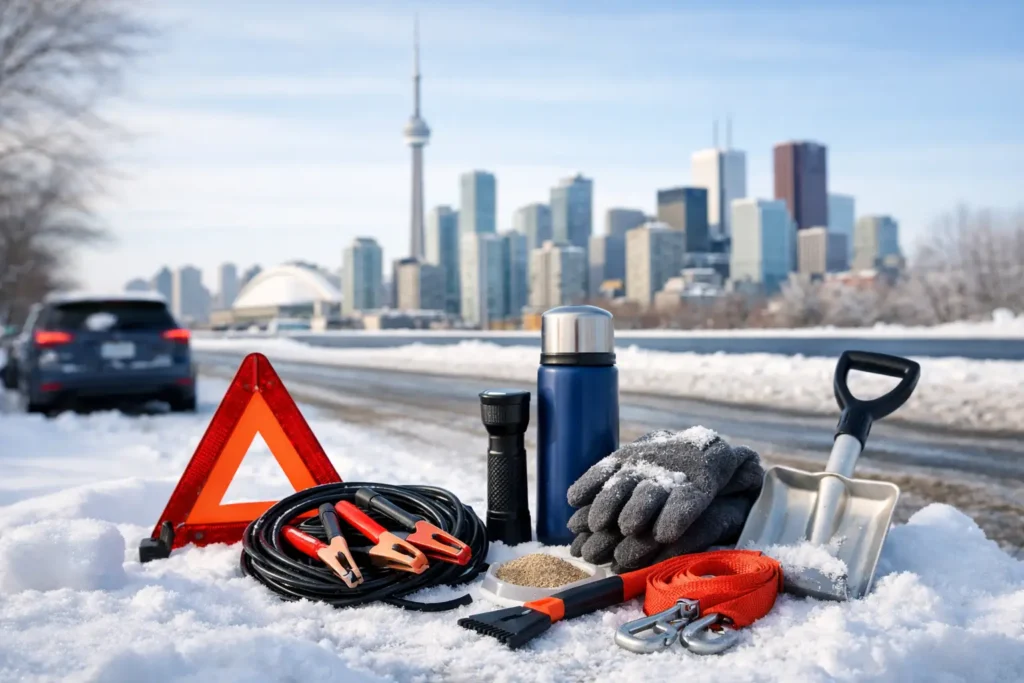
Winter Roadside Checklist: What to Keep in Your Car
Your emergency kit should be easy to reach without unloading the trunk. Store it in a weather-resistant tote, and replace used supplies as soon as possible. A good kit does not need to be expensive, but it should cover warmth, visibility, basic traction, and communication.
- A warm blanket or sleeping bag, extra gloves, hat, and hand warmers
- A charged power bank and charging cable for your phone
- A flashlight with fresh batteries or a rechargeable emergency light
- Reflective triangles, road flares, or a high-visibility vest
- A compact shovel, ice scraper, snow brush, and traction aid such as sand or non-clumping cat litter
- Booster cables or a jump pack, plus a basic first-aid kit
- Bottled water and shelf-stable snacks, particularly for families or long-distance drivers
- A paper copy of key contact information, including your insurer and roadside assistance provider
Keep a full-size spare tire in usable condition if your vehicle has one. Many newer vehicles have a temporary spare, a tire repair kit, or no spare at all. Find out what your vehicle carries before you get a flat in freezing weather. A repair kit may not help if the sidewall is damaged, and a compact spare has speed and distance limits.
Build Better Habits Before You Leave
Winter readiness is also about the decisions you make before starting the engine. Check the forecast and allow extra time. Rushing is one of the easiest ways to turn low traction into a collision or a slide into a curb.
Keep your fuel tank above one-quarter full whenever possible. A fuller tank gives you more flexibility if traffic slows or you are stranded, and it reduces the risk of moisture-related fuel issues. Electric vehicle drivers should plan for reduced range in cold weather and avoid beginning a storm-day trip with a low battery charge.
Tell someone where you are going when conditions are severe, especially if you are traveling outside the city. Delivery drivers and commercial operators should also carry the correct dispatch and fleet contacts, since the fastest safe solution may depend on vehicle type, load, and location.
If You Are Stranded, Protect Yourself First
A dead battery, flat tire, or lockout can feel urgent, but your first task is to get out of immediate danger. If your vehicle can move safely, pull as far from traffic as possible onto a shoulder, parking lot, or side street. Turn on hazard lights and make your vehicle visible without placing yourself in an exposed position.
On a high-speed roadway, do not stand beside traffic or attempt a tire change near moving vehicles. Stay in the vehicle with the doors locked if it is safe to do so, and call for professional assistance. If you are in a collision, blocking traffic, injured, or in an unsafe location, call 911 first.
When you request roadside help, provide the clearest location possible. Share the road name, nearest intersection or exit, your direction of travel, vehicle make and color, and the problem you are seeing. Mention whether you are in a safe location, whether children or vulnerable passengers are with you, and whether the vehicle is electric, all-wheel drive, or carrying a load that affects towing.
If snow is falling heavily, check that the exhaust pipe is clear before running the engine for heat. Never run a vehicle in an enclosed space, and do not let snow build around the exhaust outlet. Carbon monoxide can enter the cabin without a warning smell.
Know When Roadside Service Is the Smarter Call
Some drivers are comfortable using a jump pack or replacing a wheel in a safe driveway. Conditions change the calculation. Darkness, ice, narrow shoulders, frozen lug nuts, poor visibility, and heavy traffic can make a normally simple task dangerous. There is no benefit in proving you can handle it alone if the roadside environment is unsafe.
For drivers across Toronto and the GTA, Emergency Roadside Service by South Toronto can dispatch help for jump starts, mobile tire changes, lockouts, fuel delivery, towing, and recovery needs. Licensed operators and the right equipment matter, especially after an accident or when a vehicle needs flatbed or EV-specific towing.
Before any service begins, ask for pricing information and explain the situation accurately. Clear details help dispatch send the appropriate truck and reduce delays. Honest communication also helps you avoid unnecessary work when a quick roadside solution is possible.
Winter driving does not have to be unpredictable. Prepare your vehicle, keep a practical kit within reach, and make safety the priority the moment something goes wrong. When the temperature drops and traffic keeps moving, having a calm plan is one of the best things you can carry.