A tow truck is already on the way, but the next few minutes still matter. Knowing how to prepare for tow arrival can keep you safer at the roadside, help the driver find you without delay, and prevent avoidable damage or confusion when your vehicle is loaded.
Whether you are stuck downtown in traffic, parked in North York with a dead battery, or pulled over on the Gardiner after a breakdown, focus on safety first. You do not need mechanical expertise. You just need clear information, a safe position, and a vehicle that is ready for the operator to assess.
Put Your Safety Ahead of the Vehicle
If your vehicle can be moved safely, pull as far off the active roadway as possible. A parking lot, side street, wide shoulder, or safe curbside space is better than stopping in a live lane. Turn on your hazard lights immediately, especially at night, during rain, or in heavy Toronto traffic.
Do not stand between your vehicle and traffic. If you can exit safely, move to a protected location away from the road, such as behind a guardrail or on the sidewalk. Keep an eye on approaching vehicles, but do not walk into traffic to wave down the tow truck.
Some situations require more than roadside assistance. Call 911 first if there are injuries, a fire, fuel leaking onto the road, a serious collision, or a vehicle creating an immediate traffic hazard. Follow police or emergency personnel instructions before arranging a tow. If your car is in an unsafe position and cannot be moved, tell dispatch exactly where it is so the operator can arrive prepared.
Give Dispatch Details That Prevent Delays
Fast service starts with accurate information. The dispatcher needs enough detail to send the right truck, equipment, and operator on the first trip. A standard passenger car with a flat tire may need a different setup than an all-wheel-drive SUV, an electric vehicle, a lowered car, a motorcycle, or a loaded work van.
When you call, be ready to provide your exact location. Do not rely only on a neighborhood name. Share the street address, closest intersection, highway direction, exit number, landmark, parking garage level, or business name. If you are on a highway, say which direction you are traveling and identify the nearest sign or kilometer marker if visible.
Also describe the vehicle by year, make, model, color, and license plate when possible. Let dispatch know what happened: no-start, collision, flat tire, locked keys, dead battery, overheating, fuel shortage, or mechanical failure. Mention anything that affects access or loading, including a locked steering wheel, wheels turned sharply, a missing key, a damaged axle, a car stuck in snow, or a vehicle parked in a tight underground garage.
Before ending the call, confirm the destination. That might be your home, a repair shop, a dealership, or a collision center. If you have not chosen a destination yet, say so. It is better to discuss options before the truck arrives than to change plans after your vehicle is loaded.
Make Your Vehicle Accessible for the Tow Operator
Once help is dispatched, prepare the vehicle only if it is safe to do so. Clear space around the front and rear of the car when possible. Move loose items, bicycles, bins, or other objects that could block access to the tow points, wheels, or hitch area.
Have your keys ready. The operator may need them to release the parking brake, put the transmission in neutral, unlock the steering wheel, or access the vehicle. If the keys are locked inside, tell dispatch before arrival. A lockout may need to be handled before towing can begin.
Remove valuable belongings and any essentials you will need after the tow. Take your wallet, phone, medication, work equipment, house keys, child seats if needed, and important documents. Check the trunk, glove compartment, center console, and cargo area. A tow truck driver can transport the vehicle, but you should not assume you will have easy access to its contents once it reaches a shop or storage location.
If the car still has power, roll down a window slightly only if weather and security allow. Do not leave the vehicle unsecured while you wait. Lock it again after you gather your belongings, and be prepared to unlock it when the operator arrives.
What to Do While Waiting for the Tow Truck
Waiting calmly is not always easy, especially in bad weather or after a collision. Stay reachable. Keep your phone charged if possible, turn the ringer on, and watch for a call or text from dispatch or the driver. If your location changes, call back right away. A few blocks can make a major difference when a truck is trying to reach you through congestion or a complicated parking area.
Use this time to take a few photos of your vehicle, particularly after a collision or if there is existing body damage. Capture the overall condition, visible damage, license plate, and the area around the vehicle. This is not about assuming a problem will occur. It simply gives you a clear record of the vehicle’s condition before transport.
Avoid trying roadside repairs that put you at risk. Do not crawl underneath the vehicle, improvise a tow strap, remove damaged parts in traffic, or repeatedly attempt to start an overheating engine. A quick fix can become a bigger repair or create a dangerous situation. If the vehicle is smoking, leaking, or making unusual noises, step away and tell the dispatcher.
How to Prepare for Tow Arrival in Bad Weather or Traffic
Toronto weather can change the job. Snow, freezing rain, standing water, and low visibility can slow access and make the roadside more hazardous. Wear a coat, stay dry when you can, and avoid standing on icy pavement near moving vehicles. If you are in a safe indoor location, tell the dispatcher where you will be and keep your phone nearby.
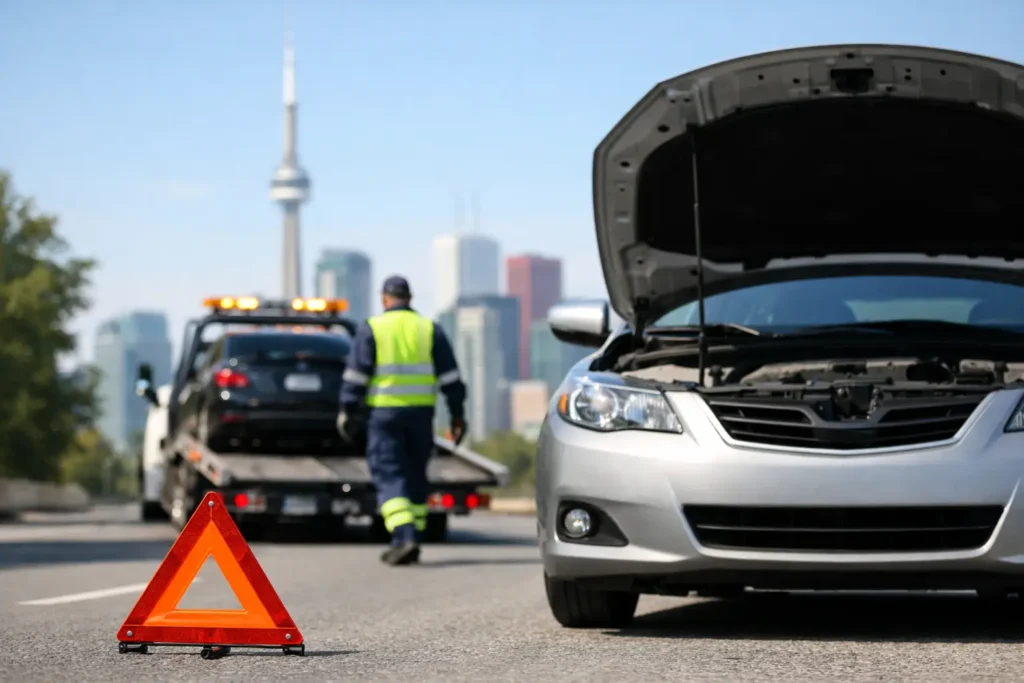
In heavy traffic, make your vehicle easy to identify without putting yourself in danger. Keep hazards on and provide a precise description of nearby landmarks. If you have reflective triangles or a roadside safety kit, use them only when it is safe and legal to place them. Never walk along a high-speed roadway just to set up warning devices.
Underground garages need special attention. Tell dispatch the clearance height, garage entrance, level, and whether the vehicle can be accessed by a standard tow truck. In some cases, a smaller service vehicle or different recovery plan may be necessary. The same applies to narrow alleys, tight condo parking, and vehicles blocked by other cars.
Be Ready to Confirm the Service and Price
A professional tow begins with clear communication. When the operator arrives, confirm that they were sent by the company you contacted. Ask for a quick explanation of the towing method and destination before loading begins. Flatbed towing is often preferred for all-wheel-drive vehicles, electric vehicles, motorcycles, luxury cars, and vehicles with significant damage, but the right method depends on the vehicle’s condition and access to it.
Review the price and any expected additional charges before work starts. Distance, recovery difficulty, after-hours conditions, storage requirements, or special equipment can affect the final total. Transparent pricing does not mean every job costs the same. It means you should understand what you are approving and why.
If your vehicle was in a collision, ask where it is being taken and whether you need to collect personal items or provide documents before it enters storage. Keep the receipt, tow company information, destination address, and any claim details in one place for your insurer or repair shop.
Let the Operator Handle the Loading
Once the tow operator begins setting up, give them room to work. Loading a vehicle involves winches, wheel straps, chains, hydraulic equipment, and traffic awareness. Stay where the operator directs you, keep children and pets away from the truck, and do not stand near the cable or between the truck and your vehicle.
Tell the driver about any issue that could affect towing, even if it seems minor. Mention a parking brake that will not release, aftermarket suspension, a low front bumper, a damaged wheel, an EV charging issue, or cargo that shifts in the trunk. Honest details help the operator choose the safest approach.
Emergency Roadside Service by South Toronto is available 24/7 for drivers who need fast, reliable help across the GTA. When you call, clear details and a safe waiting location help the right operator reach you and get the job moving without unnecessary delay.
The best thing you can do while help is coming is stay safe, stay reachable, and let trained professionals take over the hard part. A prepared driver turns a stressful roadside stop into a controlled next step toward getting back on the road.