A collision can turn a normal drive through Toronto into a high-pressure situation in seconds. Your car may be blocking traffic, fluids may be leaking, another driver may be waiting for police, and your insurer may be asking questions before you have caught your breath. Knowing the collision towing process helps you make calm decisions, protect your vehicle, and avoid being rushed into a choice you do not understand.
The first priority is always safety. Once everyone is out of immediate danger, a professional tow operator and a clear plan can move the situation from chaos to control.
Start the Collision Towing Process Safely
If you can do so without creating more risk, pull the vehicle out of active traffic. Turn on your hazard lights, set out warning devices if you have them, and move yourself and passengers to a safe location away from passing vehicles. Do not stand between vehicles, near blind curves, or on the traffic side of a damaged car.
Call emergency services if anyone is injured, there is a fire risk, traffic is obstructed, or police attendance is required. Follow instructions from responding officers and do not attempt to drive a vehicle with steering damage, a deployed airbag, a leaking fluid, a dragging bumper, or a wheel that no longer sits straight. A car can look drivable while having damage that makes it unsafe.
Take photos when it is safe to do so. Capture the vehicle positions, visible damage, license plates, road conditions, traffic signs, and the wider scene. Exchange required information with the other driver, but keep the conversation factual. The roadside is not the place to decide fault or negotiate repairs.
What Happens When You Request Collision Towing
A reliable dispatcher will first ask where you are, whether the car is in a dangerous position, what kind of vehicle you drive, and whether it can roll or steer. Those details determine the right truck, equipment, and recovery approach. A vehicle that is simply disabled may need a standard tow, while a car with suspension damage, locked wheels, or severe body damage may require a flatbed or specialized recovery equipment.
Be ready to provide a nearby intersection, highway direction, landmark, vehicle color and model, and a callback number. If you are on a freeway or busy road, tell the dispatcher which lane or shoulder you are on and whether police are already present. Accurate information prevents delays and helps the operator arrive prepared.
Emergency Roadside Service by South Toronto coordinates urgent towing across the Greater Toronto Area, including Downtown Toronto, North York, Scarborough, Etobicoke, East York, and surrounding neighborhoods. When a collision has left your vehicle unsafe to drive, call for dispatch rather than taking a chance on getting it home yourself.
The operator assesses the scene first
On arrival, the tow operator should assess traffic exposure, vehicle condition, and the safest loading position. They may use warning lights, cones, wheel dollies, skates, winches, or a flatbed depending on the damage. This is not wasted time. Proper setup protects people nearby and reduces the chance of adding damage during recovery.
The operator may ask where you want the vehicle taken and whether it needs to be released to a repair shop, a collision center, your home, or another approved location. If police have directed the tow, confirm the destination and any instructions before the vehicle leaves.
Your car is documented and secured
Before loading, a professional operator typically records the vehicle condition, notes existing collision damage, and confirms the destination. Remove personal items if it is safe and practical, especially your wallet, keys, medications, work equipment, garage opener, and important documents. Do not climb into a damaged vehicle to retrieve belongings if airbags, broken glass, traffic, or structural damage create a risk.
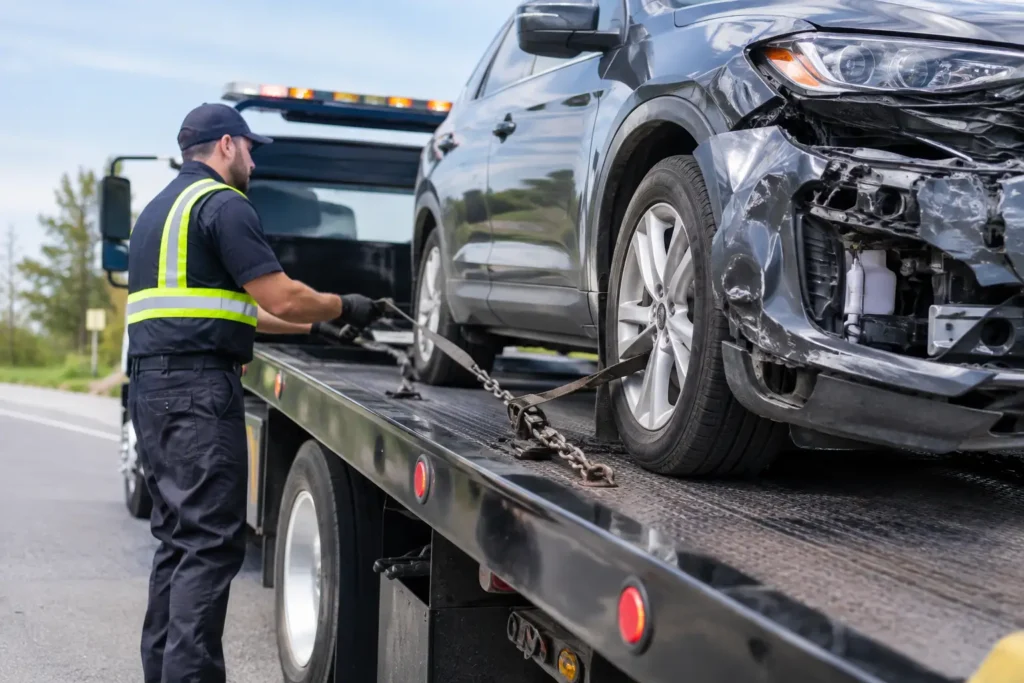
The vehicle is then secured using the correct attachment points. A flatbed is often the best choice after a collision because it keeps all four wheels off the road. That matters for all-wheel-drive vehicles, EVs, luxury vehicles, and cars with damaged wheels or suspension. Still, the right method depends on the vehicle’s condition, access to the scene, and manufacturer requirements.
Choose the Right Tow Destination
You do not always need to decide on the spot, but you should understand the options. Taking the car directly to a qualified collision repair facility can save a second tow and help begin the estimate process sooner. Taking it home may make sense for minor damage or when you need time to speak with your insurer. If the vehicle is not safe to store at home, a secure holding location may be necessary.
Before authorizing the tow, ask where the vehicle will go, what the towing and storage charges are, and whether there are after-hours access rules. Request a receipt or written record that identifies the towing company, vehicle destination, date, and charges. Transparent pricing matters most when you are stressed and trying to make quick decisions.
Be cautious if someone pressures you to use a particular body shop, demands a signature you have not read, or cannot clearly explain fees. Police instructions and local regulations can affect what happens at a collision scene, especially when a vehicle must be cleared quickly. You can still ask direct questions and keep copies of every document.
Insurance, Police Reports, and Vehicle Release
Contact your insurer as soon as you reasonably can. Give them the basic facts, the tow destination, and any report or occurrence number provided by police. Your insurer may explain coverage, inspections, rental arrangements, and approved repair options. Keep your photos, tow receipt, incident details, and repair communications together from the start.
Do not assume a vehicle is ready for repairs simply because it has reached a shop. The shop may need authorization from the owner, insurer, lienholder, fleet manager, or leasing company before work begins. If your car is leased, financed, a company vehicle, or registered to someone else, ask what release or approval documents are needed.
For EVs and hybrid vehicles, tell the tow company and repair facility about the powertrain. Damage near the battery pack, underbody, charging system, or high-voltage cables can require extra precautions. The vehicle may need isolation, a flatbed tow, or a designated storage area. Never try to inspect orange high-voltage cables or restart an EV that has been submerged, severely hit underneath, or involved in a fire.
Questions to Ask Before the Truck Leaves
A few clear questions can prevent confusion later. Confirm the tow destination, the estimated charges, how you will receive a receipt, and whether storage fees apply if the shop is closed. Ask whether you need to meet the vehicle at the destination or whether the operator can complete the drop-off under the shop’s instructions.
If you are arranging the tow through roadside coverage or an insurer, ask whether there is a claim reference number to include on the paperwork. If you are paying directly, make sure the service, mileage, recovery work, and any storage are explained before you approve the job. The cheapest quote is not always the best value if the operator lacks the equipment to handle collision damage safely.
You should also confirm how you will get home. A tow truck is built to transport vehicles, not always passengers. Depending on local rules, available seating, and the nature of the recovery, you may need a ride from a family member, rideshare service, taxi, or another arranged option.
Avoid These Common Post-Collision Mistakes
Do not drive away just because the engine starts. Hidden radiator damage can cause overheating, a bent suspension component can fail suddenly, and loose body panels can create hazards for other drivers. Avoid leaving the vehicle at an unapproved location without understanding towing or storage rules.
Also, do not sign a repair authorization when you only intend to approve a tow. Read each document, keep a copy, and ask for plain-language clarification. A calm, professional towing company will answer reasonable questions and give you time to understand what you are authorizing.
A collision is disruptive enough without worrying about the next step. Put safety first, choose a properly equipped tow, document the handoff, and keep your paperwork close. Once the vehicle is secure, you have the space to handle insurance and repairs with a clearer head.