A dead battery outside your condo, a flat tire on the Gardiner, or an engine warning light in North York can leave you asking one urgent question: does insurance cover roadside towing? Sometimes it does. But the answer depends on the coverage you selected, the reason your vehicle cannot move, and the towing limits written into your policy.
The practical priority comes first: get yourself and your passengers somewhere safe, then arrange a qualified tow. You can sort out reimbursement after the vehicle is secure. Knowing what your policy may cover can still help you avoid a surprise bill when you are already dealing with a stressful roadside problem.
Does Insurance Cover Roadside Towing Under Your Policy?
Basic auto insurance does not automatically include roadside towing in every policy. Towing is commonly covered when you have added roadside assistance, emergency roadside service, towing and labor coverage, or a similar endorsement. The label changes by insurer, but the purpose is usually the same: to pay some or all of the cost of getting an inoperable vehicle to a repair facility or safe location.
This optional coverage often applies to common non-collision breakdowns, such as a dead battery, flat tire, lockout, empty fuel tank, mechanical failure, or overheating. Many plans also include services that can prevent a tow altogether, including a jump-start, tire change, fuel delivery, or lockout assistance.
The key word is “often.” Your insurer may set a per-service dollar cap, a maximum towing distance, or a limit on the number of roadside calls allowed each policy term. A policy that covers a tow up to 10 miles, for example, may leave you paying the difference if the nearest suitable repair shop is much farther away.
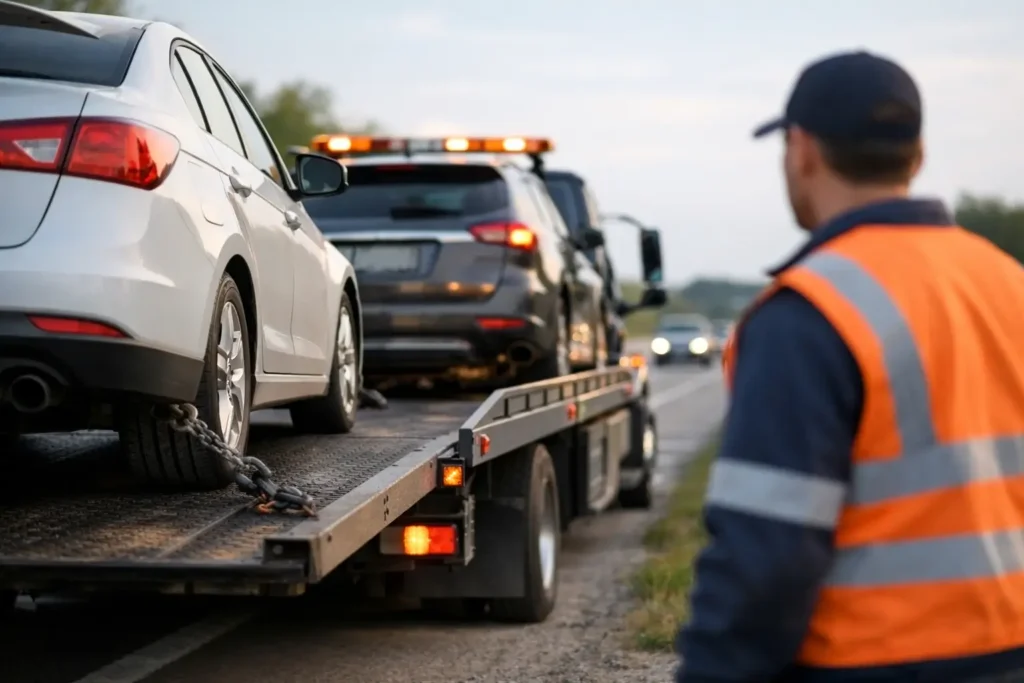
Coverage can also depend on the vehicle. Passenger cars and light trucks are commonly eligible, while motorcycles, commercial vans, larger trucks, trailers, and modified vehicles may have separate rules. EV towing deserves special attention. An electric vehicle may need a flatbed tow rather than being pulled with wheels on the ground, and that can affect both the service required and the cost.
Roadside assistance is not the same as collision coverage
Collision coverage helps pay to repair or replace your vehicle after a covered crash, subject to your deductible. It does not always mean the tow is covered as a separate roadside benefit. In an accident, towing and storage may be handled as part of the collision claim, but the details depend on the insurer and the circumstances.
If your car breaks down because of a mechanical issue and no collision occurred, collision coverage is usually not the answer. Roadside assistance or towing and labor coverage is the part of the policy most likely to help.
Comprehensive coverage can create similar confusion. It is generally designed for covered non-collision damage, such as theft, fire, vandalism, or weather damage. It may support a claim after one of those events, but it is not a blanket promise of free towing for every breakdown.
When a Tow Is Usually Covered and When It May Not Be
Your policy wording controls, but there are patterns worth knowing before you call for help. A roadside endorsement may cover towing after a battery failure, flat tire, lockout, fuel shortage, or disabled vehicle. It may also pay for a tow after a mechanical breakdown, even though it will not pay to repair the failed part.
A tow connected to a covered accident may be eligible through the accident claim. If your vehicle is undrivable after a collision, ask the insurer whether it has a preferred towing process and whether it will cover storage. Storage fees can grow quickly when a vehicle sits at an impound lot or collision facility.
Coverage may be limited or denied when the service is outside the policy’s terms. Common examples include towing beyond the mileage allowance, towing a vehicle that was not listed on the policy, moving a vehicle that is not disabled, or requesting recovery work that is more complex than standard roadside towing. A vehicle stuck deep in snow, down an embankment, or in a difficult parking structure may require winching, recovery equipment, extra labor, or a specialty truck. Those charges are not always included in a standard roadside benefit.
Towing caused by unsafe driving, illegal parking, or a police-ordered impound is also different from a routine breakdown. Insurance coverage may not apply, and the vehicle owner may be responsible for tow, storage, and release fees.
Check These Details Before You Need a Tow
Do not wait until you are stranded in traffic to find out how your roadside coverage works. Open your insurer’s app, policy documents, or roadside assistance card and look for the service limits. You want clear answers to a few practical questions: Is roadside service included? Do you have to use the insurer’s dispatch line? What is the dollar or distance limit? Is reimbursement available if you arrange your own tow? Are lockouts, jump-starts, fuel delivery, and tire changes included?
Some insurers require you to contact their provider first for direct billing. If you choose an independent towing company, you may need to pay at the scene and submit an itemized receipt for reimbursement. Other policies allow either option, but only reimburse up to the plan limit.
Keep a photo or digital copy of your policy number, vehicle information, and roadside-assistance instructions on your phone. It is a small step that saves time when you are stopped on the shoulder in bad weather or trying to manage an urgent situation with children, passengers, or a delivery schedule.
What to Do When Your Vehicle Needs Towing Now
If your vehicle stops running, turn on your hazard lights and move to a safe area if the vehicle can be driven without creating more damage. Do not stand beside traffic, and do not remain in the vehicle if it is in a dangerous location. On busy Toronto roads and highways, your safety matters more than trying to diagnose the problem yourself.
Call for roadside help and give the dispatcher accurate details: your exact location, vehicle make and model, whether the vehicle can roll and steer, the issue you noticed, and the destination you want. Mention if you drive an EV, motorcycle, all-wheel-drive vehicle, lowered vehicle, or commercial vehicle. These details help ensure the right truck and equipment are sent the first time.
Ask for the price and any possible extra charges before service begins. Transparent pricing is especially important when a tow may involve a longer distance, accident scene, underground garage, after-hours recovery, or specialized equipment. If you plan to seek reimbursement, request an itemized receipt that identifies the service, date, location, vehicle, and amount paid.
For drivers across Toronto and the GTA, Emergency Roadside Service by South Toronto provides 24/7 towing and roadside support for breakdowns, lockouts, battery failures, flat tires, fuel shortages, and urgent vehicle moves. Fast dispatch and a clear estimate can make a difficult stop feel manageable again.
Will Using Towing Coverage Raise Your Insurance Rate?
A single roadside assistance call does not automatically raise your premium. Many insurers treat it differently from an at-fault accident claim. Still, there is no universal rule. Frequent roadside claims, policy-specific conditions, and your overall claims history can affect future pricing or eligibility for certain discounts.
If you are worried about reporting a tow, ask your insurer whether roadside calls are recorded as claims, whether they count toward a service limit, and whether reimbursement will affect your policy. Get the answer before submitting paperwork rather than relying on assumptions.
There is also a cost trade-off. Roadside coverage may be inexpensive when added to a policy, but its limits can be modest. A separate roadside membership may offer different mileage benefits, while paying out of pocket gives you more freedom to choose a provider but can cost more during an emergency. The best option is the one that matches how far you drive, the age and condition of your vehicle, and whether you need coverage for multiple drivers.
A Quick Checklist for Filing a Towing Reimbursement Request
If you paid for the tow yourself, submit the claim promptly. Most insurers will want your policy number, service date, location, vehicle details, explanation of the disablement, and an itemized paid receipt. Keep photos of the receipt and any documentation showing why the vehicle needed towing, such as a repair invoice or roadside-service report.
Be accurate about the service performed. If the truck provided a jump-start and no tow was needed, list it that way. If the vehicle required a flatbed because it was an EV or could not be safely towed conventionally, make that clear. Good documentation makes it easier for the insurer to assess the request within the policy rules.
When the road is unsafe or your vehicle cannot continue, do not delay help while you search through fine print. Arrange a professional tow, save your documentation, and let the coverage question follow once you and your vehicle are out of harm’s way.