A motorcycle stranded on the Gardiner, outside a North York apartment, or in a downtown parking garage needs more than a quick hook-up. Can a tow truck tow motorcycles? Yes, but only when the operator uses the right equipment, securing method, and loading procedure. A poorly handled motorcycle tow can turn a dead battery, flat tire, or breakdown into expensive damage to the bike’s suspension, fairings, wheels, or frame.
The safest answer is usually a flatbed tow. It keeps the motorcycle upright, fully off the road, and secured at multiple points for transport across Toronto and the GTA. When you call for help, tell dispatch that it is a motorcycle and share the bike’s location, condition, and any access issues. That gives the operator a chance to arrive prepared instead of improvising at the roadside.
Can a Tow Truck Tow Motorcycles Without Damage?
A professional tow truck can tow a motorcycle safely, but the truck type and tie-down process matter far more than the word “tow.” Motorcycles do not behave like cars. They have two wheels, a narrow balance point, exposed components, and steering that must be stabilized. Pulling one behind a conventional tow truck with a chain or strap is generally not the right approach.
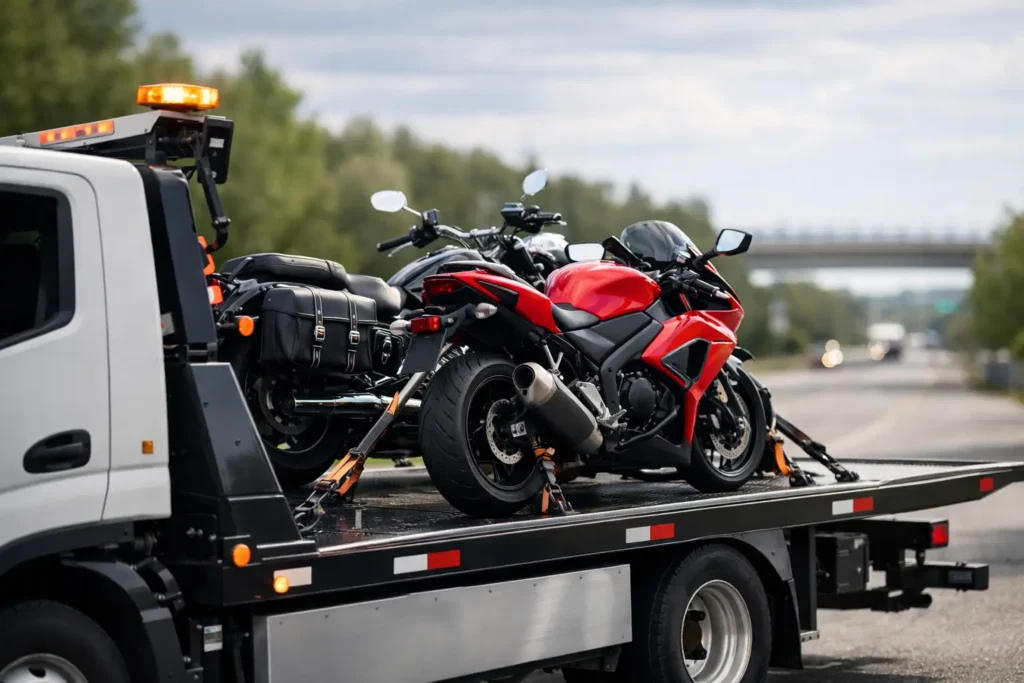
For most situations, a flatbed truck is the preferred solution. The operator lowers the bed, uses a suitable loading ramp or wheel chock, and carefully rolls or winches the motorcycle onto the platform. Once positioned, the bike is secured upright with soft straps and proper anchor points. The truck then transports it without either tire rolling on the pavement.
This approach is especially valuable for sport bikes, cruisers, touring bikes, scooters, vintage motorcycles, and bikes with low ground clearance. It also protects motorcycles with damaged tires, locked wheels, chain problems, accident damage, or mechanical failures that make riding impossible.
A wheel-lift setup may work in limited circumstances when it is paired with motorcycle-specific equipment, but it is not the first choice for every bike. The key question is not whether a truck can physically move the motorcycle. It is whether the assigned operator can move it securely without placing stress on parts that were never designed to carry the bike’s weight.
Why Flatbed Towing Is the Safer Choice
Flatbed towing reduces many of the risks that come with motorcycle transport. The motorcycle stays elevated, rather than being dragged, partially lifted, or left to follow the tow truck on its own wheels. That matters when road conditions are poor, traffic is heavy, or the bike has already been damaged in an accident.
Proper loading starts with controlling the bike’s movement. The operator should keep it upright, avoid sudden steering changes, and use a gradual winching process if the motorcycle cannot be rolled safely onto the bed. A wheel chock can hold the front tire in position while the operator applies straps.
The straps should be placed carefully. High-quality soft loops and ratchet straps are often used around stable areas such as the handlebars, triple tree, or designated frame points, depending on the motorcycle’s design. The goal is to compress the suspension slightly and prevent side-to-side movement without crushing cables, damaging painted surfaces, or pulling against fragile accessories.
A competent operator also checks the motorcycle after it is secured. Loose luggage, saddlebags, phone mounts, helmets, and personal gear can shift during transport. If there is accident damage or a leaking fluid line, that should be identified before the truck starts moving.
Situations That Require Extra Care
Not all motorcycle tows are routine. A bike that simply will not start in a safe driveway is very different from a motorcycle lying on its side after a collision on the Don Valley Parkway. The truck, equipment, and recovery plan should match the situation.
Accident towing may require additional stabilization before loading, especially if the handlebars are bent, a wheel is damaged, or parts are hanging loose. The operator may need to protect broken fairings or prevent a damaged brake rotor from contacting the truck bed. If a motorcycle is in a ditch, on soft ground, or wedged in a tight parking area, recovery can take more planning than a standard pickup.
Electric motorcycles also deserve special handling. They should be moved according to the manufacturer’s transport guidance, particularly after an impact that could affect the battery pack. The same goes for large touring motorcycles and trikes, which may need more bed space, different anchor points, and a truck with enough capacity for their weight.
If your bike has a custom build, very low suspension, oversized handlebars, a sidecar, or expensive aftermarket parts, say so when requesting service. That information helps dispatch send the right equipment from the start.
What to Tell Dispatch When You Need Motorcycle Towing
Fast dispatch depends on accurate details. You do not need to be a motorcycle expert, but a clear description helps prevent delays and ensures the operator arrives with the proper setup.
When requesting a tow, be ready to provide these details:
- Your exact location, including the nearest intersection, highway direction, parking level, or visible landmark.
- The motorcycle’s make, model, and approximate size, such as a scooter, cruiser, sport bike, touring bike, trike, or electric motorcycle.
- The reason it cannot be ridden, including a flat tire, no-start condition, collision damage, locked wheel, or missing key.
- Any complications, such as underground clearance limits, a blocked driveway, loose parts, a sidecar, or a bike that is not upright.
Also tell the dispatcher where the motorcycle needs to go. It may be your home, a dealership, a repair shop, or another safe location. If the destination is closed, ask whether the motorcycle can be placed in a secure, accessible area. A professional operator should confirm the plan and provide clear pricing information before the job begins.
What You Should Do While Waiting for the Tow Truck
Your priority is personal safety. If the motorcycle is stopped near moving traffic, move yourself to a safer location when possible. Do not stand between the bike and traffic, and do not attempt to push it across active lanes. On a highway, stay behind a barrier if one is available and follow local emergency guidance.
If the bike is in a safe spot, turn off the ignition and remove valuables or loose accessories that can be easily carried away. Keep the key available for the operator, but do not keep trying to start a motorcycle that has been in a collision, is leaking fluid, or has electrical damage.
Avoid accepting a tow from someone who plans to attach a chain directly to the frame or pull the motorcycle with one wheel on the road without explaining the equipment being used. Cheap shortcuts can cause scratches, bent components, tire damage, or a dangerous loss of control during transport. Asking how the bike will be loaded is reasonable, especially when the motorcycle is valuable or already damaged.
Choose a Motorcycle Towing Service Prepared for the Job
The lowest quoted price is not always the lowest-cost decision if the service lacks motorcycle experience or arrives without a flatbed. Ask whether the provider has motorcycle-capable equipment, uses proper straps and wheel restraint, and carries the right insurance. These are practical questions, not unnecessary extras.
Emergency Roadside Service by South Toronto provides 24/7 roadside support and towing for motorcycles as well as cars, trucks, and EVs. Licensed, bonded, and insured operators coordinate the right response for routine breakdowns, accident scenes, and difficult access locations across Toronto and surrounding neighborhoods.
If your motorcycle cannot be ridden safely, do not risk further damage trying to force a repair at the roadside or asking a friend to pull it with a vehicle. Call for a properly equipped tow, give dispatch the details, and let the bike get to a safe destination the right way.