A stalled vehicle can turn a profitable shift into a long, expensive problem fast. For couriers, food delivery workers, and fleet drivers, roadside help for delivery drivers is not just about getting a vehicle moving again. It is about protecting your safety, your route, your customer ratings, and the income you planned to earn that day.
Toronto traffic leaves little room for a vehicle issue. A dead battery in a downtown loading zone, a flat tire on the Gardiner, or an empty tank during a late-night Scarborough delivery can put you in a vulnerable position. The right response is simple: get to a safe place if you can, notify your delivery platform or dispatcher, and call for professional help right away.
Why Delivery Drivers Need Fast Roadside Support
Delivery vehicles work harder than most personal cars. They make frequent stops, idle in traffic, carry extra cargo, run through construction zones, and operate in every season. That workload puts added strain on batteries, tires, brakes, and cooling systems.
The cost of a breakdown is also different when you are working. You may lose active orders, miss delivery windows, or have to cancel an entire shift. If you drive a commercial van or use your personal vehicle for multiple delivery apps, one roadside issue can affect your schedule long after the vehicle is back on the road.
Fast dispatch matters because waiting is rarely a safe or practical solution. A licensed roadside operator can assess the situation, provide the right service, and arrange towing when a quick repair at the curb is not the safe choice. That prevents small problems from becoming roadside risks or costly vehicle damage.
The Most Common Delivery Vehicle Emergencies
Dead batteries and no-starts
A battery can fail without much warning, especially after repeated short trips, cold weather, or long periods of idling with accessories running. Delivery drivers often rely on phone chargers, navigation, cabin heat or air conditioning, and interior lights throughout a shift. Those demands can weaken an aging battery.
A professional jump start may get you moving, but it is not always the full answer. If the vehicle dies again soon after, the battery, alternator, or electrical system may need inspection. Do not keep accepting orders if the car is unreliable. Being stranded a second time, especially at night, is not worth the risk.
Flat tires and tire damage
Potholes, nails, curb contact, and debris are common across busy delivery routes. A low tire can become a blowout when a driver tries to finish just one more order. If you notice pulling, vibration, a tire-pressure warning, or a visible loss of air, stop somewhere safe as soon as possible.
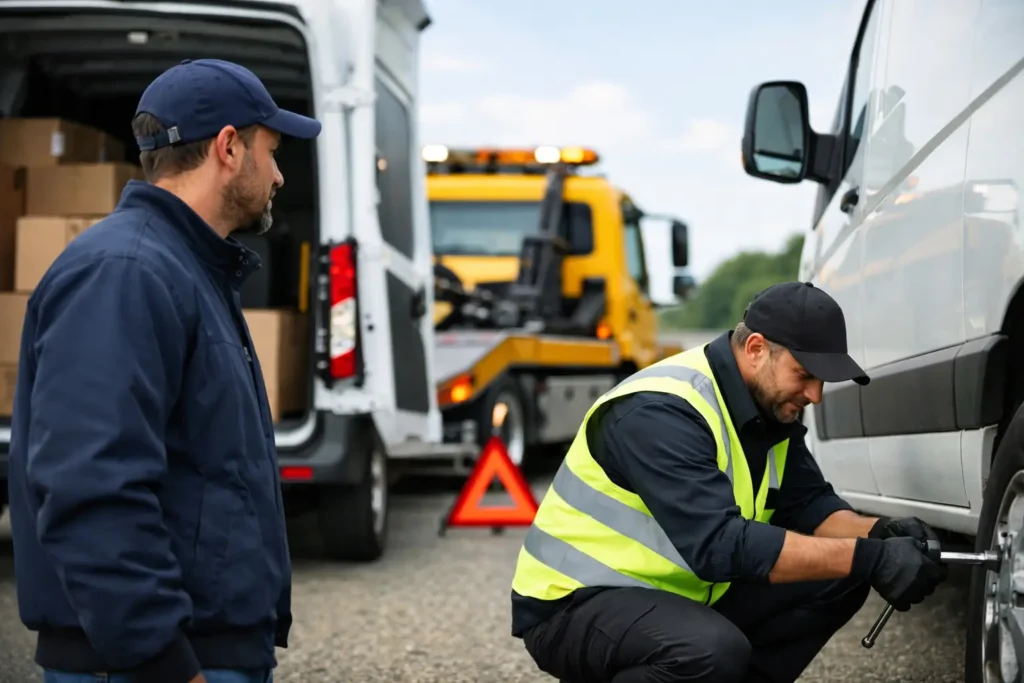
Mobile tire change service is often the fastest solution when you have a usable spare and the vehicle is parked in a safe location. If the tire is severely damaged, the spare is missing, or the wheel itself is bent, towing may be the better call. Continuing on a damaged tire can ruin the rim and create a loss-of-control hazard.
Lockouts during a busy stop
It happens in seconds: you step out with a delivery, the door closes, and the keys are inside. Modern key fobs can also fail, leaving drivers unable to unlock or start the vehicle. Trying to force a window or pry open a door can cause far more damage than the delay itself.
Professional lockout service is designed to get you back into your vehicle without unnecessary damage. Keep your delivery app, identification, and proof of vehicle access available if possible. It helps the process move faster when you are already managing a delayed order.
Fuel shortages
Back-to-back deliveries can make it easy to underestimate fuel use, particularly in stop-and-go traffic. Navigation reroutes, long waits at restaurants, and winter idling can use more fuel than expected. Running out of gas on a highway shoulder or in an unfamiliar neighborhood is not a situation to manage alone.
Fuel delivery can provide enough gas to get you safely to a station. If your vehicle is diesel, electric, or has a mechanical issue after running dry, tell the dispatcher before service is sent. Accurate details help ensure the proper response arrives the first time.
Accidents, overheating, and mechanical failures
Not every roadside issue has a curbside fix. After a collision, a vehicle may have hidden damage even if it appears drivable. Overheating, oil-pressure warnings, smoke, transmission trouble, brake problems, or a check-engine light that flashes are also signs to stop driving and request a tow.
Flatbed towing is often the right choice for accident vehicles, low-clearance cars, all-wheel-drive vehicles, and EVs. It keeps the vehicle off the road surface during transport and reduces the chance of additional drivetrain damage. For a working driver, protecting the vehicle matters because it is often the tool that earns your income.
What to Do While You Wait for Roadside Help
Your first job is to protect yourself, not the delivery. Pull into a parking lot, side street, or other safe location if the vehicle can move safely. On a highway or high-speed road, get as far from traffic as possible, turn on hazard lights, and remain away from moving lanes.
Then contact your delivery platform, customer, or dispatcher through the appropriate channel. A brief, honest update is better than leaving an order unaddressed. Do not promise an arrival time until you know what service your vehicle needs.
When you call for roadside assistance, share your exact location, vehicle make and model, license plate if requested, the problem you see, and whether you are blocking traffic or carrying cargo. Mention if you drive an EV, have an all-wheel-drive vehicle, or need a commercial vehicle towed. These details help dispatch the right truck and equipment.
Avoid accepting help from unverified strangers, especially if they ask for cash before explaining the service or price. Professional roadside assistance should provide clear communication, appropriate equipment, and transparent pricing before work begins.
Choosing Roadside Help for Delivery Drivers in Toronto
Speed matters, but it should not be the only factor. The lowest quoted price can become costly if the provider lacks the right equipment, arrives without the needed tools, or adds surprise charges after your vehicle is loaded. Look for a service that is available 24/7, uses licensed and insured operators, gives clear estimates, and can handle both simple roadside calls and towing.
Coverage also matters. Delivery routes do not stay in one neighborhood. You may begin in Midtown, pick up in Little Italy, finish in Etobicoke, and get stranded in North York. A provider with broad Greater Toronto Area coverage can coordinate help where the problem occurs rather than asking you to find a service in an unfamiliar area.
Emergency Roadside Service by South Toronto provides urgent support for drivers dealing with flat tires, dead batteries, lockouts, fuel shortages, accidents, and towing needs across Toronto and surrounding areas. The goal is straightforward: send capable help quickly, explain the service clearly, and help you make the safest next move.
Keep a Small Roadside Plan in Your Vehicle
Preparation will not prevent every breakdown, but it can reduce the stress when one happens. Keep a charged phone, charging cable, reflective vest, flashlight, basic first-aid supplies, and weather-appropriate clothing in your vehicle. If you use a spare tire, check its pressure regularly. A spare that is flat when you need it is not a backup plan.
Before starting a long shift, take a quick look at tire condition, fuel or battery charge, dashboard warnings, and visible fluid leaks. This takes less than a minute and can prevent a difficult roadside stop later. Drivers who work late should also avoid letting fuel run low simply because they plan to stop after the next delivery.
If your vehicle cannot be driven safely, do not gamble on getting through one final order. Call now for professional roadside assistance, get the vehicle assessed, and protect the workday you still have ahead of you.