A stalled car on the Gardiner, a flat tire outside a Scarborough apartment, or a dead battery after a late shift can turn stressful fast. This after hours towing service guide gives Toronto drivers a clear plan for getting safe, professional help when most repair shops are closed and you need a solution now.
The priority is not diagnosing every mechanical issue from the driver’s seat. It is getting yourself out of harm’s way, giving dispatch the right information, and choosing the service that protects your vehicle as well as your budget. A reliable towing company should make that process feel calm and straightforward, even at 2 a.m.
Start With Safety Before You Request a Tow
If your vehicle loses power in traffic, pull as far away from moving vehicles as you safely can. Turn on your hazard lights, keep your doors locked if the area feels unsafe, and avoid standing beside the vehicle near active lanes. On highways, do not try to change a tire or inspect the engine from the traffic side.
If there has been a collision, anyone is injured, fuel is leaking, or your vehicle is creating an immediate road hazard, call 911 first. Towing can be arranged after emergency responders have addressed the urgent safety issue. For a non-injury breakdown, a 24/7 roadside dispatcher can coordinate the right truck and give you practical instructions while help is on the way.
Your exact location matters more after dark. Look for a cross street, exit number, nearby storefront, parking lot name, or recognizable landmark. If you are on the DVP, 401, Gardiner, or another major route, tell dispatch the direction you are traveling and the nearest exit. “Near downtown” is not enough information for a fast arrival.
What to Tell an After Hours Towing Dispatcher
The fastest dispatch starts with accurate details. You do not need mechanical expertise, but you should describe what happened as clearly as possible. State the make, model, color, and condition of the vehicle, then explain whether it is drivable, blocked in, damaged, or parked in a garage.
Be ready to share four essentials:
- Your precise location and a callback number
- The vehicle type, including whether it is an EV, motorcycle, truck, or commercial vehicle
- The problem, such as a collision, flat tire, lockout, dead battery, empty fuel tank, or mechanical failure
- The destination, if you already know where the vehicle needs to go
Mention special conditions early. A vehicle with wheel damage, a locked steering wheel, a low-clearance garage location, or all-wheel drive may require specific equipment. EVs also need proper handling and, in many cases, a flatbed tow. Giving complete information upfront helps avoid delays and prevents a truck from arriving without the equipment your situation requires.
When Roadside Assistance Is Better Than a Tow
Not every late-night breakdown needs a tow truck. If the issue can be safely resolved where you are, roadside assistance may get you moving sooner and at a lower cost. A jump start can help when lights were left on or a battery is weak. Mobile tire service can replace a flat with your usable spare or assist with a tire issue that does not require transport. Lockout service is the practical answer when keys are inside the vehicle, and fuel delivery can solve an empty-tank problem without a trip to a gas station.
There are limits. A jump start is not a permanent repair if the battery, alternator, or electrical system is failing. A tire change will not help if you have no safe spare, multiple damaged tires, or wheel damage. If the engine is overheating, warning lights are flashing, steering feels unstable, or the vehicle has been in a crash, towing is often the safer call.
A professional dispatcher should help match the service to the actual problem instead of sending a tow by default. That is especially valuable after hours, when you may be tired, frustrated, and unsure whether your car can be driven another block.
Choosing the Right Type of Tow
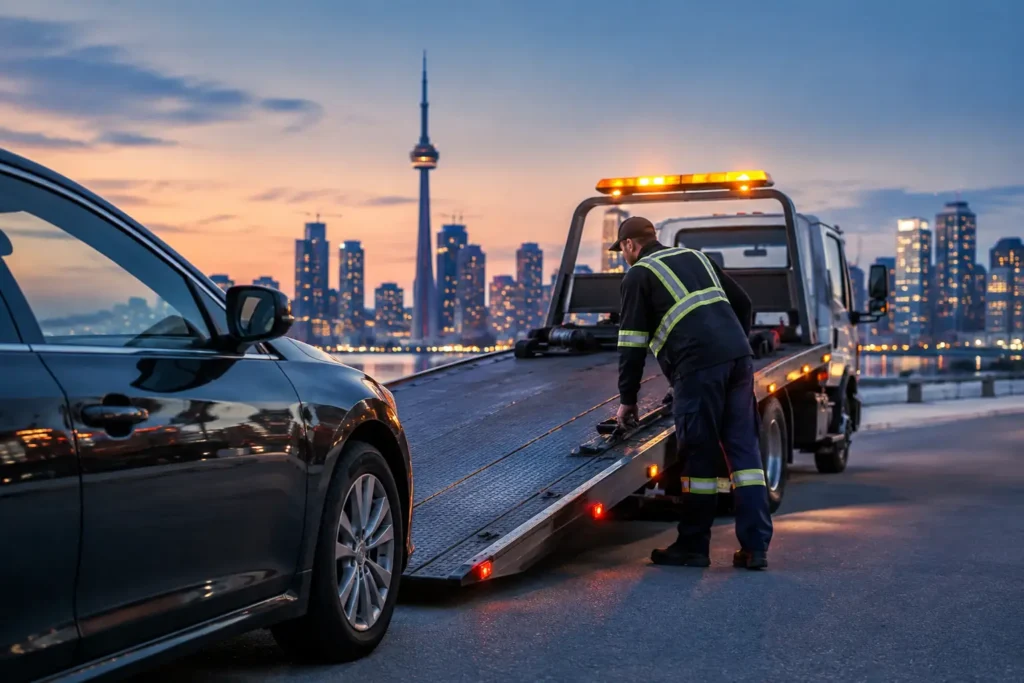
The towing method depends on your vehicle and the condition it is in. Flatbed towing is often the preferred option for luxury vehicles, low-clearance cars, motorcycles, EVs, accident-damaged vehicles, and all-wheel-drive models. Keeping all four wheels off the road reduces the risk of further drivetrain or body damage during transport.
A standard tow may be appropriate for certain vehicles and straightforward situations, but the operator should assess the vehicle before loading it. If your car cannot roll, has broken suspension components, or is stuck in a difficult position, recovery equipment may be needed. Recovery work can take longer and may cost more because it involves specialized rigging, labor, and safety precautions.
Be honest about where the vehicle is located. A car in an underground garage, a tight downtown laneway, or a snow-covered side street can affect which truck dispatch sends. The right equipment is not a luxury. It is how the job gets done safely without wasting time.
What Fair After-Hours Pricing Should Look Like
After-hours service can cost more than daytime service because operators, equipment, and dispatch support must remain available around the clock. That does not mean pricing should be vague. Before confirming service, ask for a clear estimate based on your location, vehicle type, required service, and destination.
A transparent quote should explain whether there is a service or hookup charge, how towing distance is calculated, and whether special conditions could change the final total. Examples include a recovery situation, extra labor, a difficult vehicle position, tolls, storage, or a vehicle that needs specialized handling. If something cannot be priced exactly over the phone, the dispatcher should tell you why rather than promise an unrealistically low number.
Be cautious of an unusually cheap quote that lacks details. A low starting price can become expensive if it excludes mileage, equipment, or after-hours charges. Ask for the company name, confirm the destination, and make sure you understand the service being dispatched before the truck arrives.
After Hours Towing Service Guide: Avoid Common Mistakes
Stress can lead drivers to make choices they would normally avoid. Do not accept help from an unverified person who appears at the scene and pressures you to choose a specific repair shop or storage yard. Confirm the towing company you called, and ask the operator to identify the company on arrival.
Avoid leaving valuables visible in the vehicle. Take your wallet, keys, identification, medications, work equipment, and important documents with you if it is safe to do so. Before the vehicle is loaded, take a few photos of its condition, especially after a collision. This is useful for insurance documentation and gives you a record of existing damage.
If you are unsure where the vehicle should go, consider your next step before authorizing a tow. A trusted repair shop, dealership, home driveway, or secure location may all make sense depending on the problem. Towing to a random lot can add storage fees and make it harder to access the vehicle later.
Toronto Conditions That Change the Plan
Toronto breakdowns are not all alike. Winter cold increases battery failures, tire problems, and vehicles stuck in snow. Heavy rain can create visibility problems and standing water, while rush-hour traffic can make even a short tow more complex. Downtown construction, event traffic, condo garages, and narrow streets can also affect arrival time and equipment access.
That is why local dispatch coordination matters. A company serving Downtown Toronto, North York, Etobicoke, East York, Scarborough, Midtown, Parkdale, and surrounding GTA areas needs to account for traffic patterns and access restrictions, not just distance on a map. Emergency Roadside Service by South Toronto focuses on fast dispatch, licensed operators, and clear communication when drivers need help outside regular hours.
While You Wait for Help
Stay aware of your surroundings and keep your phone charged if possible. If waiting inside the vehicle is safe, remain inside with the doors locked and hazards on. If you must exit because of smoke, fire risk, or an unsafe traffic position, move well away from the road and avoid standing directly in front of or behind the vehicle.
Keep the dispatcher updated if your location changes, police arrive, or the vehicle becomes less safe to access. A good towing team would rather receive updated information than arrive to a situation that no longer matches the original request.
A late-night breakdown does not have to become an all-night problem. Call for professional help, give clear details, and choose the safest service for the vehicle in front of you. The right response gets you off the roadside, protects your car, and lets you focus on getting home safely.