
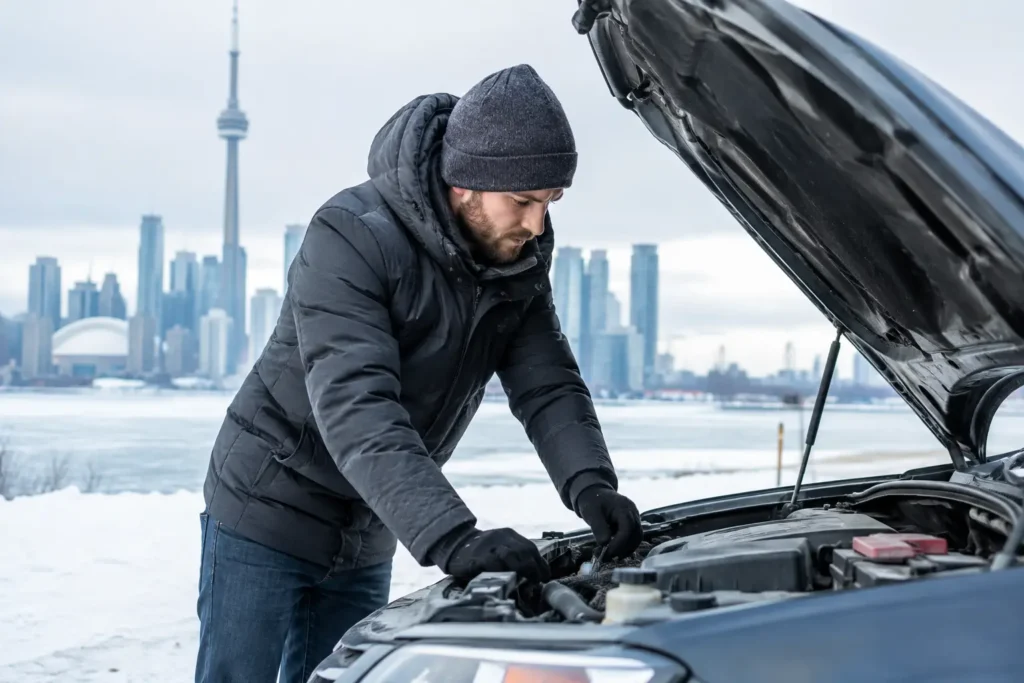
A dead battery on a dark side street, a tire buried in slush, or a car that will not gain traction at a snowy parking lot exit can turn a normal Toronto drive into an urgent problem. The best tools for winter breakdowns do not replace professional help, but they can keep you safer, warmer, and easier to assist while help is on the way.
Winter emergency gear should be practical, reachable, and suited to the vehicle you drive. A trunk full of random supplies is not the goal. You need a small group of dependable items that address the risks that matter most: low visibility, cold exposure, loss of traction, a weak battery, and being stuck in snow.
Best tools for winter breakdowns: start with safety
Before thinking about getting your car moving again, make sure other drivers can see you. Winter storms reduce visibility quickly, especially on busy routes through Downtown Toronto, North York, Scarborough, Etobicoke, and the surrounding GTA. Keep a high-visibility reflective vest in the cabin, not buried under luggage in the trunk. If you must step outside, putting it on before opening the door makes a real difference.
Reflective warning triangles or LED road flares are equally valuable. Place them only when it is safe to leave the vehicle, and never walk into active traffic to set them out. LED flares are often a better winter choice because they are reusable, compact, and less affected by wind or wet pavement than traditional flares.
A strong flashlight or headlamp belongs in every winter vehicle kit. A headlamp is especially useful because it leaves both hands free for checking a tire, connecting jumper cables, or finding your way around an unlit shoulder. Check the batteries at the start of the season. Rechargeable lights are convenient, but a model with replaceable batteries gives you a backup when the cold drains a charge.
A compact shovel and traction aid
Snow can pack under a bumper, around the tires, and behind the exhaust area faster than most drivers expect. A folding snow shovel is one of the most useful winter tools you can carry. Choose a sturdy model that can break through compacted slush, not a lightweight novelty shovel meant only for fresh powder.
Use it to clear a path around the drive wheels and remove snow from behind the vehicle before attempting to reverse. If snow is piled near the tailpipe, clear it immediately. Running an engine with an obstructed exhaust can allow dangerous carbon monoxide to build up inside the vehicle.
Traction boards are helpful for drivers who regularly travel on unplowed streets, rural roads, construction sites, or deep-snow parking areas. They provide a firm surface beneath the tires and are more reliable than loose cardboard. In a smaller city car with limited trunk space, a bag of traction sand or non-clumping cat litter can be the more practical option. It adds weight, takes up less room, and can help with ice, though it will not solve every stuck-car situation.
Do not keep spinning the tires. That can dig the vehicle deeper, overheat components, and create a harder recovery. Try gentle acceleration only after clearing snow and adding traction. If the vehicle is still stuck, stop and arrange roadside assistance rather than turning a manageable problem into vehicle damage.
Battery tools that work in real winter conditions
Cold weather exposes a weak battery. If your car cranks slowly, the battery warning signs may have started before the temperature dropped. A set of heavy-duty jumper cables is a worthwhile backup, but cables only help if another suitable vehicle is available and both drivers know how to use them safely.
For many drivers, a lithium jump starter is the better tool. It allows you to jump-start a vehicle without relying on a stranger or waiting for another car to stop. Look for a unit rated for your engine size, with clear safety protection against reverse polarity. Keep it charged, inspect it periodically, and read the instructions before an emergency. A jump pack left uncharged all winter is just extra trunk weight.
There is a trade-off: extreme cold reduces battery-pack performance too. Store the jump starter inside the cabin when possible rather than in an unheated trunk for weeks at a time. If the vehicle still will not start after a proper jump, the issue may be more than the battery. Repeated attempts can drain the electrical system further. Professional diagnosis or towing is the safer next step.
Warmth, communication, and basic comfort
A winter breakdown can become dangerous when a driver is underdressed. Keep a warm blanket, insulated gloves, a knit hat, and waterproof footwear or spare socks in your vehicle. These are simple supplies, but they matter when you are waiting outside a locked vehicle, changing a tire, or dealing with a long delay during a storm.
Your phone is your most important communication tool, so carry a vehicle charging cable and a power bank. A charging cable is useful only when the car battery still has power. A separate power bank gives you another way to call for help, share your location, and keep family informed. Charge it regularly and do not assume it will be ready because it was charged months ago.
Water and shelf-stable snacks are also sensible for longer winter drives. They are not a substitute for timely assistance, but they can make a delay less stressful if roads are closed, traffic is stopped, or dispatch resources are managing heavy storm demand.
Tire tools worth carrying
A flat tire in winter is harder to manage than a flat tire in dry weather. Check that your spare tire is inflated and that your jack, lug wrench, wheel lock key, and owner’s manual are all in the vehicle. Many drivers discover a missing wheel lock key only when they are stranded.
A tire pressure gauge and portable inflator can help with a slow leak or a temperature-related pressure drop. Cold air lowers tire pressure, and underinflated tires reduce handling and traction. Still, do not use an inflator to postpone dealing with a damaged tire. If the sidewall is cut, the tire is visibly flat, or you cannot safely work where you are stopped, call for a mobile tire change or tow.
Tire chains may be appropriate for certain commercial, rural, or mountainous travel, but they are not a general answer for city driving. They must fit properly, and using them incorrectly can damage the vehicle. For most Toronto drivers, quality winter tires, a gauge, and access to professional roadside service are more useful than chains sitting unused in the trunk.
What to do when the breakdown happens
The best equipment is only useful if you use it safely. Pull as far from traffic as conditions allow, turn on hazard lights, and assess whether you are safer inside the vehicle or outside it. On a high-speed road, in freezing rain, or during poor visibility, staying inside with your seat belt on is often the right call.
Share your exact location when calling for help. Use nearby intersections, highway direction, exits, landmarks, or a map pin. Tell the dispatcher what happened, the vehicle make and model, whether you are blocking traffic, and any immediate safety concern. Clear details help send the right service, whether you need a jump-start, fuel delivery, a tire change, lockout support, or a tow.
Emergency Roadside Service by South Toronto provides 24/7 dispatch coordination for drivers across the GTA when a winter problem cannot be resolved safely at the roadside. Licensed operators and the right equipment matter most when a vehicle is in a dangerous location, damaged, or unable to move.
Do not let a winter kit create false confidence. If visibility is poor, traffic is close, you smell fuel, the vehicle has been in a collision, or you are exposed to severe cold, call now and wait in the safest available place. A few well-chosen tools can buy you comfort and control, but getting home safely is always the priority.