
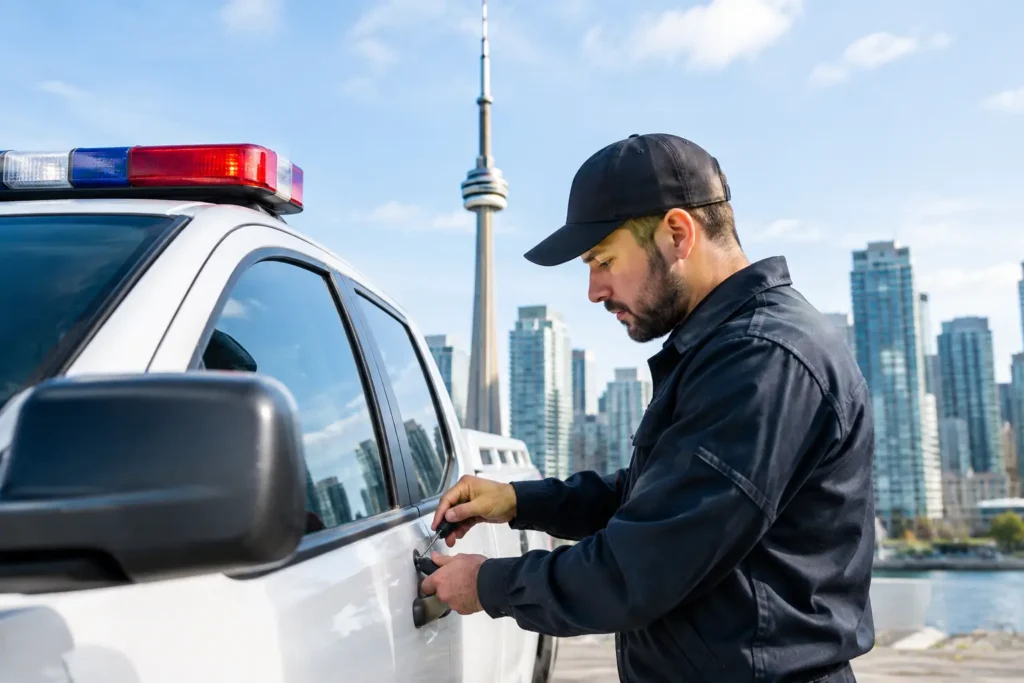
A vehicle lockout can turn a normal Toronto drive into a stressful roadside problem in seconds. You step out to grab coffee, load groceries, check a delivery, or clear snow from the windshield, and the doors lock with your keys still inside. This guide to emergency vehicle lockouts explains what to do first, what not to do, and when to call for professional help.
The priority is not getting back into the car as quickly as possible at any cost. It is protecting yourself, your passengers, and your vehicle while arranging a safe solution. A rushed DIY attempt can damage weather stripping, window glass, door locks, side airbags, or electronic components – and turn a simple lockout into an expensive repair.
First Steps During an Emergency Vehicle Lockout
Start by taking a breath and checking your surroundings. If you are parked in a safe, well-lit location, move away from traffic and stand somewhere visible while you assess the situation. If you are on a busy road, highway shoulder, parking garage ramp, or an isolated area, your personal safety comes before the vehicle.
Check every door, the trunk or hatch, and any available spare key access. Some vehicles allow trunk access through an exterior release, but do not force handles or repeatedly pull on a locked mechanism. If you use a vehicle app, key fob app, or remote access service, confirm whether it can unlock the doors. A weak phone signal, dead fob battery, or disconnected vehicle battery may prevent that option from working.
If another driver is with you, ask them to stay nearby rather than leaving you alone. At night, turn on your phone flashlight if needed and remain aware of people and vehicles around you. Calling a trusted roadside service early is usually faster and safer than trying several unsuccessful methods on your own.
Call 911 When Someone Is Locked Inside
A lockout becomes an emergency when a child, vulnerable adult, or pet is trapped inside the vehicle, especially during extreme heat or cold. Call 911 immediately if there is any danger to life or health. Tell the dispatcher your exact location, the vehicle description, and who is inside.
Do not wait to see whether the person can open the door or whether the temperature will improve. In these situations, emergency responders should direct the response. If conditions require immediate entry to protect a life, property damage may be necessary. That decision is very different from a routine lockout with no one inside.
What Not to Do When Keys Are Locked in the Car
Online lockout tricks can make a difficult moment worse. Modern vehicles have tighter door seals, side-impact components, sensors, complex locking systems, and glass that is not designed for improvised entry. A coat hanger, screwdriver, wedge, shoelace, or other household item can scratch paint, bend the frame, tear seals, trigger an alarm, or damage internal wiring.
Breaking a window is rarely the right answer for a standard lockout. Glass replacement can cost far more than professional roadside help, and shattered glass creates a hazard for passengers and pets. It also may not give you easy access to the door lock. Reserve destructive entry for a genuine life-safety emergency when directed by emergency services or when there is no safer option.
Avoid accepting help from an unverified person who offers to open the car. A professional lockout provider should identify their service, explain the process, and use appropriate tools with care. You should also expect to show proof that you own or are authorized to use the vehicle before entry is provided.
Why Professional Lockout Service Is the Better Choice
Professional vehicle lockout service is designed to regain access without unnecessary damage. The right approach depends on the make, model, year, lock type, and condition of the vehicle. A trained operator can assess the entry points, use proper equipment, and work carefully around the door, glass, and trim.
That matters even more with newer vehicles. Keyless entry systems, proximity fobs, electronic releases, and advanced anti-theft features mean there is no universal method that works safely for every car. Trucks, vans, luxury vehicles, EVs, and older models can all require different handling.
When you call for help, be ready to provide your location, vehicle make and model, color, license plate if available, and whether keys are visible inside. Mention any urgent details, such as a vehicle stopped in an unsafe place, a dead battery, broken key fob, or passenger waiting in severe weather. Clear information helps dispatch send the right assistance without delay.
Emergency Roadside Service by South Toronto provides lockout support across Toronto and surrounding areas with licensed, bonded, and insured operators. A dispatcher can help you explain the situation, provide transparent service information, and coordinate the appropriate response – 24 hours a day.
Guide to Emergency Vehicle Lockouts in Toronto: Location Matters
Toronto lockouts do not always happen in convenient places. A car can lock automatically outside a downtown condo, in a crowded supermarket lot, near a construction zone, on the Gardiner, or during a late-night stop in North York, Scarborough, Etobicoke, East York, Parkdale, Little Italy, or Midtown.
Your location affects what you should do while waiting. In a parking lot, wait near the entrance or another visible area if it is safe. In a parking garage, note the level, section, and nearest entrance so the operator can find you. On a busy roadway, move behind a barrier if one is available and safe to reach. Never stand between your vehicle and moving traffic.
Winter adds another layer of risk. A lockout in snow or freezing wind can become uncomfortable quickly, particularly for children, older passengers, or anyone without warm clothing. In summer, heat inside a parked car rises rapidly. Call for help early rather than trying to solve the issue outdoors for an extended period.
Questions to Ask Before You Confirm Service
Fast help should also be clear help. Ask for an estimated arrival window and confirm the service price or pricing structure before dispatch whenever possible. If the vehicle is in a difficult location, such as an underground garage with low clearance, mention it right away. That prevents the wrong vehicle from being sent.
It is also reasonable to ask whether identification or registration will be required. Reputable providers protect vehicle owners by confirming authorization before opening a locked vehicle. Have your driver’s license, registration, insurance card, or digital proof available if you can access it.
Price can depend on the time of day, location, vehicle type, and complexity of the lockout. The cheapest quote is not always the best choice if it comes without a clear arrival estimate, business identification, or professional standards. Look for straightforward communication, trained operators, and a service that treats your vehicle with care.
Prevent the Next Lockout
Most drivers only need one lockout to change a few habits. Keep a spare key in a secure place away from the vehicle, such as at home with a trusted person. If your vehicle supports digital keys or remote access, set them up before an emergency and make sure you know your account password.
Replace weak key fob batteries before they fail, especially before winter travel. Get into the habit of checking for your keys before closing the door, trunk, or hatch. For delivery drivers and parents making frequent stops, that quick check can save a long wait later.
If your keys are inside right now, do not risk damage or your safety trying to force a door. Move to a safe location, keep your phone charged, and call for professional roadside assistance. Calm action gets you back on the road faster than a risky shortcut.