A fuel warning light can turn into a stopped vehicle faster than most drivers expect, especially in Toronto traffic, on the Gardiner, or during a long winter commute. This guide to fuel delivery service explains what to do first, what a roadside provider needs from you, and how to get moving again without creating a bigger safety problem.
Running out of gas is frustrating, but it does not have to become dangerous. The priority is getting your vehicle out of traffic if possible, making yourself visible, and arranging professional help rather than walking along a busy road with a gas can.
What to Do When Your Vehicle Runs Out of Fuel
If the engine begins sputtering, do not keep accelerating or try to force the vehicle farther than it can go. Turn on your hazard lights immediately and safely guide the vehicle to the shoulder, a parking lot, a side street, or another safe location. Avoid stopping on a curve, at the bottom of a hill, or in an active travel lane whenever you have another option.
Once stopped, put the vehicle in park, apply the parking brake, and keep the doors locked if you are in an unfamiliar or high-traffic area. At night, in bad weather, or beside fast-moving traffic, remaining inside the vehicle is often safer than standing outside. If you must exit, do so only when it is safe and move well away from traffic.
Your next move is to call a fuel delivery service. A dispatcher can send a roadside operator with the correct fuel, so you do not need to leave your vehicle or depend on a stranger for assistance. This is especially useful for parents with children, commercial drivers on a schedule, and anyone stranded where walking to a gas station is not realistic or safe.
How Fuel Delivery Service Works
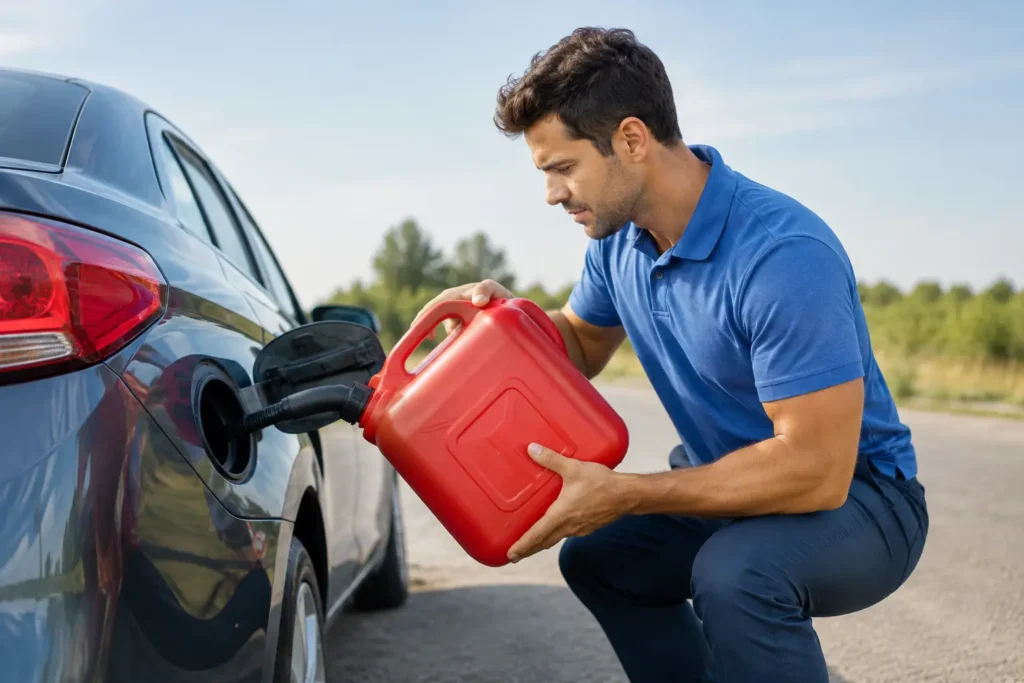
Fuel delivery is a straightforward roadside assistance service. You provide your location, vehicle details, and the type of fuel your vehicle requires. A trained operator arrives with an emergency supply of gasoline or diesel, adds enough fuel to help you reach a nearby station, and confirms that the vehicle is ready to start.
The goal is not usually to fill the tank. Emergency fuel is intended to get you safely back on the road and to a service station where you can refuel properly. The exact amount may depend on the provider, vehicle type, fuel availability, and the distance to the nearest gas station.
A professional operator should handle the fuel carefully, follow safe transfer procedures, and keep the interaction quick and clear. If your vehicle still will not start after fuel is added, the issue may be more than an empty tank. A weak battery, fuel pump problem, frozen fuel line, or other mechanical concern could be involved. In that case, towing or further roadside diagnostics may be the safer next step.
Information to Have Ready for Dispatch
Accurate details help the dispatcher send the right assistance without delay. Be ready to share your exact location, including the street, nearest intersection, highway direction, exit number, or a recognizable landmark. If you are in a parking garage, state the level and clearance restrictions because some service vehicles may not fit.
You will also need to identify your vehicle’s fuel type. Check the fuel door, dashboard message, owner’s manual, or fuel cap label if you are unsure. Do not guess. Putting diesel into a gasoline vehicle, or gasoline into a diesel vehicle, can lead to expensive damage and may require towing and a fuel-system drain.
Let the dispatcher know the vehicle’s make, model, color, and license plate, along with any access issue such as a locked fuel door or a vehicle parked in an unsafe position. If the car is blocking traffic or you are in immediate danger, tell them at the start of the call.
When Calling for Fuel Delivery Makes Sense
A fuel delivery service is often the best option when you are already stopped, cannot safely walk to a station, or have no approved container for carrying fuel. It is also the practical choice on highways, bridges, major arterial roads, during severe weather, and late at night.
Calling a friend may appear cheaper, but it can introduce delays and safety risks. They may have trouble finding you, arrive without an approved container, or need to stop for fuel before reaching you. A roadside professional is dispatched specifically for the job and understands how to work around traffic, poor visibility, and stressful roadside conditions.
There are situations where a tow is better than fuel delivery. If your vehicle has been sitting empty for a long time, will not restart after fuel is added, has visible leaks, or shows warning lights beyond the low-fuel indicator, do not continue trying to start it. Explain the symptoms and arrange the right level of assistance.
Safety Rules During a Roadside Fuel Delivery
Fuel is flammable, so a few simple precautions matter. Do not smoke, vape, use open flames, or run the engine while fuel is being transferred. Keep passengers, especially children and pets, a safe distance from the fueling area when conditions allow.
Avoid accepting fuel from unverified individuals who stop beside you. A good intention does not guarantee the fuel is correct, clean, or safely transported. It is better to wait for a licensed roadside provider that can confirm the fuel type and handle the delivery professionally.
If you smell strong fuel odor, see a leak under the vehicle, or notice fuel pooling on the ground, move away from the vehicle if it is safe to do so. Do not attempt to add fuel. Call emergency services if there is an immediate fire risk, then contact roadside assistance once the area is secure.
What Fuel Delivery May Cost
Fuel delivery pricing can vary based on the time of day, distance, location, fuel type, amount delivered, and the difficulty of reaching your vehicle. A vehicle in a downtown parking garage or on a restricted highway may require more coordination than one parked in a residential driveway.
Ask for a clear estimate before dispatch when possible. A reputable provider should explain the service call charge, the cost of the fuel, and any applicable after-hours or access fees. Transparency matters when you are stranded. The cheapest quoted option is not always the fastest or safest, particularly if it cannot provide a realistic arrival window.
For fleet operators and delivery drivers, the cost of lost time can exceed the service charge quickly. Fast fuel delivery can prevent missed deliveries, customer delays, and a vehicle sitting exposed on the roadside.
Preventing Another Empty-Tank Stop
Most fuel emergencies are preventable, but busy schedules make it easy to put off a stop at the pump. Treat a quarter tank as your practical refill point, not an empty-tank warning. This gives you room for detours, traffic delays, cold weather, and inaccurate fuel-level readings.
Winter deserves extra caution. Toronto traffic can leave drivers idling longer than planned, and low temperatures may affect vehicle performance. Keep more fuel in the tank before storms, long trips, or late-night drives. If your fuel gauge behaves inconsistently, have it inspected instead of relying on mileage estimates.
It also helps to plan fuel stops before entering unfamiliar areas or starting a long highway stretch. Navigation apps can show nearby stations, but do not wait until the range estimate reaches zero. Those estimates change with traffic, weather, hills, and driving habits.
A Guide to Fuel Delivery Service for Toronto Drivers
Fast help depends on clear communication and local coverage. Whether you are stopped in Downtown Toronto, North York, Scarborough, Etobicoke, East York, Parkdale, Little Italy, or Midtown, give dispatch the most precise location possible and stay available by phone. Keep your hazards on, watch for the arriving vehicle, and follow any safety instructions from the operator.
Emergency Roadside Service by South Toronto provides 24/7 roadside fuel delivery for drivers who need a quick, professional response. Licensed, insured operators can bring the correct fuel and help you take the next safe step, whether that means driving to a station or arranging a tow.
An empty tank is a disruption, not a reason to take unnecessary risks. Get to a safe position, call for help, and let a qualified roadside professional bring the fuel to you so you can continue your trip with confidence.