The problem with figuring out how to tow a lowered car is that the wrong move can cause damage before the truck even leaves the curb. A front lip can crack on the ramp, side skirts can scrape on a driveway edge, and improper hook points can bend parts that were never meant to carry towing force. If your vehicle sits low, every inch matters, and the tow method matters even more.
A lowered car should never be treated like a standard-height sedan. Whether it is lowered from the factory, modified with springs or coilovers, or simply has very little ground clearance, it needs a careful approach from the first contact point to the final tie-down. In a busy area like Toronto, where breakdowns happen in parking garages, condo ramps, narrow side streets, and snow-lined roads, that extra care is not optional.
How to tow a lowered car without causing damage
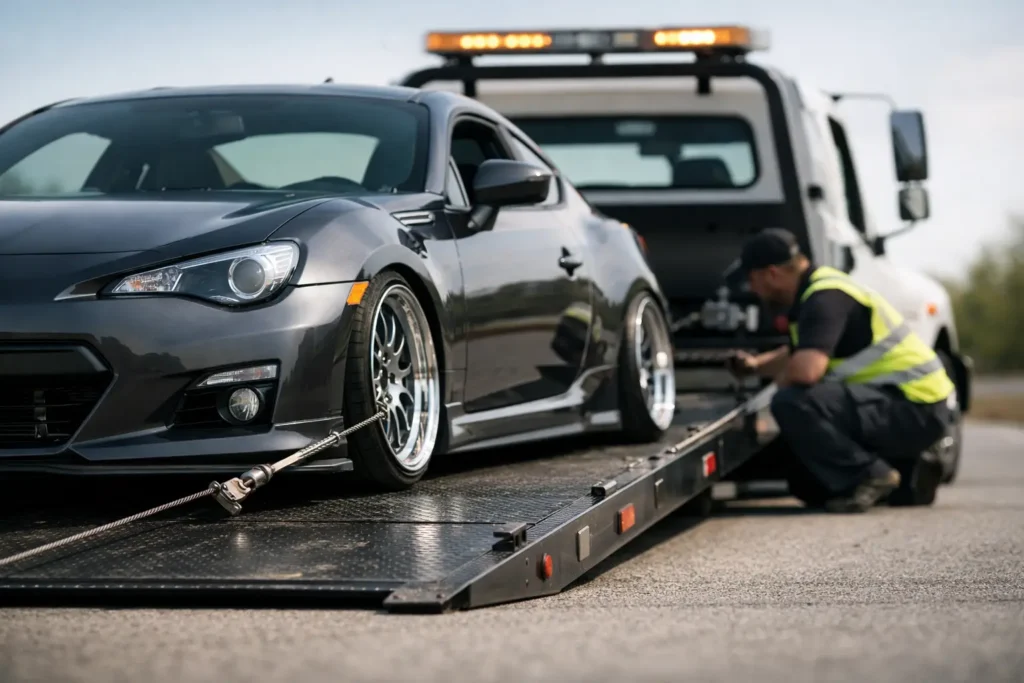
The safest answer is simple – use a flatbed tow truck and load the car with the right angle reduction tools. In most cases, that means race ramps, wood planks, skates, or specialized low-profile ramp extensions that reduce the approach angle. This helps the bumper clear the bed and keeps the underbody from dragging during loading.
A wheel-lift tow can work for some vehicles, but it is usually not the first choice for a lowered car. The lower the ride height, the more likely the bumper, exhaust, rocker panels, or suspension parts will contact the ground during lifting. If the car is all-wheel drive, wheel-lift towing also creates drivetrain concerns unless dollies are used correctly. For most lowered vehicles, flatbed towing is the safer and cleaner option.
What matters most is not just the truck type, but the operator’s process. A professional tow should start with checking the car’s height, body kit clearance, wheelbase, front overhang, rear overhang, and whether the car can roll freely. If it has a blown tire, broken suspension, locked steering, or collision damage, the loading plan changes.
The biggest risks when towing a lowered car
The most common damage happens at the loading stage, not while driving down the road. That surprises a lot of people. Once the vehicle is secured on a flatbed, transport is usually straightforward. The danger is in getting the car onto the truck without the nose, underside, or rear bumper hitting the ramp.
Low front splitters and aftermarket lips are especially vulnerable. So are side skirts on angled driveways or uneven pavement. Some lowered cars also have stiffer suspension travel, which means the body does not lift much as it begins climbing the bed. Instead of flexing, it scrapes.
There is also the issue of tow hooks and tie-down points. On many lowered cars, aftermarket bodywork blocks access to the factory recovery point. If someone reaches for a control arm, sway bar, or another suspension component instead, they can do real damage fast. Securement should always use approved points and soft straps when needed to avoid wheel and body damage.
The right equipment for a lowered vehicle tow
If you are dealing with a low-clearance vehicle, the truck should arrive prepared. A standard bed and standard angle may not be enough. The right setup often includes extended ramps or angle reducers, low-profile skates for stuck wheels, soft straps for proper securement, and a winch used slowly and in a controlled way.
That controlled winching matters. A lowered car should not be yanked onto the bed. Slow loading gives the operator time to watch every clearance point and stop immediately if the angle is too sharp. In some cases, placing boards under the ramps or changing the truck position slightly can make all the difference.
If the car is parked in a garage, near a curb, or facing downhill, recovery gets more technical. A low car in a tight underground parking structure may require skates, careful repositioning, or a smaller truck before transfer to a flatbed. That is why experience matters as much as equipment.
Flatbed vs. wheel-lift for lowered cars
For most situations, flatbed towing wins. It supports the entire vehicle, avoids drivetrain issues, and gives the best chance of preventing scrape damage when used with the proper ramp angle. It is usually the best option for sports cars, modified sedans, performance vehicles, show cars, and EVs with low battery tray clearance.
Wheel-lift towing has a place, especially in tight urban areas, but it comes with more risk for low-clearance vehicles. If the front bumper sits very close to the ground, lifting from one end can create contact before the vehicle is fully raised. It also may not suit vehicles with delicate aero parts or very low side skirts.
Can you tow a lowered car yourself?
Technically, sometimes. Realistically, it depends on the car, the trailer, the straps, the loading angle, and your experience. If you are asking because the car is disabled on the roadside, the answer is usually no. Trying to load a lowered car onto a rented trailer without the right ramps or tie-down knowledge can turn a breakdown into body damage.
If you are moving a project car or show car under controlled conditions, self-towing may be possible with a proper low-deck trailer and enough clearance tools. But if the car is stuck, has suspension damage, cannot roll, or is sitting in traffic, it is safer to call a professional towing service that handles low-clearance vehicles.
What to tell the tow company before they arrive
If you need to know how to tow a lowered car the right way, start with the dispatch call. The more accurate your information, the better the truck setup will be when help arrives.
Tell them the car is lowered. Be specific if you can. Mention if it has a front lip, side skirts, coilovers, air suspension, a damaged wheel, or if it is stuck in a garage or on a steep driveway. If the steering is locked, the battery is dead, or the car will not shift into neutral, say that too. These details affect the equipment and the loading plan.
Photos can help if the company accepts them, but clear verbal details are usually enough. A professional dispatcher will use that information to send the right truck instead of guessing.
What not to do with a lowered car
Do not keep trying to drive it if it is leaking, dragging, or scraping badly. A lot of drivers do more damage by trying to reach a safer spot when the car already needs a tow. That can turn a simple tow into suspension, oil pan, or exhaust repairs.
Do not let anyone rush the loading process. If the first ramp angle is too steep, it needs to be adjusted. If the hook point is wrong, it needs to be corrected. Fast service is important, but speed should never come at the cost of avoidable damage.
Do not assume every tow truck is the same. Lowered vehicles need more than a winch and a bed. They need the right equipment, the right operator, and a method that matches the car.
Special cases that change the towing method
Air suspension can make things easier if the system still works and the car can be raised before loading. If it cannot, the vehicle may sit even lower than usual, which increases the need for ramp extensions.
Rear-wheel drive, front-wheel drive, and all-wheel drive setups also affect how the vehicle should be transported. EVs add another layer because many have strict manufacturer guidance on tow points and wheel movement. A lowered EV should be handled even more carefully because underbody battery protection is expensive and critical.
Collision damage changes everything. If a wheel is bent inward or suspension is collapsed, the vehicle may not roll normally. That means skates or specialty recovery tools may be needed before it can even be winched onto the truck.
Why professional towing is worth it for low cars
A lowered car takes more time, more attention, and usually better equipment than a standard tow. That is exactly why professional service matters. The cost of doing it right is almost always less than the cost of repainting a bumper, replacing a splitter, fixing underbody damage, or dealing with suspension problems caused by a bad recovery.
For drivers across Toronto and the GTA, this is not just about moving the car from point A to point B. It is about protecting a vehicle that already has limited clearance and less margin for error. Emergency Roadside Service by South Toronto handles urgent towing situations with the kind of careful loading low vehicles require – fast dispatch, licensed operators, and the right equipment when clearance is tight.
If your car sits low, the safest move is the simplest one – stop, protect the vehicle from further damage, and get a tow method that matches the car instead of forcing the car to match the truck.