A dead battery on a dark parking lot is frustrating. A flat tire on the shoulder of a busy highway can become dangerous fast. The best items for roadside emergency kits help you stay visible, warm, connected, and prepared while you decide whether the problem is safe to handle or it is time to call for help.
A good kit is not a box full of gadgets you will never use. It is a practical set of supplies chosen for real breakdowns: flat tires, battery failures, lockouts, fuel shortages, winter weather, and long waits for a tow. Keep it secured in the trunk or cargo area, where it will not become a projectile during a sudden stop.
Best Items for Roadside Emergency Kits That Matter Most
Start with the equipment that protects you from traffic and helps other drivers see your vehicle. Mechanical tools are useful, but roadside visibility and communication come first.
1. Reflective warning triangles or road flares
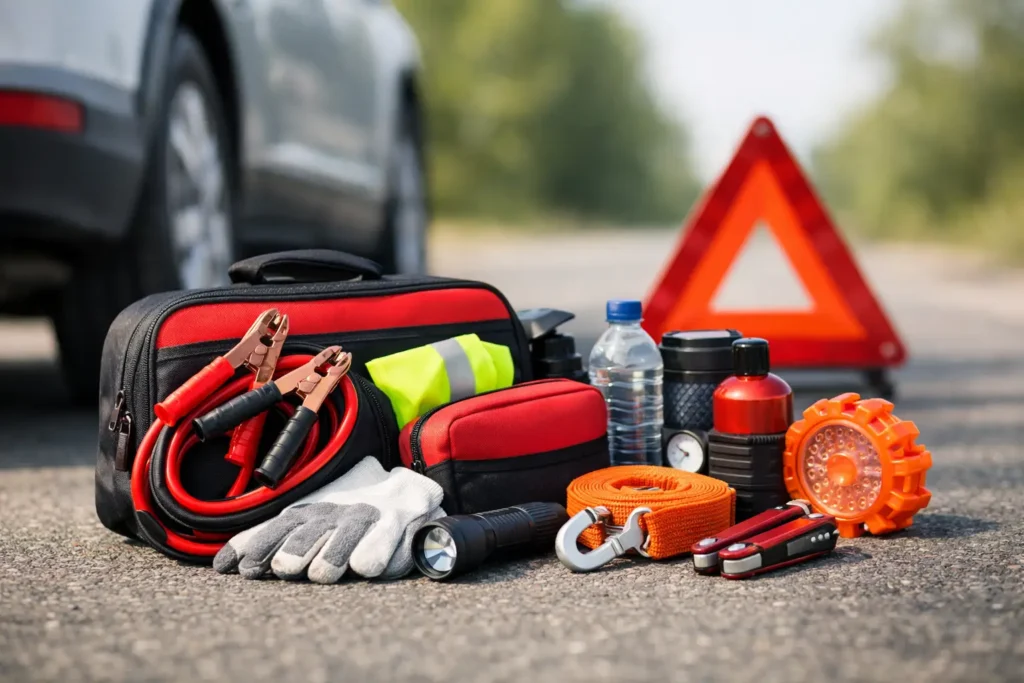
Three reflective triangles can warn approaching traffic that your vehicle is stopped ahead. They work without batteries and are especially valuable at night, in rain, fog, or snow. LED road flares are another strong option because they are bright, reusable, and safer than open-flame flares.
Do not place warning devices if doing so requires walking into active traffic. Turn on your hazard lights first, stay aware of your surroundings, and prioritize getting yourself to a safe location.
2. A high-visibility safety vest
A bright reflective vest takes almost no space and makes a major difference when you must step outside after dark. Put it within reach of the driver’s seat rather than burying it beneath other gear in the trunk. If you have passengers, consider carrying more than one vest.
3. A reliable flashlight and spare batteries
Your phone flashlight is helpful, but it drains the battery you may need to contact roadside assistance. Pack a durable LED flashlight with fresh spare batteries. A headlamp is even better for checking a tire, looking under the hood, or keeping both hands free while setting out safety markers.
Check the batteries twice a year. A flashlight that fails when temperatures drop is not emergency equipment.
4. A charged power bank and charging cable
A dead phone can turn a minor issue into a serious problem. Keep a high-capacity power bank in your kit with a cable that fits your phone. Recharge it regularly, especially before a road trip or during winter.
A 12-volt vehicle charger is useful too, but it will not help if the car battery is dead. The power bank is the backup that matters when you are waiting for a jump start, tow truck, or family member.
5. First-aid supplies
A compact first-aid kit should include adhesive bandages, gauze, antiseptic wipes, medical tape, gloves, pain relievers, and any personal medications you may need. Add a thermal blanket if your kit does not include one.
This is not a substitute for emergency medical care. If anyone is injured after a collision, call 911. Avoid moving an injured person unless there is an immediate threat, such as fire or oncoming traffic.
6. Jumper cables or a portable jump starter
A quality set of jumper cables can solve a routine battery issue if another vehicle is available and it is safe to use. Choose cables that are long enough to reach between vehicles and keep the instructions with them.
A portable jump starter offers more independence because it does not require another driver to stop. It does need maintenance: charge it according to the manufacturer’s schedule and keep it protected from extreme heat or cold. If you are unsure how to connect a battery safely, do not guess. Incorrect connections can damage electrical systems or cause sparks.
7. A tire inflator, gauge, and tire repair basics
A compact air compressor, tire pressure gauge, and tire sealant can help with a slow leak. These supplies are useful when you need enough air to reach a nearby repair shop, not when a tire has a sidewall cut, a blowout, or visible structural damage.
Many newer vehicles do not include a spare tire. Check what your vehicle has before an emergency happens. If you do carry a spare, make sure the jack, lug wrench, wheel lock key, and spare itself are all present and in usable condition.
Know When Not to Change a Tire
A tire change is only a good idea when you can get completely out of traffic onto level, stable ground. It is not a safe roadside DIY job on a narrow shoulder, near fast-moving vehicles, during poor visibility, or when your vehicle is heavily loaded.
If the location feels unsafe, remain inside with the doors locked when possible, hazards on, and call for professional assistance. Move away from the vehicle only if staying inside creates a greater danger. Your safety is worth more than saving a service call.
8. Basic tools and vehicle-specific supplies
A small tool kit with pliers, an adjustable wrench, screwdrivers, work gloves, and a utility knife can handle simple fixes. Add duct tape and zip ties for temporary, non-safety-critical repairs, such as securing loose trim until it can be professionally repaired.
Include your owner’s manual, registration, insurance information, and the number for roadside assistance. The manual can identify fuse locations, towing points, tire specifications, and warning lights. For electric vehicles, keep the manufacturer-approved towing instructions accessible. EVs often require specialized handling, and improper towing can seriously damage the drivetrain or battery system.
9. Water and shelf-stable food
Keep bottled water and nonperishable snacks in the vehicle, particularly for long commutes, road trips, or trips with children. Granola bars, nuts, crackers, and other compact foods can make an unexpected delay more manageable.
Rotate these supplies before they expire. In very hot or freezing conditions, check containers for damage and replace anything that has degraded.
10. Warm layers, blankets, and hand warmers
Cold weather changes the priority of a roadside kit. Pack a warm blanket, gloves, knit cap, and extra socks. Hand warmers are compact and can provide short-term relief during a long wait in freezing conditions.
Do not run a vehicle in an enclosed garage or snow-blocked area for heat. Carbon monoxide can build quickly. If snow is around the exhaust pipe, clear it before running the engine, and use the vehicle only as safely as conditions allow.
11. Small shovel, traction aid, and ice scraper
For winter driving, a folding shovel can help clear packed snow around the tires. A bag of sand, cat litter, or purpose-made traction mats may help a vehicle gain grip on ice. An ice scraper and snow brush should stay in the vehicle all season, not appear only after the first storm.
These tools can help with a minor stuck situation, but spinning the tires aggressively can make the problem worse. Stop if the vehicle is digging deeper, losing traction near traffic, or stuck in a location where recovery is unsafe.
12. Paper map, cash, and a written contact card
Navigation apps are excellent until your phone loses charge or cellular service is weak. A local paper map, a small amount of cash, and a contact card with important phone numbers give you options when digital tools fail.
Write down your vehicle’s make, model, color, license plate number, and insurance details. When calling for help, know your location, the direction you were traveling, and a nearby intersection, exit number, or recognizable landmark. That information speeds up dispatch and reduces confusion.
Build the Kit Around Your Vehicle and Routes
The right kit depends on how and where you drive. A commuter who stays in city traffic may prioritize visibility gear, a phone charger, and a jump starter. A family driving longer routes should add water, blankets, first-aid supplies, and child-specific items. Delivery drivers and commercial operators may need more lighting, gloves, weather gear, and backup communication tools because they spend more hours on the road.
Review your kit at least twice a year. Replace expired food, drained batteries, worn gloves, missing tools, and outdated documents. Test the tire inflator and power bank before you need them. Preparation works only when the equipment is ready.
If your vehicle is disabled in a risky location, you do not need to diagnose every problem on the roadside. Emergency Roadside Service by South Toronto can coordinate fast, professional help for jump starts, flat tires, lockouts, fuel delivery, and towing when the situation calls for it. Keep your kit close, keep your phone charged, and make the safe call before a small breakdown becomes a bigger emergency.