The fuel light came on several kilometers ago. Now the engine has sputtered, traffic is moving fast beside you, and the nearest gas station is not within walking distance. Can roadside service bring gas in that situation? Yes. A fuel delivery service can bring enough fuel to get your vehicle moving again, without asking you to take an unsafe walk along a busy Toronto road or leave your car unattended.
For a driver stranded in Downtown Toronto, Scarborough, North York, Etobicoke, or elsewhere in the GTA, the priority is simple: get to a safe location and get back on the road without adding another problem. Professional roadside fuel delivery is designed for exactly that.
Can Roadside Service Bring Gas to Your Location?
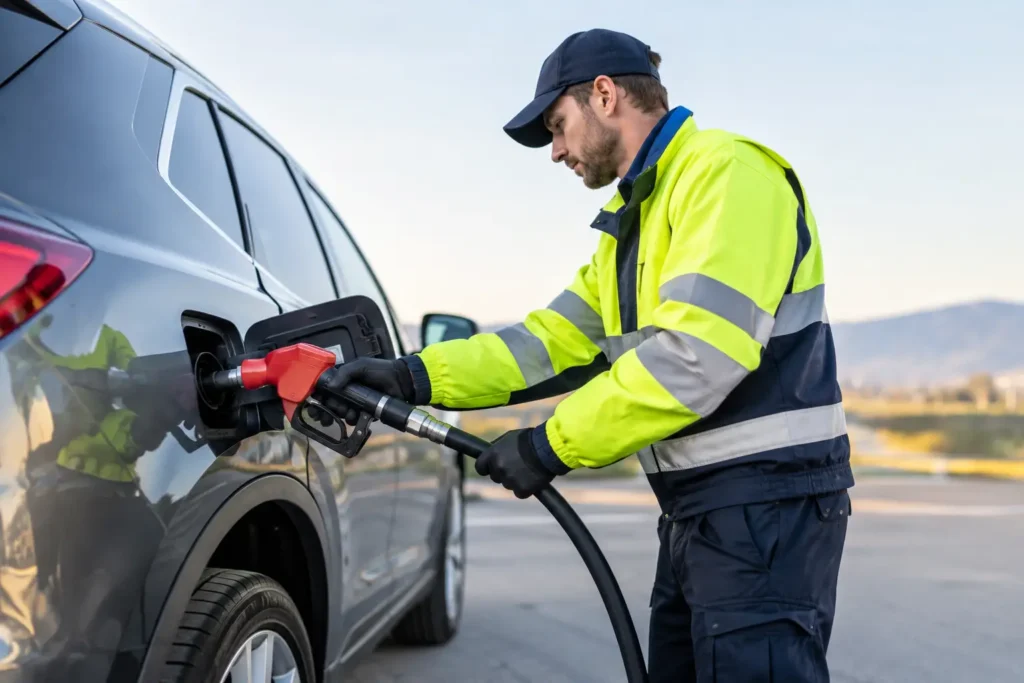
In most cases, yes. A roadside assistance provider can dispatch an operator with emergency fuel to your vehicle, whether you are in a parking lot, on a residential street, at a workplace, or stopped near a major roadway. The operator will confirm your location, vehicle type, and fuel type before heading out.
Emergency fuel delivery is not meant to fill your tank. It is meant to provide enough fuel for you to start the vehicle and drive directly to a nearby gas station. The amount supplied depends on the service provider, the vehicle, and the fuel required, but it is typically enough to get you out of an immediate roadside situation.
That distinction matters. If your tank is empty because of a failed fuel gauge, a fuel leak, or a problem with the fuel system, adding gas may not solve the issue. A reliable dispatcher will help you decide whether fuel delivery makes sense or whether towing is the safer next step.
What Happens When You Request Fuel Delivery?
A fast response starts with accurate information. When you call for roadside gas delivery, be ready to provide your exact location, the make and model of your vehicle, and the type of fuel it uses. If you are unsure of your fuel type, check the label inside the fuel door or your owner’s manual. Do not guess.
The dispatcher may also ask whether you are in a safe spot, whether the vehicle is completely out of fuel, and whether you have access to the vehicle. This helps the operator arrive prepared and helps prevent delays once they reach you.
After dispatch, remain reachable by phone. In dense areas of Toronto, a precise location can make a major difference. Give the nearest intersection, parking level, highway direction, landmark, or building entrance. If you are on Highway 401, the Gardiner Expressway, the Don Valley Parkway, or another high-speed route, tell the dispatcher which direction you are traveling and the nearest exit or marker you can safely identify.
Once the operator arrives, they will confirm the fuel type, add the emergency fuel, and allow you to start the vehicle. If the engine does not start after fuel delivery, the operator can assess whether a dead battery, mechanical problem, or another issue is involved. You may need a jump start or a tow rather than more fuel.
Safety Comes First When You Run Out of Gas
Running out of gas can feel embarrassing, but it is a roadside safety issue, not a personal failure. A faulty gauge, unexpected detour, heavy traffic, extreme cold, or a simple missed fuel stop can empty a tank faster than expected. The right response is to protect yourself and your passengers.
If your vehicle begins losing power, signal early and move as far away from traffic as possible. Turn on your hazard lights. If you can safely pull into a parking lot, side street, shoulder, or designated emergency area, do so. Avoid stopping in an active lane unless there is no other option.
On a busy highway, stay inside your vehicle with your seat belt on if it is safer than standing outside near passing traffic. Do not walk along the shoulder to buy a gas can. At night, during bad weather, or near fast-moving traffic, that walk can create more risk than waiting for professional help.
If you smell gasoline, see fluid leaking, notice smoke, or suspect a collision damaged the vehicle, do not attempt to add fuel. Move to a safe distance if you can do so without entering traffic, then request emergency assistance. Fuel delivery is appropriate for an empty tank, not for a possible fuel-system hazard.
Fuel Type Matters More Than Most Drivers Think
The operator needs the correct fuel before arriving. Gasoline, diesel, and specialty fuel requirements are not interchangeable. Putting the wrong fuel into a vehicle can lead to expensive repairs, especially with diesel engines.
Most gasoline vehicles use regular unleaded fuel, although some require premium. Emergency delivery generally provides the appropriate standard fuel to get you to a station. If your vehicle requires diesel, make that clear when you request help. If you drive a hybrid, confirm whether the vehicle has run out of gasoline or has an unrelated battery or charging problem.
Electric vehicles are different. An EV cannot receive gasoline, and roadside charging options depend on the vehicle, battery condition, available equipment, and location. If an EV has no usable charge, a flatbed tow to a charging location is often the practical solution. Be specific when calling so the correct equipment is dispatched.
When Fuel Delivery Is Better Than a Tow
Fuel delivery is usually the quickest, most affordable choice when your vehicle is otherwise running properly and simply ran out of fuel. You get enough gas to restart, then continue to a nearby station and fill up normally.
A tow may be the better decision if you are far from a gas station, your car will not restart after fuel is added, or you believe the vehicle has a mechanical problem. The same applies if the car is parked in an unsafe position where it cannot remain while fuel is added. A professional roadside provider should explain the options clearly rather than pushing a service you do not need.
Transparent pricing matters here. Before dispatch, ask what the fuel delivery service includes, whether fuel is included in the quoted price, and whether there are additional charges based on distance, time, or difficult access. Clear answers help you make a confident decision while avoiding surprises.
How to Avoid Another Empty-Tank Emergency
A roadside fuel delivery gets you moving, but a few habits can reduce the chance of needing one again. Treat the quarter-tank mark as your refill point, particularly during winter, long commutes, or trips across unfamiliar parts of the GTA. Cold weather, idling, slow traffic, and detours can all increase fuel use.
Pay attention if the fuel gauge behaves inconsistently, the low-fuel light comes on too early or too late, or your vehicle uses more fuel than normal. Those can be signs of a gauge issue, leak, or engine problem that deserves inspection. Keeping a small emergency kit in the car, with a charged phone, warm layer, flashlight, and reflective gear, also makes any roadside delay easier to manage.
For commercial drivers, delivery vehicles, and busy families, fuel planning is especially important. Still, unexpected delays happen. When they do, Emergency Roadside Service by South Toronto can coordinate prompt fuel delivery and roadside support 24/7 across Toronto and surrounding areas.
If your tank is empty now, focus on a safe stopping point, turn on your hazards, and call for help with your precise location and fuel type. A quick professional response can turn a stressful roadside stop into a short delay – and get you safely to the pump.