A dead battery on the Gardiner, a flat tire in North York, or a collision in Scarborough can turn a normal drive into a stressful stop within minutes. The best towing companies do more than move a vehicle – they help protect you, your passengers, and your car while getting the right assistance dispatched quickly.
When you are stranded, speed matters. So do clear answers, safe equipment, and a price you can understand before the truck arrives. Knowing what to expect helps you make a confident call when time is tight.
What Reliable Towing Companies Should Do First
A professional towing provider starts with dispatch, not guesswork. When you call, the dispatcher should ask where you are, what happened, what type of vehicle you drive, and whether you are in an unsafe position. A clear location is especially important on busy Toronto roads, parking garages, condo lots, and highways where access can be limited.
The right solution depends on the problem. A vehicle with a dead battery may need a jump start, not a tow. A locked car may only need lockout service. If you have a flat tire and a usable spare, a mobile tire change can often get you moving sooner. If there is collision damage, a mechanical failure, or an EV that cannot be driven safely, towing may be the correct call.
Good dispatch coordination saves time and avoids unnecessary costs. It also means the operator arrives with the equipment needed for your situation rather than trying to force a one-size-fits-all solution.
Ask About Price Before the Truck Is Dispatched
Nobody wants to discuss pricing while standing beside a disabled vehicle, but it is the right time to ask. Request an estimate that explains the service call, towing distance if applicable, and any special handling that may affect the total. Be direct about your vehicle’s condition, destination, and location so the estimate is based on accurate information.
Transparent pricing does not always mean every job costs the same. A standard car tow from a safe curbside location is different from a recovery job, a vehicle stuck in an underground garage, or a truck requiring specialized equipment. The important point is that the company explains the difference before work begins.
Be cautious if a provider will not give even a basic pricing framework, pressures you to agree without details, or cannot explain where your vehicle will be taken. You should know whether the destination is your home, a repair shop, a dealership, or a storage facility before the tow starts.
The Right Tow Method Protects Your Vehicle
Not every vehicle should be towed the same way. Modern cars have low ground clearance, sensitive transmissions, all-wheel-drive systems, and advanced driver-assistance sensors that need careful handling. This is why the equipment and operator experience matter as much as arrival time.
When a Flatbed Is the Better Choice
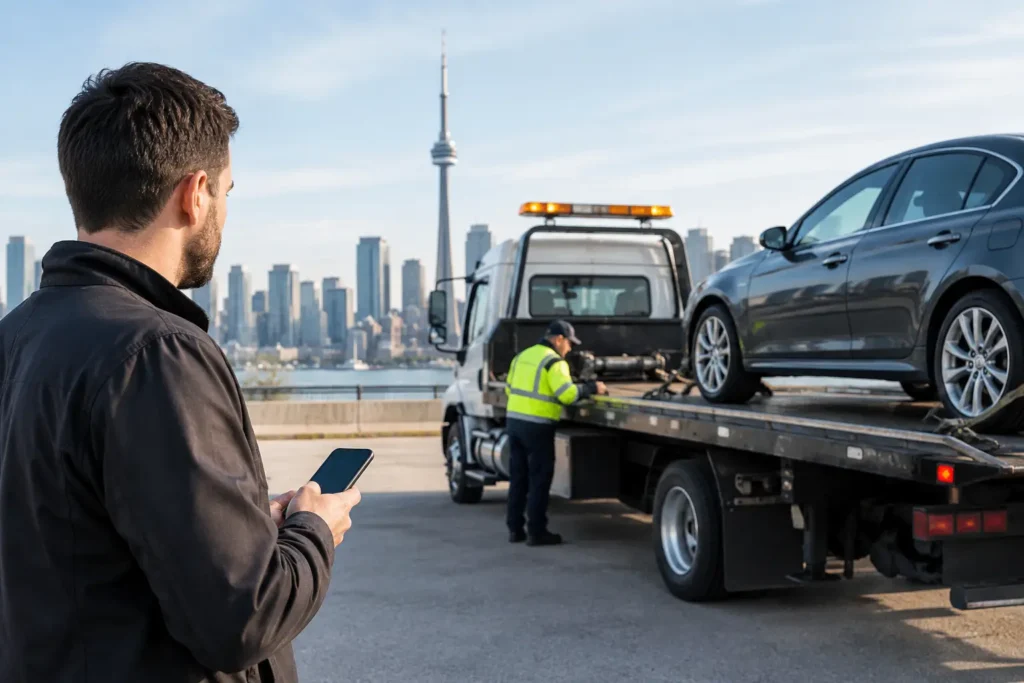
Flatbed towing keeps all four wheels off the road. It is often a smart option for all-wheel-drive vehicles, luxury vehicles, cars with major damage, motorcycles, and vehicles that cannot roll safely. It can also reduce the risk of added wear when a car has drivetrain or suspension issues.
A wheel-lift tow can be appropriate for certain vehicles and routine situations, particularly when access is tight. The best approach depends on your vehicle, its condition, and where it is located. A reliable operator will assess the situation instead of promising a method that is not suitable.
EV Towing Requires Extra Care
Electric vehicles need informed handling. Depending on the make, model, and condition of the vehicle, improper towing can damage the drive system or other components. Tell the dispatcher that you drive an EV and share any warning messages or visible damage. That information allows the company to send the proper equipment and plan for safe loading.
If your EV has lost charge but is otherwise safe, roadside charging options may be limited by location and vehicle type. In many cases, a flatbed tow to a charging location, home, or service center is the safer answer.
What to Do While You Wait for Roadside Help
Your first responsibility is personal safety. If your vehicle is in a live traffic lane, near a blind curve, or in a position where another vehicle could strike it, call emergency services if there is immediate danger. If you can move the vehicle safely, pull as far from traffic as possible.
Turn on your hazard lights. At night or in poor weather, remain visible without putting yourself at risk. If it is safer to wait inside your locked vehicle, do so. On a highway shoulder, avoid standing between your vehicle and traffic. If you must exit, use the side away from passing vehicles when possible.
Before the operator arrives, have your vehicle make, model, color, license plate number, and destination ready. A nearby intersection, major landmark, parking level, or building entrance can help the dispatcher find you faster than a vague neighborhood description. If you are in a garage, mention height restrictions right away.
Do not leave valuables in the car if it will be transported to a shop or storage location. Take your phone, wallet, keys, documents, and any medication you may need. If the vehicle has been in a collision, take photos when it is safe to do so, but never step into traffic to get them.
Signs You Are Dealing With a Professional Provider
The tow truck should be clearly identifiable, and the operator should be able to confirm the service details, destination, and vehicle before loading begins. Professional operators work carefully around low bumpers, damaged wheels, and vehicles that will not shift or steer. They should not rush you into signing paperwork you do not understand.
Insurance and licensing matter because towing involves your property and, often, a difficult roadside environment. Ask questions if something does not feel right. A legitimate company will not be offended by a driver who wants to confirm the plan.
Communication matters, too. You should receive realistic expectations, not vague promises. Traffic, weather, construction, and a severe winter storm can affect arrival times across Toronto and the GTA. Honest updates are far more useful than an unrealistic ETA that leaves you waiting without information.
Choose a Local Service Before You Need One
The worst moment to research roadside help is when your battery is dead in a grocery store parking lot or your tire fails after midnight. Save the number of a local 24/7 provider before an emergency happens, and keep your roadside coverage information in your phone or glove compartment.
For Toronto drivers, local coverage makes a practical difference. A provider familiar with Downtown Toronto, Etobicoke, East York, Midtown, Parkdale, Little Italy, North York, and Scarborough can better understand common access issues, traffic patterns, and realistic routing. That local knowledge can help get the appropriate truck to you faster.
Emergency Roadside Service by South Toronto coordinates urgent towing and roadside support for drivers who need a calm response and a clear next step. Whether you need a jump start, fuel delivery, lockout help, a tire change, accident towing, or flatbed transport, the priority should be the same: get you out of a stressful situation safely and without confusion.
A roadside problem does not have to become a longer, more expensive ordeal. Keep your location clear, ask for the service and price details you need, and choose help that treats your safety and vehicle with care. When the unexpected happens, call for professional assistance early – it is often the fastest way back to the road.