
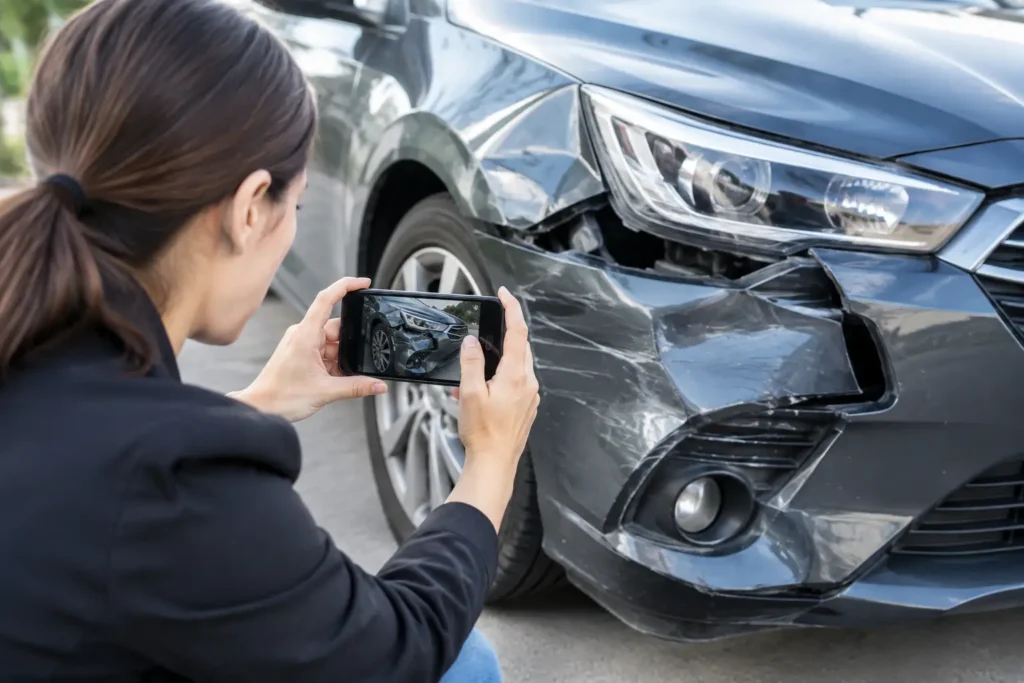
The minutes after a collision can feel blurred. Traffic is moving, adrenaline is high, and you may be trying to decide whether your vehicle is safe to drive. Knowing how to document collision damage before cars are moved gives you a clear record of what happened and protects you when speaking with police, insurers, repair shops, or the other driver.
Your first job is safety, not paperwork. Move yourself and passengers out of danger if you can do so safely, turn on hazard lights, and call 911 if anyone is hurt, the road is blocked, a driver appears impaired, or the crash creates an immediate risk. Once the scene is stable, start documenting. Details disappear quickly after vehicles are moved, debris is cleared, weather changes, and memories fade.
Start With Safety and the Big Picture
Do not stand in an active lane to get a better photo. If traffic, poor visibility, fire risk, leaking fluid, or an injury makes the scene unsafe, step away and let emergency responders handle it. Documentation can wait. A few incomplete photos are far better than being struck by another vehicle.
If the vehicles can be moved without creating more damage or danger, take wide shots first. Capture the position of both vehicles in relation to the roadway, lanes, intersection, traffic lights, stop signs, crosswalks, nearby businesses, and any visible skid marks or debris. These images establish context that close-up damage photos cannot show.
Use your phone’s standard camera setting when possible. Avoid filters, portrait effects, or heavy editing. Keep the original files and do not crop out surrounding details. Your insurer may request unedited images with timestamps and location data.
How to Document Collision Damage With Photos
Photos are usually the fastest and most useful evidence available at the scene. Take more than you think you need, but take them in a sensible order. Begin wide, move to medium range, then photograph close-ups of each damaged area.
Walk around your vehicle and photograph all four sides, even if the impact appears limited to one bumper or door. A low-speed rear-end crash can cause damage that is not obvious at first glance, including shifted panels, cracked mounting points, sensor problems, trunk misalignment, or fluid leaks. A complete walk-around also helps show pre-existing damage separately from new damage.
For every visible damaged spot, take photos from several angles. Include close-ups of scratches, dents, broken glass, paint transfer, torn trim, bent wheels, deployed airbags, and damaged lights. Then step back far enough to show exactly where that damage sits on the vehicle.
Photograph the license plates of every involved vehicle, along with each vehicle’s make, model, color, and overall condition. Take clear images of the other driver’s license, registration, and insurance information only with their permission. If they prefer to exchange details verbally, write the information down and read it back to confirm accuracy.
Do not forget the road itself. Capture wet pavement, snow, ice, potholes, loose gravel, construction zones, obscured signs, damaged guardrails, and anything else that may explain the conditions. If a traffic signal is relevant, photograph it only when it is safe and practical. Never walk into an intersection to prove a point.
Photograph Details That May Affect Repairs
Modern vehicles often hide critical components behind bumpers and body panels. If your car has parking sensors, cameras, radar equipment, advanced driver-assistance features, or an EV charging port near the damaged area, photograph those components. A bumper that looks lightly scuffed may still require inspection and calibration.
Also take photos of the dashboard if warning lights appear after the collision. Capture the odometer, fuel level, and any messages about air bags, braking, traction control, battery systems, or sensors. For electric or hybrid vehicles, avoid touching damaged high-voltage components or orange cables. If there is smoke, a burning odor, or a battery warning, move away and call emergency services.
Write Down What Photos Cannot Explain
Your phone camera records appearance. Your notes preserve timing, conditions, and your immediate observations. Open a note on your phone or record a calm voice memo as soon as you are safely able.
Include the date, time, exact location, direction of travel, weather, road conditions, and what you were doing immediately before impact. Write only what you observed. For example: “I was traveling east in the right lane on Bloor Street. Traffic slowed near the intersection. I felt an impact from behind.” Keep the language factual and avoid guessing about speed, distraction, fault, or mechanical issues.
Record what happened after impact, too. Did the vehicle pull to one side? Did a tire begin losing air? Did a door stop opening? Did you notice a fuel smell, leaking fluid, or an unusual noise? These details can help a repair facility identify hidden damage and can show why towing was the safer choice.
Avoid apologizing or accepting blame at the scene, even if you are trying to be polite. You can be cooperative without making conclusions before the full facts are reviewed. Exchange required information, speak honestly to police, and let insurers determine responsibility.
Collect Information From the Other Driver and Witnesses
Exchange names, phone numbers, addresses, driver’s license details, license plate numbers, insurance information, and vehicle details with every involved driver. If a commercial vehicle is involved, note the company name, unit number, and any identifying markings.
Witnesses can be especially helpful when accounts conflict. Ask for their name and best contact number, then make a note of what they said they saw. Do not pressure anyone to take sides. A simple statement such as “The vehicle behind you did not stop” is more useful when it comes from an independent witness than from a debate at the roadside.
If police attend, ask how to obtain the incident or collision report number. If officers do not attend, follow the local reporting requirements that apply where the crash occurred. Rules can vary based on injuries, damage level, whether a driver leaves the scene, and other circumstances. Report promptly to your insurer, even if you are still deciding whether to make a claim.
Keep a Record of Towing and Storage
A damaged car does not always look undrivable. Bent steering components, loose bumpers, broken lights, a damaged wheel, leaking fluids, or deployed airbags can turn a short drive into a second accident. When in doubt, arrange a tow rather than driving through Toronto traffic with a vehicle that may not be safe.
Before the vehicle leaves, photograph its condition again and note the tow company’s name, truck number if available, pickup time, destination, and any authorization you signed. Keep the tow receipt, storage paperwork, repair estimate, rental-car paperwork, and every message related to the collision in one folder. These records create a clean timeline if questions arise later.
For collision towing in the GTA, Emergency Roadside Service by South Toronto can dispatch licensed, insured operators 24/7 and help move your vehicle safely from the scene. Ask for the destination, expected charges, and any storage arrangements before the tow begins so there are no surprises.
Back Up Your Evidence Before You Need It
As soon as you are home or in a safe place, back up photos, videos, voice notes, and documents. Email them to yourself, save them to cloud storage, or create a dedicated folder on your phone. Name files clearly by date and collision location, such as “2026-09-17_DowntownToronto_rear-bumper.”
Do not edit photos to make damage more visible, and do not post detailed crash information on social media while an insurance claim is open. Public comments can be misunderstood, and online photos may reveal incomplete context. Share your documentation directly with your insurer, police, attorney if applicable, and repair provider.
When a Quick Video Helps
A slow, continuous walk-around video can be useful alongside still images, particularly when there is debris, multiple impact points, or damage that is difficult to show in one frame. Narrate only objective facts: the location, time, vehicle, and visible condition. Pan across the road, the vehicles, and the damage without rushing.
Video is not always better than photos. It can be shaky, hard to search, and less useful for close-up detail. Use both when conditions allow, but do not delay getting out of an unsafe area just to record more footage.
The goal is not to build a perfect case while standing beside a damaged vehicle. It is to preserve the clearest, most honest record possible without putting yourself at further risk. Get to safety, save the evidence you can, and choose a safe tow when your vehicle’s condition is uncertain.