A stalled car on the Gardiner, a flat tire in Scarborough, or a no-start in a Downtown Toronto garage all create the same immediate question: what will this cost? Towing prices depend on the job, the location, and the equipment needed, but a clear quote before dispatch can remove one major source of stress.
When you need help, the lowest number is not always the best value. A professional tow should include clear communication, the right truck for your vehicle, safe loading, and a driver who gets you and your vehicle where you need to go without adding surprise charges afterward.
What affects towing prices?
Most towing jobs begin with a base service or hookup charge. This covers dispatching the truck, traveling to your location, assessing the vehicle, and preparing it for transport. From there, the total can change based on distance, vehicle type, accessibility, time of day, and whether the situation requires more than a standard tow.
The distance to your destination is one of the biggest factors. A short tow from North York to a nearby repair shop will usually cost less than moving a vehicle across the Greater Toronto Area. Towing companies may calculate this by mileage, zones, or a combination of a base rate plus distance after a local service area.
Your vehicle also matters. A compact sedan with four rolling wheels is generally straightforward. A large SUV, pickup, cargo van, motorcycle, or commercial vehicle may require different equipment, additional securement, or a larger tow truck. EV towing can also require added care, especially if the vehicle cannot be placed in neutral or has sustained collision damage.
Standard towing versus a recovery job
Not every disabled vehicle needs the same level of work. A standard tow generally means the vehicle is accessible, its wheels can move, and the truck can safely load it from the roadside, driveway, or parking lot.
Recovery work is different. If a vehicle is in a ditch, stuck in snow or mud, blocked by another car, facing the wrong direction, or damaged after an accident, the operator may need winching equipment, extra time, or additional crew support. Those conditions can raise the price because they raise the complexity and safety risk of the job.
This is why the dispatcher should ask practical questions before providing an estimate. Is the vehicle on a busy road? Are the wheels locked? Is it in an underground garage? Has it been in a collision? A few accurate details help send the correct truck and reduce the chance of a changed quote when the operator arrives.
Flatbed towing and special vehicle needs
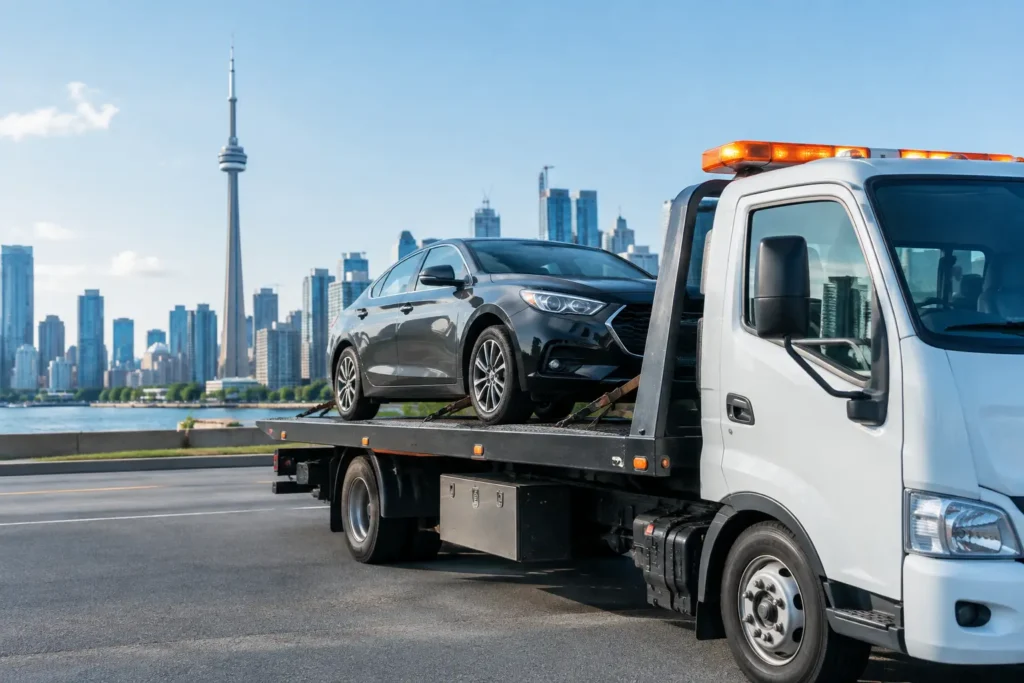
Flatbed towing is often the safest choice for all-wheel-drive vehicles, luxury cars, lowered vehicles, motorcycles, and many EVs. Instead of pulling the vehicle with two wheels on the road, a flatbed carries the entire vehicle on its platform.
That level of protection can affect towing prices, but it can be worth it when improper towing could cause drivetrain, bumper, or undercarriage damage. Tell the dispatcher if your vehicle has all-wheel drive, low clearance, oversized tires, an electronic parking brake issue, or any other condition that may affect loading.
Time and location can change the final price
Toronto traffic, construction, weather, and access limitations all affect how long a tow takes. A vehicle stopped on a clear residential street is easier to handle than one stranded during rush hour near a major intersection. Heavy snow, freezing rain, and poor visibility can also slow safe loading and travel.
After-hours service may cost more in some cases because dispatching a truck overnight, on weekends, or during holidays requires around-the-clock coverage. That said, waiting for regular business hours is not always the safer or less expensive decision. If your car is blocking traffic, sitting in an unsafe area, or exposed to further damage, prompt service is usually the better choice.
Underground parking garages deserve special mention. Height restrictions may prevent a standard tow truck from entering. Depending on the vehicle and garage clearance, the job may require specialized equipment, a different loading plan, or moving the vehicle to an accessible area first.
Ask for a clear estimate before the truck is dispatched
A reliable towing company should explain the expected charges in plain language. The estimate may not be final if the scene is materially different from what was described, but you should understand the pricing structure before help is sent.
When you call, provide your exact location, vehicle make and model, the problem, and your preferred destination. Ask whether the estimate includes the hookup charge, distance, flatbed service if needed, winching, after-hours service, and applicable taxes. If your vehicle is in a collision, ask whether any recovery or special handling charges may apply.
It also helps to confirm the destination before the truck arrives. A tow to the nearest shop may be cheaper, but the best destination depends on your situation. You may prefer your trusted mechanic, a dealership for warranty work, your home, or a collision center recommended by your insurer. Changing destinations mid-tow can increase the cost and delay the job.
Watch for costs that are separate from the tow
A towing invoice and an auto repair bill are not the same thing. Towing covers moving or recovering the vehicle. Repairs, diagnostics, replacement tires, batteries, fuel, and mechanical work are separate services unless they were specifically included in your quote.
Storage is another separate concern. If a vehicle is taken to a storage facility after a collision, breakdown, or enforcement-related tow, daily storage fees may apply. Ask where the vehicle is going and what steps you need to take to retrieve it. If your insurer is involved, contact them as soon as you can to understand what towing and storage coverage may be available under your policy.
Roadside assistance can be a more affordable option when a tow is not necessary. A jump-start, tire change, fuel delivery, or lockout service may get you moving again without transporting the vehicle. However, if the car has warning lights, overheating, steering problems, brake issues, collision damage, or repeated starting failures, towing it to a qualified shop is the safer call.
How to keep towing costs under control
The best way to avoid unnecessary costs is to give the dispatcher accurate information and choose a company that puts pricing in writing or clearly confirms it before dispatch. Do not guess at your location. Use a nearby address, intersection, parking level, or recognizable landmark, especially if you are on a highway or in a large shopping center.
Remove personal items if it is safe to do so, have your keys ready, and tell the operator about any special vehicle needs. If you have roadside coverage through your insurance company, credit card, vehicle manufacturer, or membership program, check whether it requires you to call a specific dispatch line or keep the receipt for reimbursement.
Avoid accepting help from an unverified tow truck that arrives without being requested, particularly after an accident. Confirm the company name, ask for identification if needed, and make sure you know the destination and estimated charges. In a stressful moment, a calm five-minute conversation can prevent an expensive misunderstanding.
Fast help matters as much as fair pricing
The right towing service does more than move a vehicle. It helps protect you on a dark roadside, gets traffic moving after a breakdown, and makes sure your car is handled with appropriate equipment. Fair towing prices should come with professional dispatch, licensed and insured operators, and clear answers before the work begins.
If you are stranded in Toronto or the surrounding area, call for a clear estimate, explain exactly what happened, and get the right truck sent the first time. Quick, safe help can turn a bad stop into a manageable delay.